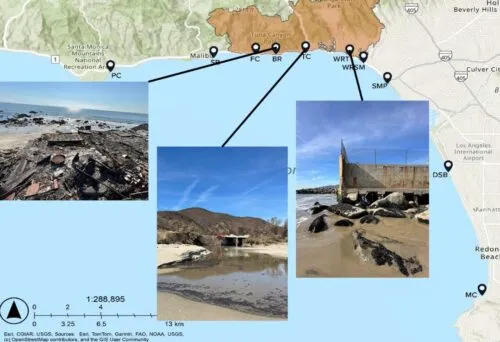
Six months after devastating wildfires swept through Los Angeles communities, comprehensive testing shows Santa Monica Bay beaches are largely safe for recreation, while successful conservation efforts have returned endangered fish to their natural habitats.
Water and sand analysis conducted by Heal the Bay and regional authorities found that fire-related contaminants, including heavy metals like mercury, barium, chromium, arsenic and lead, "appear to be below the risk-thresholds for human health," according to the organization's latest safety assessment.
"The data we have shows that LA beach water and sand do contain certain heavy metals and other fire-related chemicals, but these contaminants largely appear to be within safe levels for recreation," said Tracy Quinn, CEO of Heal the Bay, who was kayaking in Antarctica when the January 7 fires began.
The testing comes as tens of thousands of residents remain displaced from their homes, highlighting the ongoing recovery challenges facing Southern California communities hit by what Quinn called "unprecedented" fires and pollution.
In a major conservation victory, 160 federally endangered northern tidewater gobies have been successfully returned to their Topanga Canyon habitat after five months of recovery at local aquariums. The small fish, rescued from contaminated waters following the Palisades Fire, represent a critical indicator of ecosystem health along California's coast.
"This group of fish are small but mighty, and they have physically grown so much during their time here," said Stacy Hammond, an aquarist at the Aquarium of the Pacific. "They've returned back to their homes more resilient than ever."
The collaborative rescue effort involved eight organizations and more than $43,000 in donations from 50 contributors, demonstrating what Dr. Brenton Spies of California State University Channel Islands called "what conservation success looks like when we come together for a shared purpose."
However, significant gaps remain in safety monitoring protocols. Scientists lack established guidelines for assessing health risks from disaster-related sand contamination, forcing researchers to navigate "uncharted waters" in developing comprehensive safety measures.
"We can't manage what we don't measure, and we've never had (because we've never needed) official safety threshold standards for this type of disaster-related pollution," Quinn noted.
The Southern California Coastal Water Research Project is developing the first recommendations for new risk screening levels to protect against human health impacts from heavy metals and other contaminants in recreational water and sand.
Testing revealed some concerning data gaps. Previous samples lacked analysis for inorganic arsenic and hexavalent chromium, both harmful in lower concentrations. Recent testing included hexavalent chromium analysis, with results showing "Not Detected" levels, though some locations require additional sampling.
"While it appears that the state has stopped funding local water and sand testing, Heal the Bay is working to ensure it has the resources it needs to keep testing going for as long as it takes," Quinn said.
The recovery extends beyond immediate safety concerns. A Blue Ribbon Commission on Climate Action developed comprehensive recommendations for climate-resilient water infrastructure, including erosion control measures and updated legislation requiring broader contaminant testing before lifting health notices.
Ocean floor analysis continues, with Heal the Bay divers sampling sediment to identify lingering fire-related impacts. The organization plans sonar scanning to map potential debris fields on the bay floor.
"After the devastation wrought by the Palisades Fire, the return of the rescued tidewater gobies to Topanga Creek is a shining example of how collaboration makes our communities and coastline more resilient," said Gary Jones, director of the Los Angeles County Department of Beaches and Harbors.
Despite progress, officials urge continued caution. Current recommendations include avoiding beaches within burn areas, keeping children and pets from consuming sand, and staying out of water within 250 yards of debris removal operations.
"Risk tolerance is a very personal decision, we are providing data to help inform your decisions," Quinn emphasized.
The comprehensive response demonstrates how communities are adapting to increasingly frequent climate disasters while working to protect both human health and critical ecosystems along California's vulnerable coastline.