By Michelle Edgar
Special to the Daily Press
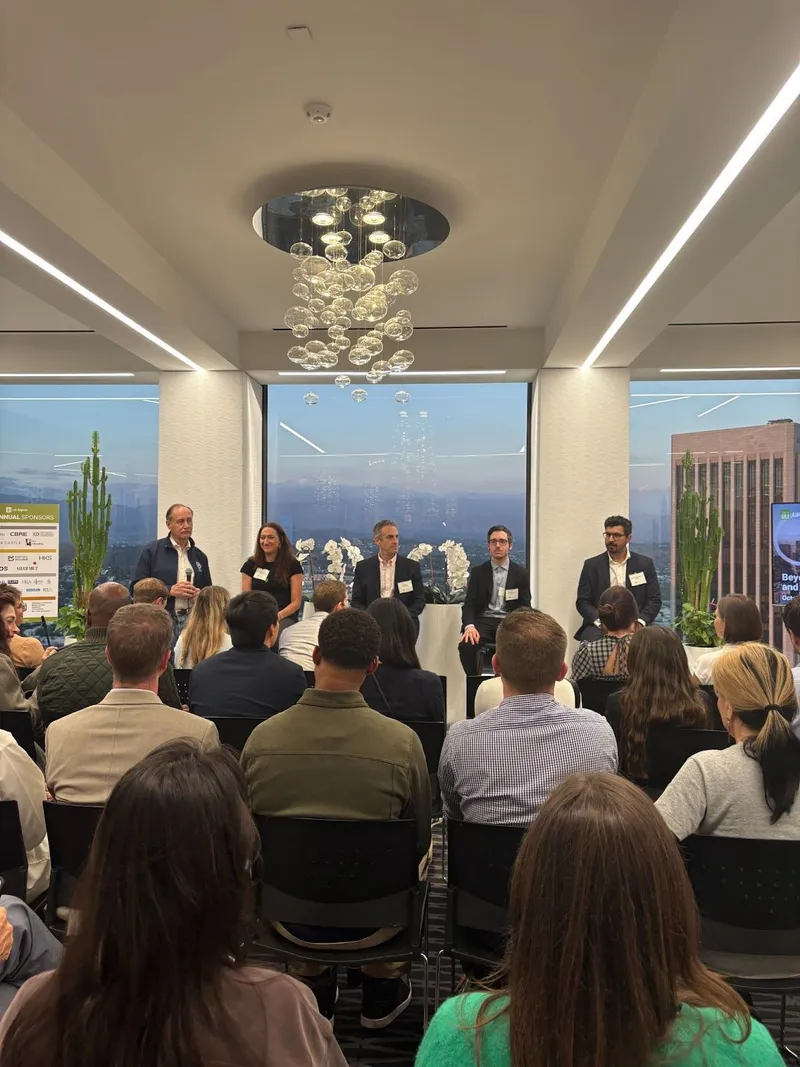
With fewer than 1,000 days until LA28, Los Angeles is facing one of its most ambitious urban tests yet — transforming the global spotlight into a legacy that lasts long after the closing ceremony. That challenge and opportunity was the focus of “Beyond the Finish Line: Planning, Policy, and LA’s Olympic Experiment,” a policy forum hosted by the Urban Land Institute Los Angeles.
Moderated by Pasadena City Councilmember Rick Cole, the event convened voices from the public and private sectors to align strategies across mobility, infrastructure, small business, and community engagement. “Unlike most Olympic host cities, LA28 isn’t about building monuments, it’s about building momentum,” Cole said. “If we do this right, the Games can become a catalyst for a new civic era rooted in connectivity, creativity, and equity.”
Daniel Bernstein, principal transportation planner in LA Metro’s Office of Strategic Innovation, described the next three years as a “living laboratory for mobility.” Metro’s plan centers on its “Games Route Network,” an intricate web of rail, shuttle, and micro-mobility connections that will link venues and communities citywide. “We’re planning for a car-light Games with no general parking at venues,” Bernstein said. “High-frequency shuttles, new rail extensions, and inclusive design for the Paralympics are how we redefine how LA moves.”
Major transit milestones including the D Line extension to UCLA, the K Line connection to LAX, and the Regional Connector linking the A and E Lines, are reshaping how Angelenos navigate the region. Metro’s commitment, Bernstein added, goes beyond transportation. “The Olympics give us a deadline to modernize not just our infrastructure, but our mindset. This is our opportunity to build a city that works for everyone, every day not just for two weeks.”
Panelists agreed that mobility alone isn’t enough; what happens between the venues will define LA’s legacy. Inspired by Paris 2024’s citywide approach, planners and civic leaders are pushing for neighborhood-level “fan zones” that activate streets, connect cultural districts, and encourage walking and biking through what has been dubbed the “festival trail.” “The legacy shouldn’t be a stadium,” said Cole. “It should be a new civic habit - how Angelenos move, gather, and celebrate together.”
Architect Michelle Stevenson, Regional Practice Director at HKS and a leader in sports and entertainment design, highlighted the potential for “temporary-to-permanent” urban interventions — modular shade structures, open-air kitchens, and pop-up plazas that start as Games pilots but evolve into lasting civic improvements. “Quick-build doesn’t mean short-lived,” Stevenson said. “The Olympics can be LA’s R&D phase for creative, resilient city design.”
The conversation also centered on how to strengthen small business participation and cultural activation. Panelists urged organizers to engage local business improvement districts, restaurants, and artists to host neighborhood fan experiences and viewing hubs, ensuring that the economic impact circulates back into the community. “We can’t outsource LA’s Olympic experience,” Cole noted. “Our chefs, artists, and entrepreneurs are the true hosts.”
Public-private partnerships emerged as a recurring theme throughout the discussion. With limited city bandwidth and tight timelines, experts stressed that collaboration between agencies, developers, nonprofits, and civic organizations will be critical. ULI’s Young Leaders Group is already forming working groups to advance “quick-build” pilots, advocate for streamlined permitting, and design public-private funding models that mix philanthropic and infrastructure capital. “City government can’t carry this alone,” Cole said. “This will take an army of collaborators - a city of partners.”
Safety and accessibility also dominated the agenda. Metro is advancing a multi-layered strategy that expands its ambassador program, introduces new fare gates, and launches a dedicated Metro police department while integrating social-service outreach. “We want stations to feel active and alive,” Bernstein said. “Art, music, and human presence make transit safer and more inviting, safety is as much about perception as enforcement.”
As the Games draw nearer, the question looming over every conversation was one of readiness: how is Los Angeles truly preparing — not just for the arrival of millions of visitors, but for the city that remains when they leave? With public and private leaders aligned on a vision of mobility, equity, and legacy, the path forward is both ambitious and urgent.
“The Games will happen,” Cole concluded. “The question is, what kind of city will we be when the torch leaves town? If we align purpose, partnership, and imagination, LA 2028 won’t just be another Olympics - it will be a blueprint for how cities can reinvent themselves.”