
California doesn't just host the biggest concerts — we spend more on live music than any other state in the nation, a total of $12.7 billion spent on live entertainment in 2024.
Taylor Swift's record-shattering Eras Tour did more than fill stadiums from LA to Santa Clara — it exposed a fundamental shift in how Californians and Americans nationwide prioritize live entertainment. According to a new study from Ticket-Compare.com, the Golden State leads the country in total concert spending, and the numbers reveal why our relationship with live music has changed forever.
Concert tickets now average $128.46 nationally, marking a 34% jump since 2019. But for superstar acts like Swift performing at venues across California, fans routinely paid $1,088 per ticket on average — with some dropping over $5,000 for premium experiences at SoFi Stadium and Levi's Stadium. Despite the sticker shock, shows sold out in minutes.
Why California Leads the Pack
California's dominance in concert spending isn't surprising given our concentration of world-class venues — from the Hollywood Bowl to Chase Center to the Forum — combined with our massive population and entertainment-first culture. While Virginia residents spend the most per capita at $446 per person, California's sheer volume of concertgoers and premium ticket buyers puts us at the top of total entertainment spending nationwide.
The demographic fueling this surge? Gen Z and Millennials, who make up a significant portion of California's population. These generations treat concerts as essential cultural experiences rather than discretionary luxuries, especially after losing years to COVID-19 lockdowns. After the pandemic stripped away crucial social years, younger audiences view live shows as identity-defining moments worth any price tag.
Beyoncé's Cowboy Carter Tour, which made multiple California stops, demonstrated similar pricing power, proving this trend extends beyond any single artist.
What's Next for California's Concert Scene
"Gen Z and Millennials treat live entertainment as a core part of their identity, not a luxury," Prism PR Agency CEO Rick Pendrick. "After losing key years of their youth to COVID-19, that pent-up demand is resulting in big spending for live events. For younger fans, concerts are the new status symbol and the new social currency — something you post, share, and build memories around. That emotional value often outweighs the financial pain of funflation."
Bad Bunny is positioned to push ticket prices even higher when he returns to California venues. With the youngest fanbase in global music and unmatched streaming dominance, his next stadium run could set new pricing records as his audience treats shows as mandatory cultural events rather than optional entertainment.
Pop music currently drives what industry experts call "funflation" — when demand for global superstars like Swift, Beyoncé, and Bad Bunny creates pricing that seemingly knows no ceiling.
The California Concert Market Reality
While Midwest cities like Milwaukee and St. Louis offer lower average ticket prices, California's entertainment infrastructure supports premium pricing across the board. Interestingly, smaller California markets and mid-tier cities nationwide like Austin and Nashville are experiencing explosive price growth as demand outpaces venue capacity.
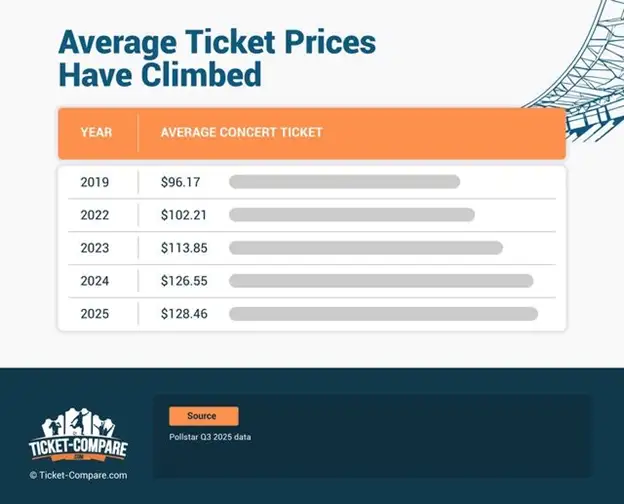
The Ticket-Compare.com study makes clear that prices will continue climbing for megastar acts because demand shows no signs of softening. Mid-tier tours may eventually see market corrections, but A-list artists operate in a different economic reality.
