

Private nursing home rooms now top $182,000 annually as aging population and post-pandemic inflation drive expenses higher
As America ages, the cost to care for seniors has skyrocketed across the country. California families facing senior care decisions are confronting sharply higher costs across every type of care setting, with private nursing home rooms surging more than 20% since 2022, according to a new study released today.
CareScout compared pricing data from its 2025 Cost of Care Survey against its 2022 benchmark — found that a private nursing home room in California now runs $182,135 per year, a 20.4% jump over three years.
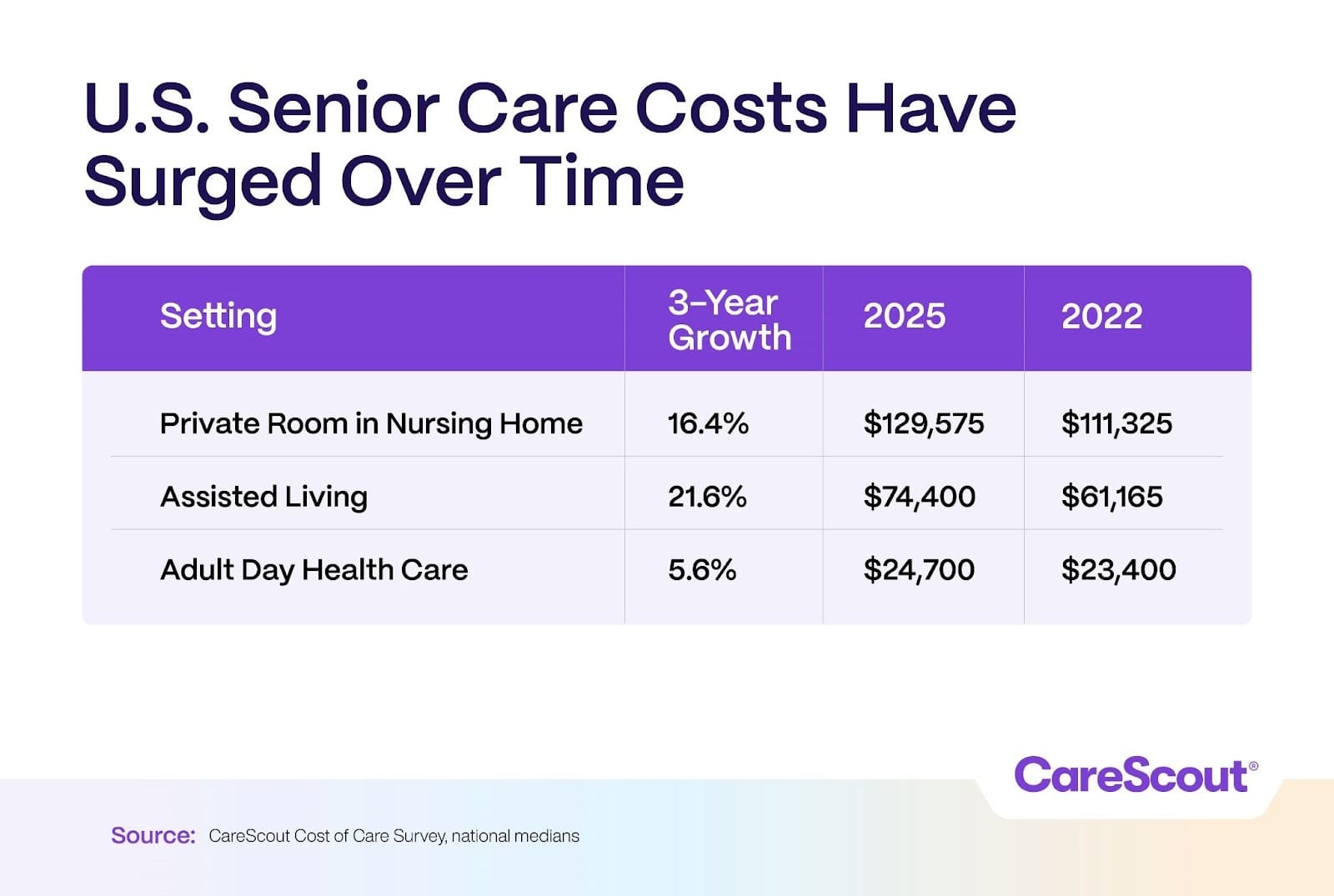
The cost increases extend well beyond nursing homes. Semi-private nursing home rooms climbed 15.3% to $146,000 annually, while assisted living facilities rose 17.1% to $82,800 per year. Adult day health care, often considered among the more affordable options for families managing care at home, increased 4.4% to $24,440 annually — a comparatively modest rise but still a meaningful expense for caregivers on fixed budgets.
California's trajectory mirrors a nationwide pattern. CareScout's analysis found that care costs rose in all 50 states since 2022, reflecting broad structural pressures on the senior care industry rather than regional anomalies.
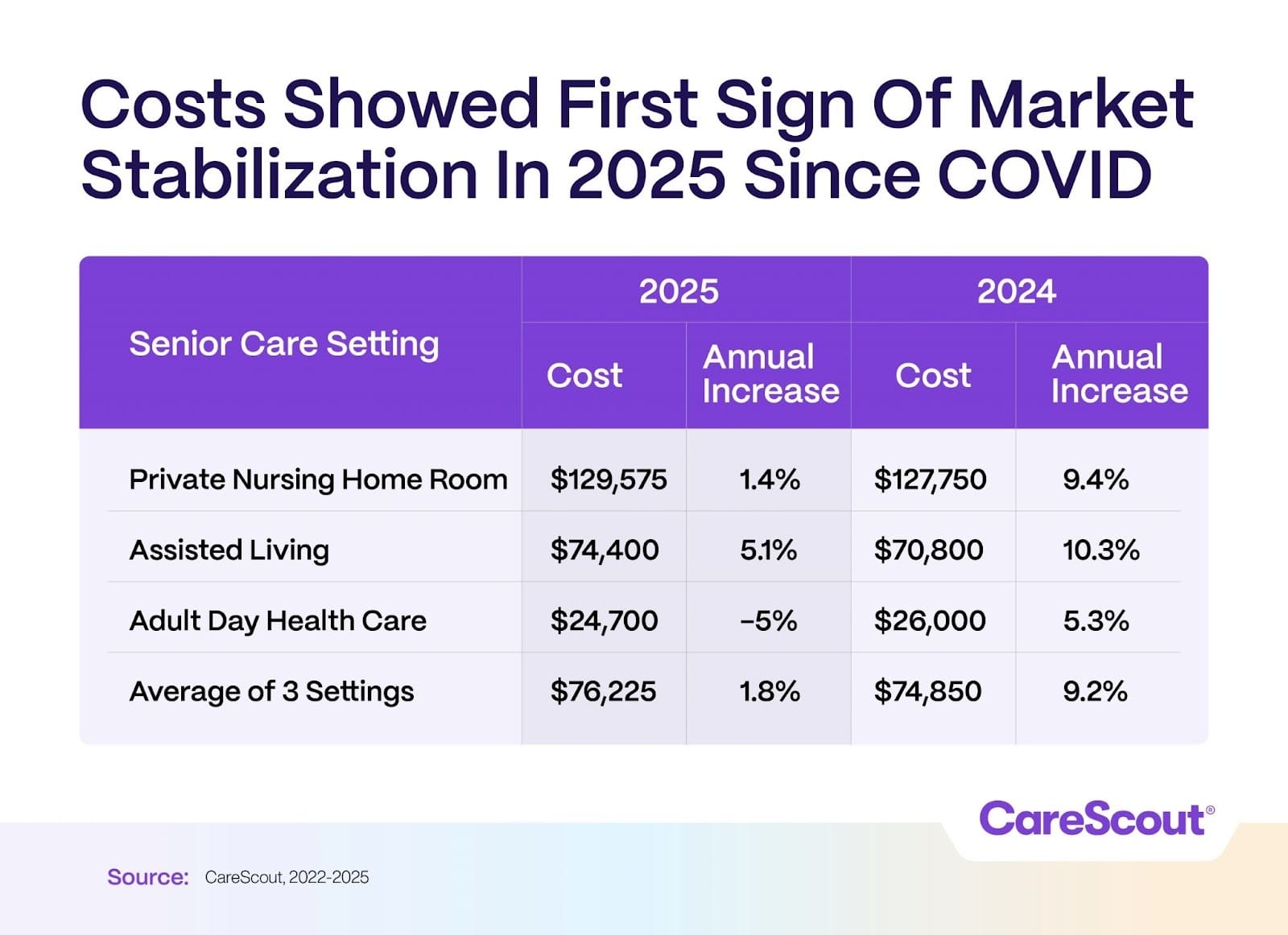
However, the most recent data offers some reason for measured optimism. After years of steep post-pandemic increases — including a 9.2% national surge in 2024 — costs stabilized notably in the past year, rising just 1.8%. It marks the first time since the pandemic that cost growth has meaningfully decelerated.
Whether that stabilization holds remains to be seen. Demographic pressure is not abating. California, home to one of the largest senior populations in the nation, is expected to feel that pressure acutely.
CareScout recommends families not wait until an emergency strikes to begin planning for senior care and offers various tools to help ease the burden including creating personalized care plans, offering long-term care insurance, and providing access to a vetted network of providers.
The annual Cost of Care Survey analyzed pricing across nursing homes, assisted living communities, memory care facilities, and home-based care settings in markets nationwide, providing one of the most comprehensive annual snapshots of senior care economics available to consumers and policymakers.
The cost of caring for older adults in California continues to climb, though signs of stabilization are beginning to emerge after years of sharp post-pandemic increases, according to a new analysis from CareScout.
The study, which compares findings from CareScout’s 2022 and 2025 Cost of Care Surveys, shows California ranks No. 25 nationally for the fastest-rising senior care costs. While that places the state in the middle of the pack, the overall price tag for care remains among the highest in the country, underscoring mounting pressure on families and the broader health care system.
Since 2022, the annual cost of a private room in a California nursing home has surged 20.4% to $182,135. Semi-private rooms rose 15.3% over the same period to $146,000 annually. Other care settings also posted notable increases, with assisted living costs climbing 17.1% to $82,800 per year and adult day health care rising 4.4% to $24,440.
The increases reflect a combination of demographic and economic forces, including California’s rapidly aging population and lingering inflation tied to the COVID-19 pandemic. As more residents enter retirement age, demand for long-term care services is intensifying, placing upward pressure on already elevated costs.
Nationally, the trend is similar. CareScout found that costs have increased in every state since 2022, highlighting a widespread affordability challenge. However, the pace of growth appears to be slowing. In 2025, care costs rose just 1.8% year over year, a significant moderation compared with the 9.2% increase recorded in 2024.
That deceleration may signal a turning point after several years of volatility driven by labor shortages, wage increases and higher operating expenses across the health care sector.
Even with that easing, the cumulative increases since 2022 have created a steep financial hurdle for many families, making it important to plan ahead.
CareScout offered 3 tips to help ease the burden for families.
- Do Not Wait for An Emergency: When an emergency strikes, families shouldn’t have to become expert care coordinators during the worst week of their lives. To mitigate this risk, it is critical to consult with an expert in advance to create personalized care plans to help save money and find the best care.
- Explore Inflation-Protected Long-Term Care Insurance: During an individual's peak earning years, it is advisable to explore long-term care insurance. Paying premiums while money is still coming in, can be advantageous to relying solely on government programs and savings if a prolonged health battle ensues.
- Understand Different Care Options: It is important to understand the different senior care options that are available. For example, nursing homes offer 24/7 medical care, while assisted living facilities do not – but help with bathing, dressing, and medication. Adult day health care and in-home services may offer more flexible or cost-effective alternatives.
