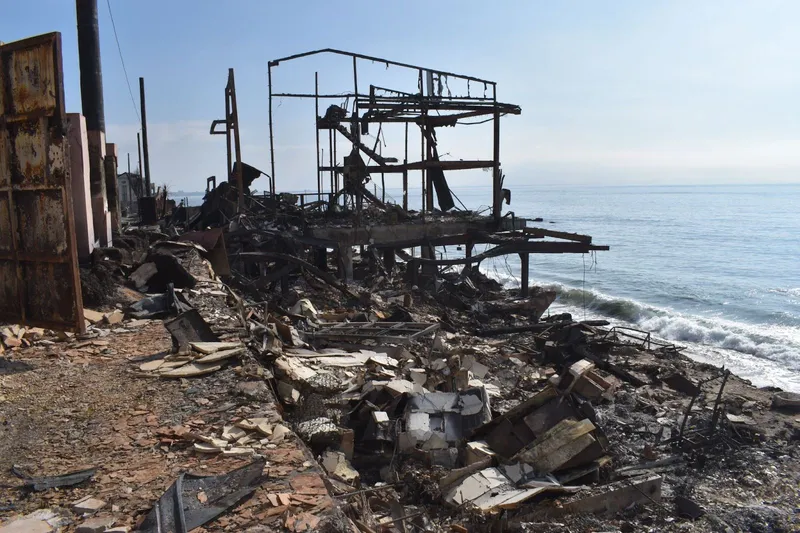
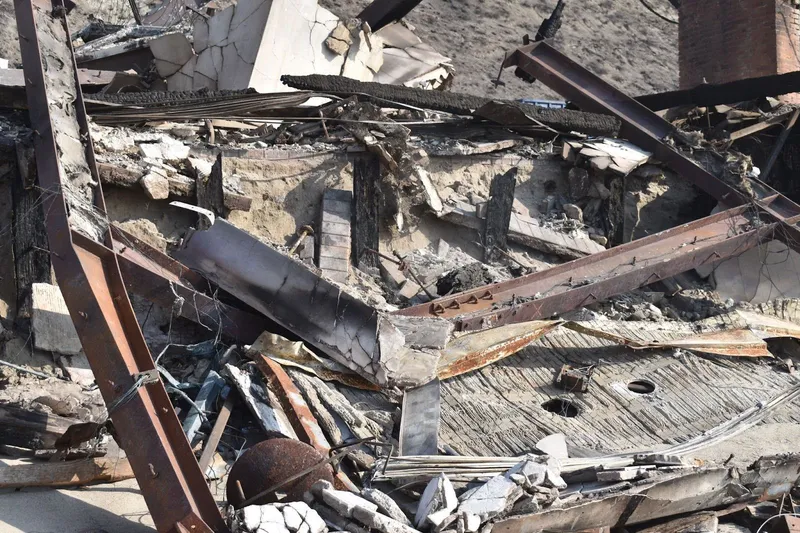
More than 5,000 properties across the Eaton and Palisades burn areas have been cleared of ash and fire debris in what officials are calling the fastest major disaster cleanup in American history.
The U.S. Army Corps of Engineers, in partnership with the Federal Emergency Management Agency and the California Governor's Office of Emergency Services, announced the milestone Tuesday, highlighting the unprecedented pace of recovery efforts following the devastating January fires that swept through Los Angeles County.
"Debris removal is being completed at a historic pace, thanks to close coordination between county, state, and federal partners along with support from the President and his administration," said FEMA Region 9 Administrator Bob Fenton.
Properties receiving final sign-off have completed debris removal, hazardous tree removal, and erosion control installation. An additional 2,500 properties have been cleared and are awaiting final approval. More than 2 million tons of debris have been removed to date.
"In just three months since we began debris removal operations, to reach 5,000 completed properties is astonishing and a testament to the partnership necessary to pull off a mission of this scale," said Brig. Gen. William Hannan, commander of the USACE Task Force Phoenix.
The current pace of debris removal has put the operation months ahead of the cleanup timeline for previous major California wildfires, including the 2019 Camp, Woolsey, and Hill fires, which were previously considered the fastest response of their kind.
Now 100 days since the fires first ignited, Governor Gavin Newsom has made the recovery of Los Angeles his highest priority, directing what he calls a "whole-of-government response" to support affected communities.
"My job is to make sure Californians who felt helpless after the fires are able to have hope again," Newsom said. "Our work is far from over — but 100 days since the fires first broke out in early January, California remains united and together will rebuild, recover and rise."
The state response has involved over 16,000 boots on the ground at the peak of operations. Newsom worked with both the outgoing Biden administration and incoming Trump administration to secure federal support, resulting in a presidential major disaster declaration.
State and federal officials cleared hazardous waste from 9,000 homes in less than 30 days. Currently, 500 crews of expert heavy equipment operators from the Army Corps of Engineers are working around the clock to clear ash, soot, and fire debris from structures damaged by the fires.
The cleanup effort extends beyond residential properties. FEMA has directed the Army Corps to clear properties in the Special Inclusion program, including places of worship, private schools, owner-occupied multifamily homes, non-profit organizations, parks, and community centers.
Newsom has issued multiple executive orders to streamline rebuilding efforts, including suspending permitting requirements under the California Environmental Quality Act and the California Coastal Act. The state has also extended tax deadlines, providing critical relief for businesses and homeowners.
Other state initiatives include mortgage relief programs, tenant protections, fast-tracked temporary housing, and safeguards against price gouging. The Governor signed legislation providing over $2.5 billion to support emergency response and jumpstart recovery efforts.
"Reaching this milestone in record time shows the great progress we can make working together," said Cal OES Director Nancy Ward. "We will continue to collaborate with our local and federal partners to bring the community the resources needed to recover and rebuild."
Educational recovery has also been a priority, with executive orders aimed at quickly assisting displaced students and bolstering affected schools. All eight affected schools have resumed in-person instruction, and eight of nine water systems have been reactivated.
As part of the broader recovery effort, the California Transportation Commission recently allocated nearly $1.7 billion to improve and strengthen the state highway system, with $86.5 million specifically directed toward repairing infrastructure damaged during the fires.
Among the highway projects, $30 million will be used to replace a retaining wall and rebuild a slope drapery protection system near Big Rock Road in Malibu and reconstruct hillsides above State Route 1 near Mulholland Drive, all of which were impacted by the Palisades Fire and subsequent rainstorms.
"Today's monumental investment puts Californians' tax dollars to work making critical safety and resiliency improvements to highways throughout the state that support the travel of millions of residents each day," Newsom said. "We're also directing millions to help repair vital infrastructure damaged by the Los Angeles fires."
The Army Corps of Engineers has characterized the current operation as the largest fire debris removal mission in its history, with more than 200 personnel currently deployed to the area. Officials emphasize that while significant progress has been made, much work remains as they continue to clear eligible properties across the burn areas.
For more information on the wildfire debris removal effort, residents can visit recovery.lacounty.gov.