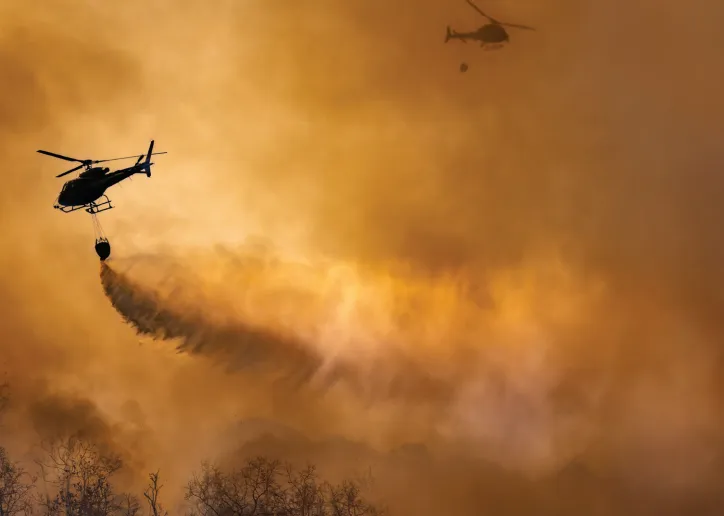
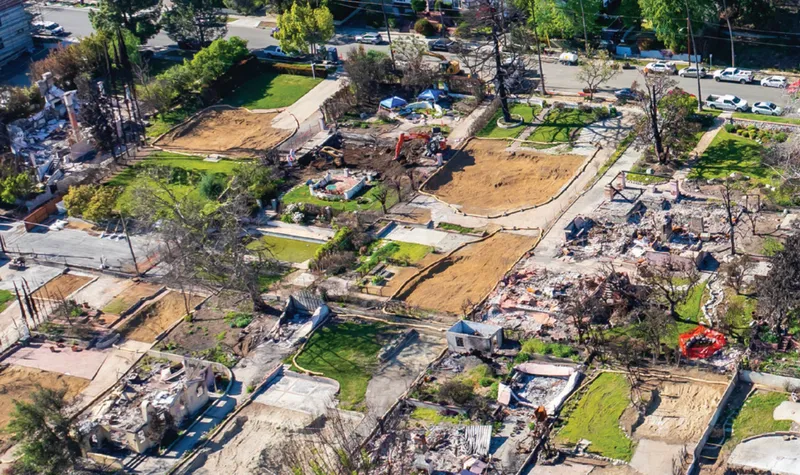
The Los Angeles County Board of Supervisors has directed staff to examine the legal feasibility of establishing a countywide Rebuilding Authority to coordinate recovery efforts from the devastating January 2025 wildfires that destroyed more than 16,000 structures across the region.
Supervisor Lindsey P. Horvath introduced the motion following recommendations from an independent Blue Ribbon Commission on Climate Action and Fire Safe Recovery, which released its final report advocating for sweeping changes to how the region approaches wildfire recovery and prevention.
"Los Angeles County led the fastest mass disaster cleanup in U.S. history – now, we must bring that same urgency to our rebuilding effort," Horvath said. "A Rebuilding Authority can coordinate recovery efficiently, equitably, and at scale, just as the U.S. Army Corps of Engineers partnered with us on debris removal."
The January fires, described as one of the costliest U.S. climate disasters since Hurricane Katrina, primarily affected the Palisades and Eaton fire areas, along with areas impacted by the December 2024 Franklin Fire. County counsel has seven days to report back on the legal pathways for establishing such an authority.
The proposed Rebuilding Authority would have broad powers including issuing tax increment financing, managing public-private reconstruction coordination, purchasing lots for land banking with priority given to returning residents, and facilitating bulk purchasing of construction materials to reduce costs.
The Blue Ribbon Commission, established by Horvath in February 2025, delivered two overarching proposals in its final recommendations. Beyond the Rebuilding Authority, the commission called for establishing an LA County Fire Control District with dedicated funding for proactive wildfire mitigation.
"The Commission recommends creating a regional Resilient Rebuilding Authority that is provided critical powers by the state legislature and Governor to better help the fire-devastated communities," said Commission Chair Matt Petersen, along with co-chairs Cecilia Estolano and Russell Gold. "This moment calls for big systems thinking, and a regional Rebuilding Authority can complement the existing role of local and state governments."
The proposed Fire Control District would implement landscape-scale fire mitigation activities, including vegetation management, fire detection, evacuation planning, and support for home hardening. Funding would come through a voter-approved parcel tax, assessed either on properties in high-risk zones or county-wide with risk-adjusted fees.
The commission's comprehensive recommendations span 10 categories, including immediate recovery needs, building codes and resilience standards, energy system modernization, water infrastructure improvements, and community health initiatives.
Key building standards would require all reconstruction to meet Chapter 7A fire-resistant building codes and implement "Zone 0" defensible space requirements within five feet of structures. The commission also advocates for enhanced standards from the Insurance Institute for Business and Home Safety to improve insurability.
"When rebuilt and newly constructed homes are constructed using the latest building and energy codes along with the best science related to wildfire home ignitions and conflagration, the neighborhood and individual property owners will increase their insurability," the commission stated in its report.
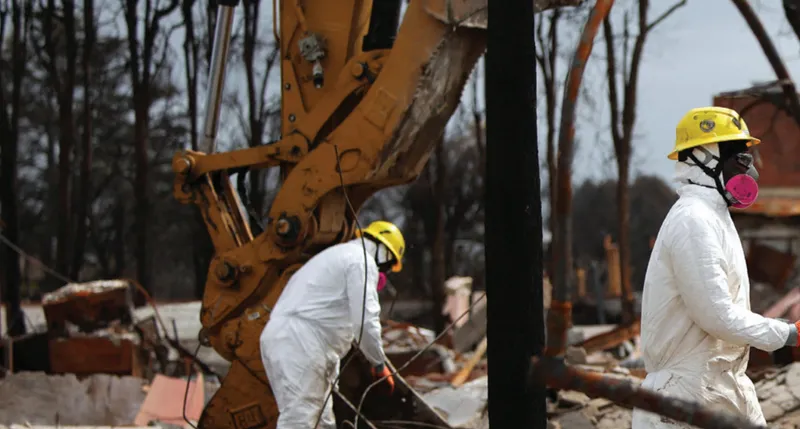
The recovery effort has already achieved significant milestones. LA County Public Works led what officials call the largest and fastest debris removal program in American history, with nearly 70% of lots already cleared through a program implemented by the U.S. Army Corps of Engineers and Federal Emergency Management Agency.
One-stop rebuilding permit centers are now operational for both fire areas, with artificial intelligence tools deployed to streamline plan reviews. The first rebuilding permits have been issued with an average review time of 25 business days.
However, challenges remain substantial. The commission noted that approaching recovery with "business-as-usual" methods will not meet the moment, citing financing difficulties for public infrastructure improvements, logistical challenges from massive construction projects, escalating costs, and workforce shortages.
The commission emphasized that without coordinated action, the region risks further displacement, rising insurance costs, and increased vulnerability to future climate events. The recommendations aim to position Greater Los Angeles as a model for climate-resilient recovery, particularly visible during the 2028 Olympic and Paralympic Games.
The feasibility study will determine what new authorities the county would need and any required state authorization to implement the rebuilding authority's proposed roles in coordinating the unprecedented recovery effort.