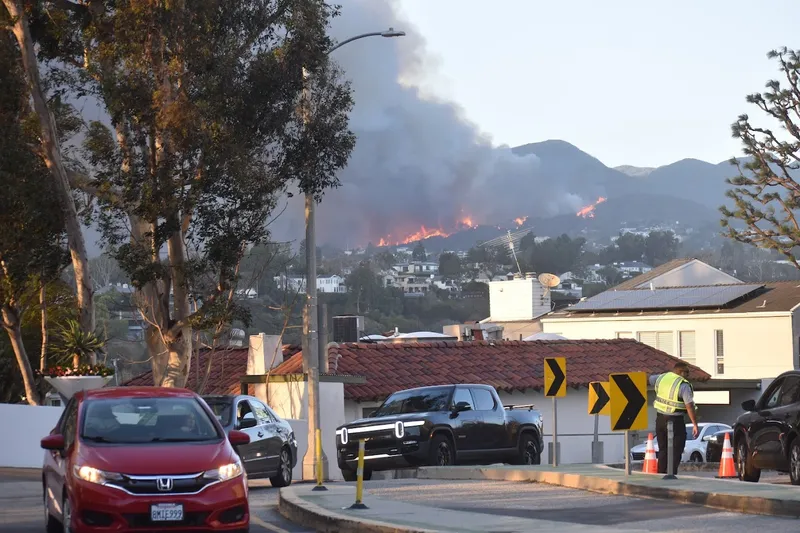
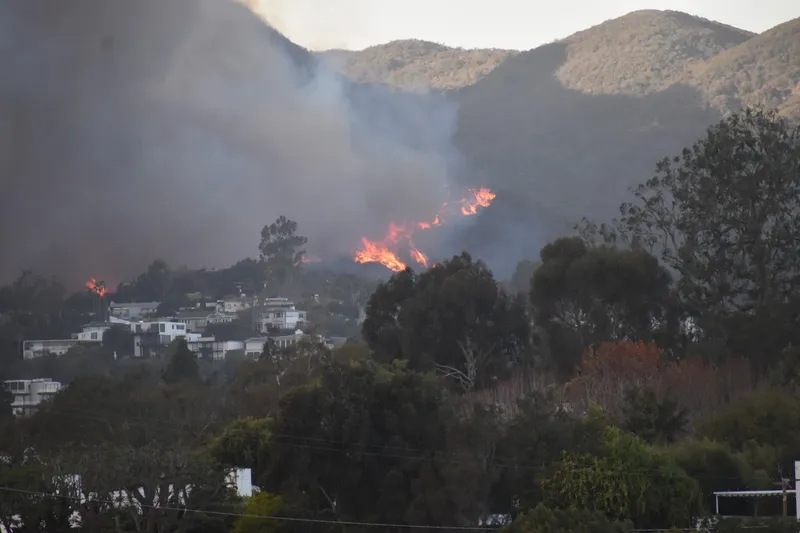
Los Angeles County officials have unveiled a comprehensive rebuilding plan aimed at accelerating construction and reducing costs for thousands of residents displaced by January's devastating wildfires, six months after the Palisades and Eaton fires became the most destructive in county history.
The ‘LA County Forward: Blueprint for Rebuilding’ includes waiving certain building requirements, expediting property tax relief and undergrounding more than 150 miles of power lines to prevent future fire risks. Officials estimate the measures could save homeowners up to $30,000 in construction costs and $3,000-$10,000 annually in property taxes.
"Thanks to a close partnership with Governor Newsom, governmental coordination at every level, and tireless County teams, we've already led the fastest debris removal in history," said Supervisor Lindsey P. Horvath. "Together, we are not just restoring what was lost — we are building back stronger, safer, and more united than ever."
The January fires scorched more than 40,300 acres and destroyed roughly 10,000 structures, displacing nearly 13,000 households. State and federal crews, including the U.S. Army Corps of Engineers, completed debris cleanup from the first 1,300 properties in just over 70 days — the fastest disaster debris cleanup in California history.
County Supervisor and Board Chair Kathryn Barger said the debris removal was "only the beginning."
"We must move into the next phase — rebuilding — with the same determination and urgency," Barger said. "Backed by the State of California and other critical partners, our LA County Forward Blueprint will drive a swift, resilient recovery and ensure our communities emerge stronger than ever."
The blueprint addresses six key priorities: supporting financial pathways for residents to return, accelerating permitting and inspections, expanding the pool of builders and materials, ensuring critical infrastructure, mobilizing the workforce and restoring everyday services.
To reduce construction costs, the county is working with the state to waive non-safety building codes, including requirements for rooftop solar panels, battery storage and full electrification. The county has also deferred permitting fees that can exceed $20,000 per household.
"We are committed to delivering a recovery that is efficient and anchored in the real needs of our residents — and we are counting on our key partnerships with the State and other essential stakeholders to get us there," said LA County Chief Executive Officer Fesia Davenport.
Property tax relief has been a priority, with the county proactively reassessing fire-damaged properties. The County Assessor has already lowered tax bills for 17,100 parcels — roughly 75% of properties impacted by the fires. Officials aim to process the remaining 2,900 claims by summer 2025.
The county has deployed more than $50 million in direct financial relief through grants, while $3.1 billion in federal funds has been approved for impacted residents and businesses. The Small Business Administration has provided 11,000 low-interest disaster loans.
However, significant challenges remain. Past California wildfire disasters show that not all displaced residents rebuild, and recovery can be uneven. After the 2018 Woolsey Fire in Malibu, fewer than 40% of the 488 destroyed homes have been fully rebuilt as of spring 2025.
Already, signs of this trend have emerged. In Altadena, the first burned residential lot sold for $550,000 in an all-cash deal after a bidding war, with the owner choosing not to rebuild. Community groups have voiced concerns about "panic selling" and urged fire survivors not to rush into sales.
"The biggest danger is in 10 or 20 years a third of these lots or half of these lots are still empty," said Brock Harris, the realtor who handled the Altadena sale.
To combat this, the county is streamlining permitting processes, contracting additional inspectors and creating expedited reviews for "like-for-like" rebuilds. A public dashboard now tracks permit turnaround times, and a pilot program allows licensed architects and engineers to self-certify certain plans.
The massive utility undergrounding project aims to create more resilient infrastructure less prone to igniting wildfires. Working with utility providers, the county plans to bury electrical, gas and telecommunications lines during the rebuilding phase.
The blueprint reflects extensive feedback from homeowners, renters, business owners and community organizations about their most pressing rebuilding needs, officials said.