Two major California rivers contain dangerous levels of toxic ‘forever chemicals’ that significantly increase downstream from wastewater treatment plants, according to a new study that highlights widespread contamination across the state's waterways.
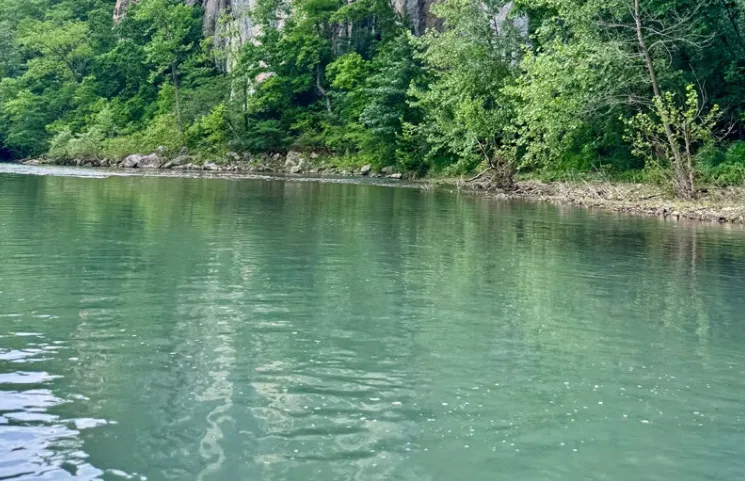
The Los Angeles and Santa Ana rivers both showed elevated concentrations of per- and polyfluoroalkyl substances (PFAS) immediately downstream from municipal wastewater facilities, with some contamination levels exceeding federal drinking water safety limits by substantial margins, according to research released by Waterkeeper Alliance.
In the Santa Ana River, PFAS concentrations downstream from Riverside's wastewater treatment plant reached levels that exceeded federal safety standards for drinking water. The contamination included PFOA at 13 parts per trillion (ppt) and PFOS at 12 ppt in one sampling period — more than three times and two times the federal maximum contaminant levels of 4 ppt, respectively.
"This study provides the information necessary for local, state, and federal leaders to take action and protect the health and safety of our communities here in Los Angeles and across the country," said Kelly Shannon McNeill, associate director of LA Waterkeeper.
The study, conducted in partnership with Hispanic Access Foundation, represents the first monitoring project to use passive sampling devices at wastewater treatment plant sites across multiple states. Researchers deployed specialized samplers for several weeks to capture time-integrated data that provides a clearer picture of long-term contamination.
PFAS, manufactured since the 1950s for use in products ranging from non-stick cookware to firefighting foam, do not break down naturally and accumulate in people, wildlife and the environment. Scientific studies increasingly link these chemicals to serious health conditions including cancer, liver and kidney disease, reproductive issues and immune system dysfunction.
The Los Angeles River showed PFAS increases downstream from the LA-Glendale Water Reclamation Plant, with total contamination rising by 6.01 ppt — an 8.61% increase. While some federally regulated PFAS decreased slightly at that location, concentrations of PFOA at 9.5 ppt and PFOS at 5.9 ppt still exceeded federal drinking water limits.
Both California rivers serve watersheds with significant populations. The Los Angeles River watershed spans 834 square miles with nearly 1 million residents living within one mile of the river. The Santa Ana River watershed covers 2,630 square miles across four counties.
The contamination particularly affects communities already facing environmental and health burdens. Near the Riverside facility, 80% of residents within one mile are people of color and 34% are low-income, according to EPA environmental justice data. Around the LA-Glendale plant, 54% are people of color and 39% are low-income.
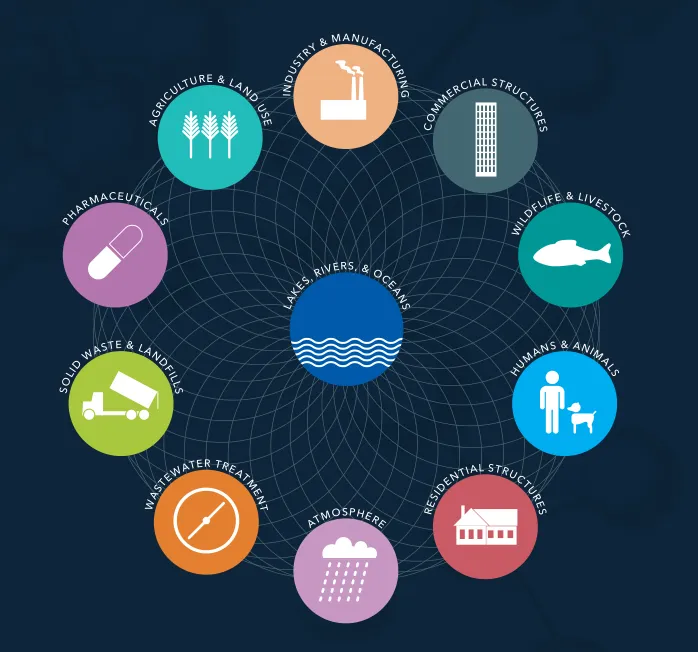
Neither wastewater facility has limits on PFAS discharges in their Clean Water Act permits, despite receiving wastewater from numerous industrial users. EPA databases identify dozens of facilities in both cities that operate in sectors potentially handling or releasing PFAS chemicals, including electronics, metal coating, chemical manufacturing and textile operations.
The study found that 95% of downstream wastewater treatment plant sampling sites nationwide had elevated PFAS concentrations, while 98% of all surface waters tested contained one or more types of these chemicals. Only one facility across all sites studied had PFAS limits in its discharge permit.
California has established some of the nation's strongest PFAS protections, including Public Health Goals more stringent than federal standards and notification levels for certain chemicals. The state has also banned PFAS in food packaging and products for infants and children.
However, the new data shows contamination levels exceeding even California's protective standards. In the Santa Ana River, PFOA concentrations surpassed the state's Public Health Goal of 0.007 ppt by nearly 13 ppt in one sample, while PFOS exceeded the state goal of 1 ppt by 11 ppt.
Environmental advocates say the findings demonstrate the urgent need for stronger federal regulation of industrial sources and upgrades to wastewater treatment systems.
Current federal law does not require industries to limit PFAS discharges to treatment plants, and conventional wastewater technology cannot remove these persistent chemicals. As a result, PFAS pass through treatment systems and accumulate in both discharged water and sewage sludge used as fertilizer on agricultural land.
The research comes as the Environmental Protection Agency faces criticism for proposing to weaken some federal PFAS drinking water standards established in 2024. The agency has not yet established surface water quality criteria for most PFAS compounds or limits on their disposal in biosolids.