
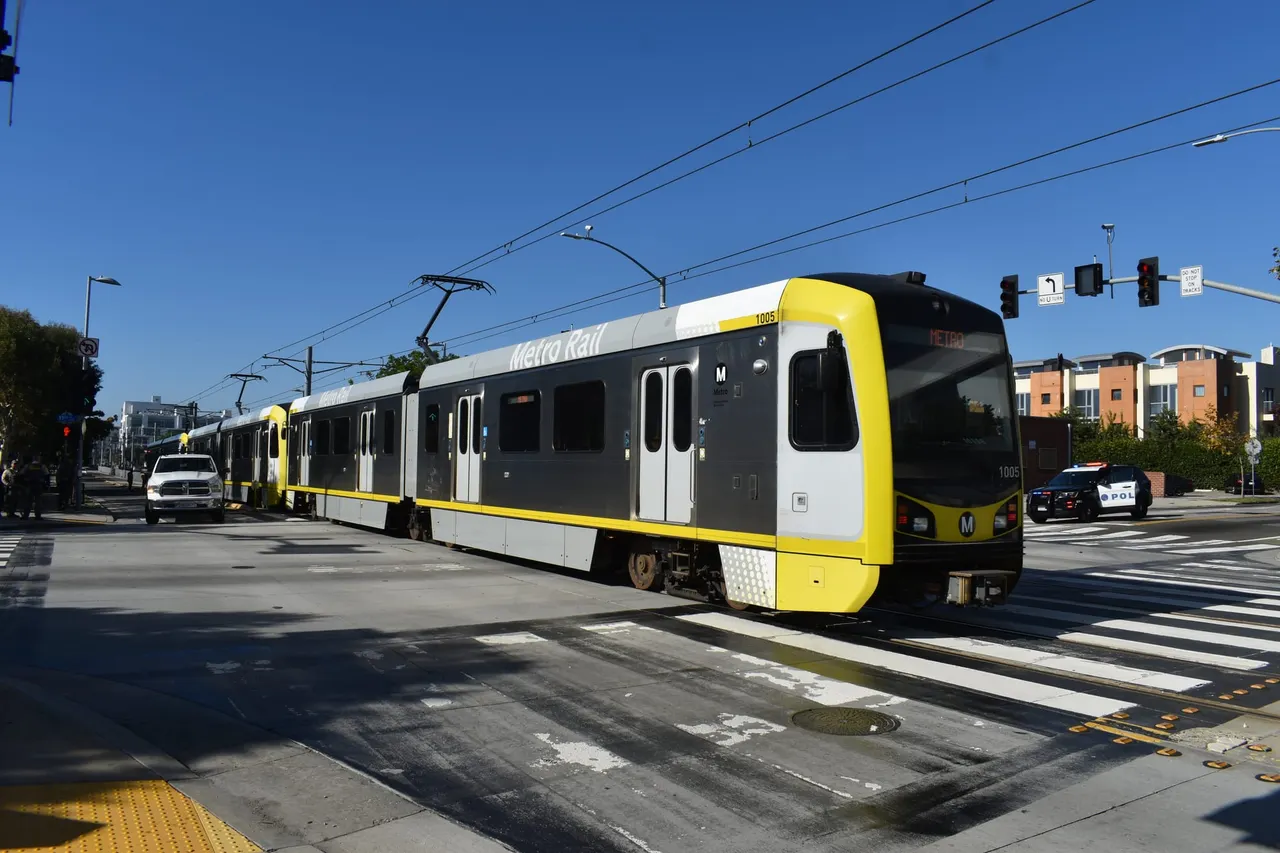
A state Senate committee is weighing legislation that would exempt some jurisdictions, including Los Angeles County's transit agency, from a new housing law, as cities across California scramble to adapt to a sweeping new mandate requiring dense residential development near public transit stops.
SB 1361, authored by Sen. María Elena Durazo and scheduled for a Senate Housing Committee hearing Tuesday, would prevent SB 79 from applying to planned but not-yet-operational transit stops in jurisdictions that had already committed by Jan. 1, 2026 to build at least 10,000 housing units — at least half of them income-restricted — by 2032.
What SB 79 Does
Signed into law in 2025 as the Abundant and Affordable Homes Near Transit Act, SB 79 requires that housing development be permitted by right on sites zoned residential, mixed-use or commercial within one-half mile of qualifying transit stops in counties with more than 15 passenger rail stations. The law, authored by Sen. Scott Wiener of San Francisco, sets minimum height, density and floor area ratio standards that vary based on proximity to the stop and the type of transit service it receives.
Near a Tier 1 stop — defined as a heavy rail or very high frequency commuter rail station in an urban transit county — projects within one-quarter mile can rise up to 75 feet and reach densities of up to 120 dwelling units per acre. Projects adjacent to those stops face even higher ceilings. Tier 2 stops, which include light rail, high-frequency commuter rail and bus rapid transit, carry somewhat reduced but still significant density entitlements.
Projects with more than 10 units must designate between 7% and 13% of units for income-restricted households, depending on the income level targeted. The law prohibits demolition of rent-controlled or deed-restricted units occupied within the past seven years. Projects must also comply with prevailing wage requirements, and those exceeding 85 feet must use a skilled and trained workforce.
California is short an estimated 1.3 million affordable units statewide. In Los Angeles alone, the gap stands at 270,000 units, and nearly one in two county households is cost-burdened.
What SB 1361 Would Change
Durazo's bill would draw a line between existing and future transit infrastructure. Under the proposal, SB 79's development standards would not apply to planned stops that were not yet operational as of Jan. 1, 2026, in jurisdictions meeting the 10,000-unit housing commitment threshold.
LA Metro argues that linking SB 79's automatic upzoning to stations still under construction has become a political liability. The agency has four rail projects under construction and three bus rapid transit projects in final design, all scheduled to open by 2028. According to Metro, local opposition to those projects has intensified since SB 79's passage, with some cities and community groups treating planned transit investments as triggers for state-mandated density increases they would prefer to avoid.
"Local jurisdictions and stakeholder groups that otherwise support transit are expressing resistance to rail and bus rapid transit projects," the agency wrote in a legislative analysis accompanying the bill, warning that constituent opposition could delay or derail projects serving predominantly low-income riders. Metro reports that 89% of its customers are very low-income and 85% are transit-dependent.
Senate Housing Committee staff, however, questioned in its own analysis whether the exemption is necessary, noting that SB 79 already authorizes local governments to adopt alternative plans that can exempt certain sites while maintaining equivalent overall housing capacity. The committee analysis suggested Metro could work with the county and individual cities to pursue those existing pathways rather than seeking a statutory carve-out.
The analysis also flagged a six-month implementation gap: SB 79 takes effect July 1, 2026, but changes under SB 1361 would not take effect until Jan. 1, 2027, meaning the law would apply to the affected Metro sites for at least six months regardless.
Housing advocates have come out in opposition arguing the bill would encourage jurisdictions to opt out of state housing policy and undermine SB 79's core purpose of providing certainty for housing production near transit.
Metro's Broader Legislative Fight
SB 1361 is not Metro's first attempt to reshape SB 79. The agency's board voted in December 2025 to pursue amendments to the law, and earlier this year Metro took an "oppose unless amended" position on SB 677, a Wiener-authored cleanup bill that made technical adjustments to SB 79's definitions but did not address what Metro called fundamental implementation problems.
Chief among Metro's concerns is that SB 79's definition of "light rail transit" — limited to streetcar, trolley and tramway systems — does not accurately describe Metro's A, C, E and K rail lines, leaving it unclear whether those corridors qualify as eligible transit stops under the statute. Metro warned the ambiguity exposes the agency to litigation risk and complicates coordination with local cities.
Metro told lawmakers it was considering several alternative structures, including limiting SB 79 to rail lines already in revenue service, creating an incentive-based framework using state funds, or exempting Los Angeles County entirely given its ongoing transit expansion.
The Senate Housing Committee is scheduled to hear SB 1361 on Tuesday.