
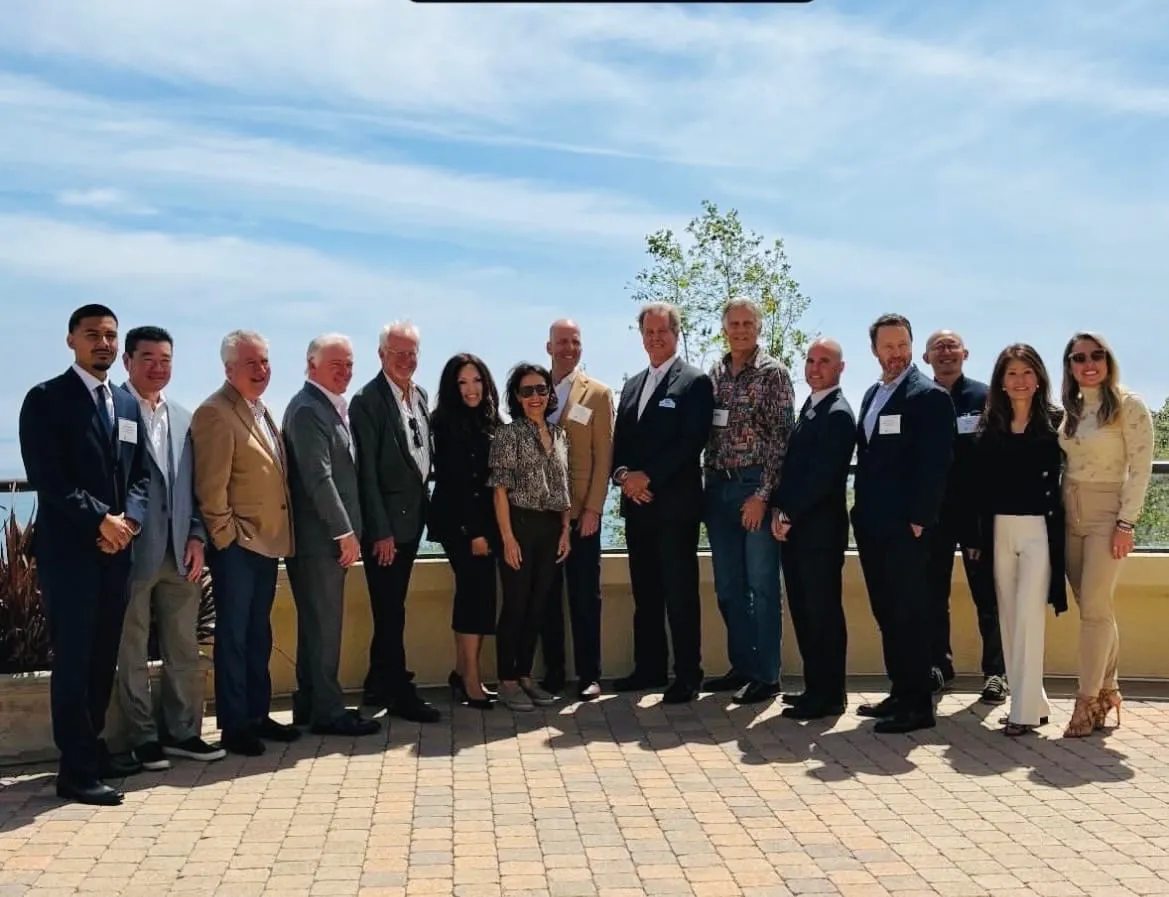
Standing at Pepperdine University with a scorched coastline at his back, Malibu's newly appointed City Manager Joe Irvin framed the region's recovery challenge with the bluntness of someone a month into an impossible job.
"Rebuilding is about resilience and sustainable recovery and community revitalization — it's not just replacing structures," Irvin said.
More than a year after wildfire, mudslides, coastal erosion and a six-month closure of Pacific Coast Highway reshaped the city, that statement carries more weight than it might seem. The question facing Malibu is no longer whether recovery will happen. It is how, and increasingly, whether the systems in place are equipped to make it possible.
Irvin spoke this month at a wildfire summit convened by ULI Los Angeles and Pepperdine University, gathering planners, policymakers, financiers and developers to confront what rebuilding looks like in an era defined by compounding climate risk.
The numbers alone tell a grim story: 597 single-family homes lost, 67 multi-family units destroyed, nine commercial properties gone, and more than 320 beachfront properties now facing severe geohazard conditions — 173 of them sitting on active landslides. Debris removal took six months in coordination with the Army Corps of Engineers.
"This is the most complex recovery environment that California has been facing," said Yolanda Bundy, Malibu's community development director and a registered civil engineer overseeing rebuilding and code compliance efforts.
The city has moved aggressively to cut through a permitting process historically known as among the most difficult in California. A centralized Rebuild Center was established immediately after the fire. Planning verification timelines have been reduced to as little as two to three weeks. State executive actions have waived CEQA requirements and limited Coastal Act oversight, shifting more authority to local jurisdictions.
Forty-five rebuild permits have been approved to date, with 41 homes now under construction.
But faster approvals have exposed a deeper problem. The bottleneck is no longer bureaucratic — it's financial.
Homeowners must rebuild to modern codes, often at costs far exceeding what their homes were originally insured for. Many are underinsured, leaving a widening gap between available funds and what rebuilding in today's regulatory and environmental reality actually costs.
"There is an incremental cost to building to higher resilience standards, and people don't know where to get that money," said Mariam Zahr, CEO of the Malibu Pacific Palisades Chamber of Commerce.
Greg Econn, executive vice chair of real estate at Venbrook Insurance Services and chair of Steadfast LA, put it more starkly.
"Insurance is no longer just protecting what's built — it's determining what gets rebuilt, where it gets rebuilt, and whether it gets rebuilt at all," Econn said. "What we're seeing across Malibu and the Palisades is a growing disconnect between what policies were written for and what it actually costs to rebuild today. That gap is where recovery slows down."
Econn said capital is beginning to return to fire-impacted markets, particularly on the builder's risk side, but cautiously and selectively — flowing toward projects where risk is understood and mitigated, pulling back where it isn't.
"Permitting has improved, no question," he said. "But you can't permit your way out of a capital gap. If the money doesn't pencil, the rebuild doesn't happen."
City officials are thinking well beyond individual homes. Among the infrastructure projects outlined at the summit: a $14 million Carbon Canyon water main and pump station, part of a larger $200 million regional water system effort, and a proposed $140 million sanitary sewer system along Pacific Coast Highway to address vulnerabilities the disaster laid bare.
"These are critical infrastructure investments that will determine how resilient the community is in the future," Irvin said.
Recovery, in other words, is no longer measured only vertically — in homes rebuilt — but horizontally, in the systems being strengthened beneath them.
Yet funding that future remains unresolved. Despite estimated needs running into the hundreds of millions, neither Malibu nor Pacific Palisades has a formal recovery district in place — a financing mechanism that would allow communities to capture future property tax revenue increases and reinvest them in rebuilding.
"There is no recovery district that's been legislated, and that means the funding needed for recovery is not yet at the table," Zahr said.
Without it, resilience risks becoming an unfunded mandate: required by code, unsupported by capital.
"If we want resilience, we have to align incentives," Econn said. "Right now, we're asking homeowners to build to higher standards without always giving them the financial tools to do it."
Commercial recovery is also lagging, and leaders at the summit were direct about what that means for residents weighing whether to return at all.
"Residents don't want to move back into a community that doesn't have a restaurant, a dry cleaner, or basic services," Zahr said.
In Pacific Palisades, entire commercial corridors require reconstruction, often demanding new development models to remain financially viable. In Malibu, recovery is inseparable from Pacific Coast Highway, where ongoing disruptions continue to suppress business activity and future tourism.
The consensus that emerged: residential and commercial recovery cannot proceed independently.
"This isn't just a housing issue," Econn said. "It's a system issue — insurance, infrastructure, policy, and capital all have to move together, or recovery stalls."
Irvin, still weeks into a role that would test the most seasoned administrator, offered the summit's most unsentimental conclusion.
"It's not a matter of if the next disaster strikes," he said. "It's when."
What Malibu is navigating now, panelists suggested, is less a local rebuilding effort than a stress test for how communities across California — and the country — must approach recovery in an era when disasters no longer arrive one at a time.
Malibu is not just rebuilding. It is redefining what recovery means.