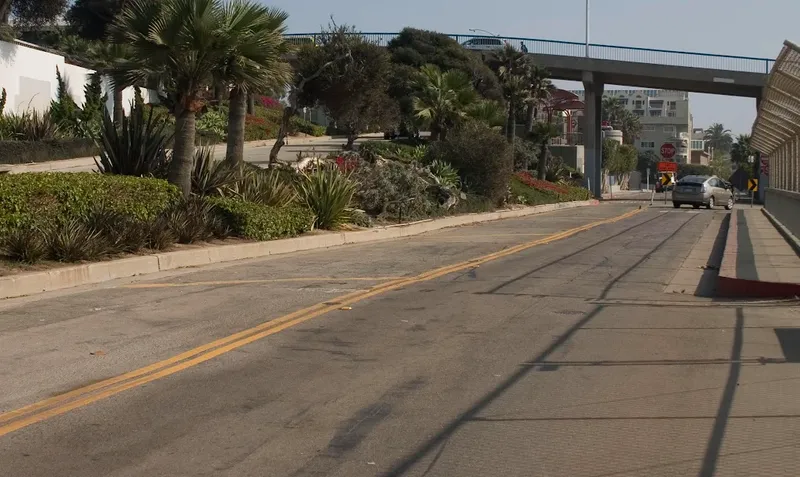
The Malibu City Council voted to extend a local emergency declaration addressing what officials call a dangerous driving crisis on Pacific Coast Highway, as new data revealed 22 deadly crashes that killed 23 people between 2018 and 2022.
The emergency declaration, first adopted in November 2023, gives the city additional authority to coordinate with state and county agencies to address reckless driving on the 21-mile stretch of PCH running through Malibu.
"PCH has become increasingly dangerous to residents and visitors due to the common occurrence of drivers speeding, driving recklessly, or driving while distracted," Mayor Marianne Riggins said during the meeting. "We've got to bring that cost down."
The declaration followed the October 2023 deaths of four Pepperdine University students who were struck by a speeding driver while walking along PCH. According to authorities, the driver was traveling in excess of 100 mph when he lost control and crashed into the group.
California Highway Patrol data shows 49 fatalities along PCH in Malibu from 2012-2022, while the Los Angeles Times reported 170 combined deaths and serious injuries between 2011 and 2023. The city experiences approximately one crash per day on the highway.
"We can't weather another disaster," said Mayor Pro Tem Bruce Silverstein, noting the city's ongoing recovery from multiple wildfires. "If we expect future disasters, we might as well not even be thinking about a budget."
Separately, California Department of Transportation representatives presented plans for extensive PCH rehabilitation projects aimed at improving safety and extending pavement life. The two-phase project will cost tens of millions of dollars and span four years.
Project I, running from Cross Creek Road to the Ventura County line, will rehabilitate 63 lane-miles with construction scheduled from summer 2026 through summer 2028. Project II covers 57 lane-miles from Santa Monica's McClure Tunnel to just south of Cross Creek Road, with construction planned from summer 2027 through summer 2029.
The projects include controversial intersection realignments at Malibu Road and Civic Center Way, changing them from angled merges to 90-degree "tee" intersections. Caltrans officials said the changes will improve pedestrian visibility and safety.
Council Member Doug Stewart questioned the intersection changes, asking about "the benefit of 'teeing up' intersections when vehicles currently have on-ramps to gain speed." He expressed concern about vehicles entering the 45-55 mph highway from a complete stop.
The projects also call for 37 new street lights at nine locations, raising concerns about Malibu's dark sky ordinance. "Malibu is a dark sky community, so what kind of lights are you putting in?" Riggins asked. "Are they going to be consistent with what we're doing in trying to do in the rest of the city?"
Stewart also questioned proposed bike lanes in the rural community, citing a 1996-1997 study that concluded PCH "is not a good place for bicyclists due to 'choke points' and fatalities."
The council authorized Mayor Riggins to execute an $87,089 federal grant agreement with the California Office of Traffic Safety for enhanced enforcement operations through September 2025.
The grant will fund two DUI checkpoints, five DUI saturation patrols, five traffic enforcement operations, two bicycle and pedestrian enforcement operations, and two motorcycle radar devices through a contract with the Los Angeles County Sheriff's Department.
Public Safety Director Susan Duenas said the grant activities will focus on the Pacific Coast Highway corridor, where speed violations are the most frequent primary crash factor.
The Selective Traffic Enforcement Program grant comes as the city grapples with mounting public safety challenges. Southern California Edison anticipates increased Public Safety Power Shutoffs this year, which disable traffic lights and cell towers during high fire-risk periods.
"We got to find a way to keep those lights running," said Council Member Steve Uhring. "Same thing with the cell towers — power goes out, cell towers die, and that is another dangerous situation."
The emergency declaration requires council review every 60 days and will remain in effect until terminated. City officials said they will continue working with Caltrans, the sheriff's department and California Highway Patrol to implement safety improvements on the state-controlled highway.