
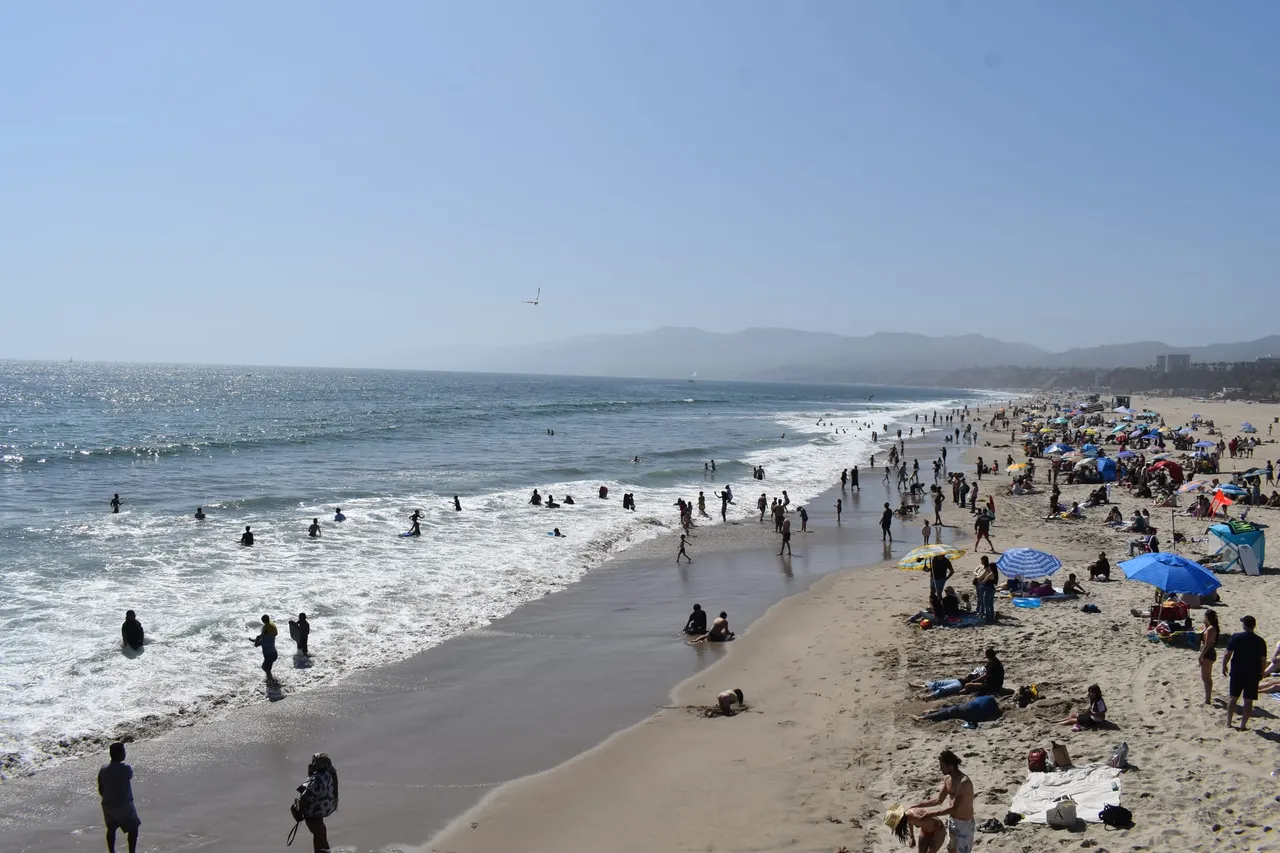
The National Park Service will hold a virtual public meeting this week to gather input on a federal study evaluating whether portions of the Los Angeles coastline — potentially stretching to Santa Monica — should be designated as a new unit of the national park system.
The online meeting, scheduled from 1 to 2:30 p.m. Pacific time on Feb. 11, will give residents an opportunity to learn about the study process and ask questions about the potential designation. The public can join via webinar or by phone, and a recording will be posted online afterward.
The effort traces back to the Consolidated Appropriations Act of 2023 that established a special resource study of select sites along the Los Angeles coast. Rep. Ted Lieu championed the study in Congress with the support of several environmental organizations. .
Sarah Bodo, project manager for the National Park Service's Denver Service Center, is leading the study team. The NPS has established a project website to share information and collect public feedback, with comments accepted through April 6.
Under U.S. law, new national park units are typically established by an act of Congress. In some cases, a president can set aside federal land as a national monument, which Congress may later upgrade to a national park. Before lawmakers decide on creating a park, however, they usually require a formal study to determine whether the area meets benchmarks for joining the national park system.
The Los Angeles coast study will assess potential sites based on four criteria Congress requires before creating new park units: national significance, suitability for park designation, feasibility of NPS management and the need for federal oversight rather than state or local management.
Evaluators must determine whether the area contains outstanding natural or cultural resources, whether it is adequately protected by existing state or local parks, whether it could be managed effectively and economically, and whether National Park Service stewardship would add clear value beyond what other agencies provide.
Even if the study concludes that parts of the coast merit inclusion in the park system, no new park unit can be created without further congressional action or a presidential proclamation. NPS officials have stressed that any final decision lies with elected leaders, not the agency.
The study can also result in a proposal for a national recreation area or similar unit rather than a traditional national park. That could mean a partnership model in which the NPS works alongside state and county agencies.
The Santa Monica Mountains National Recreation Area already provides a template. Within that existing park, the National Park Service, California State Parks, the Santa Monica Mountains Conservancy and local entities cooperatively manage public access to beaches, coastal trails and coastal resources along the Malibu coast.
Supporters argue a National Park Service presence could bring new funding for habitat protection — at sites such as the Ballona Wetlands and coastal dunes — along with educational programs, consistent signage and resources for shoreline conservation.
The proposal is not without precedent. New York's Gateway National Recreation Area, created in 1972 as the country's first urban national recreation area, preserves 26,000 acres of beaches, marshes and historic sites. The Golden Gate National Recreation Area spans beaches and bluffs around San Francisco Bay, and the Cabrillo National Monument occupies a coastal site in urban San Diego.
However, similar efforts have also stalled. The NPS studied the Gaviota Coast near Santa Barbara for national seashore status two decades ago and ultimately deemed the proposal not feasible, largely due to opposition from landowners who feared federal control and increased visitor traffic.
Much of the Los Angeles coast is already public land in an urbanized setting — factors that could reduce similar conflict but it’s also already largely controlled by the state government through the Coastal Commission. Officials say community input will be critical in shaping any plan so that it complements local priorities and meshes with California's existing coastal protections under the Coastal Act of 1976.
The public can participate in the meeting at https://bit.ly/4t8oWXW or by calling 202-640-1187 and entering conference ID 990571600. Questions can be directed to Bodo at Sarah_Bodo@nps.gov. Additional information is available online at https://parkplanning.nps.gov/MeetingNotices.cfm?projectID=133718.