The Santa Monica Planning Commission unanimously approved a controversial 18-story residential tower, rejecting an appeal that challenged the project on environmental grounds while expressing frustration that the appeal was filed in the wrong venue.
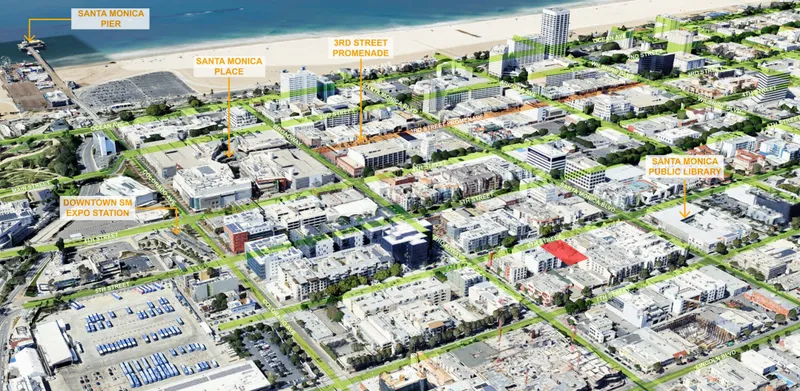
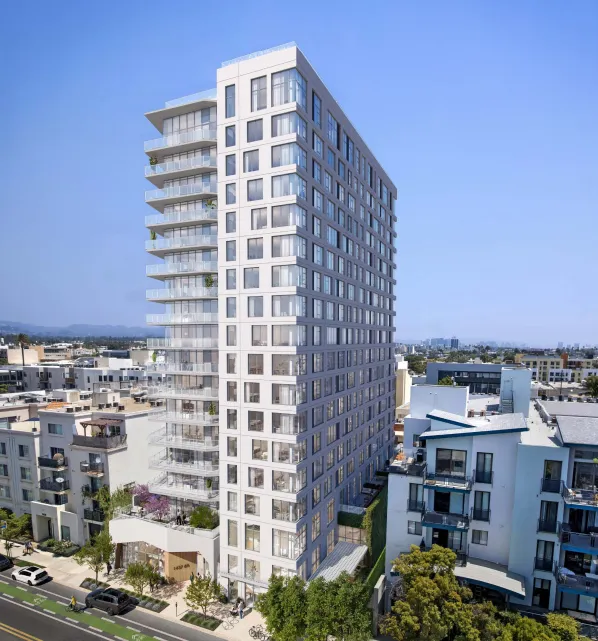
The commission voted 6-0 to deny the appeal and approve the 172-unit project at 1437 6th Street, which will include 26 affordable units and rise more than 194 feet high. The development, located between Santa Monica Boulevard and Broadway in the downtown area, represents one of the city's tallest residential buildings under state density bonus regulations.
The appeal, filed by the Supporters Alliance Safer, argued that the project required a full environmental review under the California Environmental Quality Act (CEQA). However, commissioners said their authority as an architectural review board was limited to design elements — not environmental analysis.
"I believe that this, it's very clear that this is the wrong venue," said Commissioner Shawn Landres. "It's not just that somebody came in with an appeal that we could actually deal with... Even if we agreed with it, we're not the venue for it."
Landres said he wanted to deny the appeal because "it's not in the right zip code" for the commission's jurisdiction.
The project faced an unusual procedural hurdle due to a settlement agreement stemming from the site's previous designation as a "builder's remedy" proposal. Under the agreement, any appeal of the Architectural Review Board's decision had to be scheduled within 60 days, making Tuesday's meeting the only date that satisfied the requirement.
Jordan Sison, the appellant's attorney appearing on behalf of Lisa Drew, apologized for a typographical error in the appeal letter that incorrectly referenced "Santa Barbara" instead of "Santa Monica."
"The big picture question is not whether discretion was exercised, but whether or not the decision inherently has discretion," Sison argued, contending that the architectural review process involved enough discretionary authority to trigger CEQA requirements.
The appellant pointed to several sections of Santa Monica's municipal code that reference environmental considerations, including language about preserving "areas of natural beauty" and ensuring projects don't "degrade the health, safety and general welfare of the community."
Dave Rand, representing the applicant, strongly disputed the environmental arguments, calling the appeal "a smoke and mirror exercise."
"This has nothing to do with CEQA," Rand said. "There is an appellate court decision that is crystal clear directly on point that says design review... when your jurisdiction is limited to aesthetics, design review materials and colors, that is too narrow of a scope to trigger CEQA."
The project utilizes state density bonus law, which allows developers to exceed normal height and density limits in exchange for including affordable housing. The development requests a significant increase in floor area ratio from 4.0 to 10.0 and building height from 84 feet to nearly 194 feet.
Jesse Ottinger of Ottinger Architects, who designed the building, described it as "100% density bonus project" that evolved through multiple revisions based on Architectural Review Board feedback. The design features two distinct architectural forms — a more organic, glass-heavy northern section facing the mountains, and a gridded southern portion using glass fiber reinforced concrete.
The building will include two levels of subterranean parking with 55 vehicle spaces and 88 bicycle spaces. Under state density bonus incentives, the project reduced bicycle parking requirements and eliminated the typical requirement for three-bedroom units.
City staff confirmed that the underlying administrative approval for the project was a ministerial action, meaning it was exempt from CEQA review because it simply verified compliance with existing zoning codes rather than involving discretionary land-use decisions.
The Architectural Review Board had previously approved the project's design, colors and materials on April 21 with a 5-0 vote after the applicant made revisions addressing board concerns about the building's facades and balcony designs.
Planning Commission Chair Samuel Tolkin, who was recognized at the meeting's end for his service to the city, joined his colleagues in approving the project despite the procedural complexities surrounding the appeal's environmental arguments.