
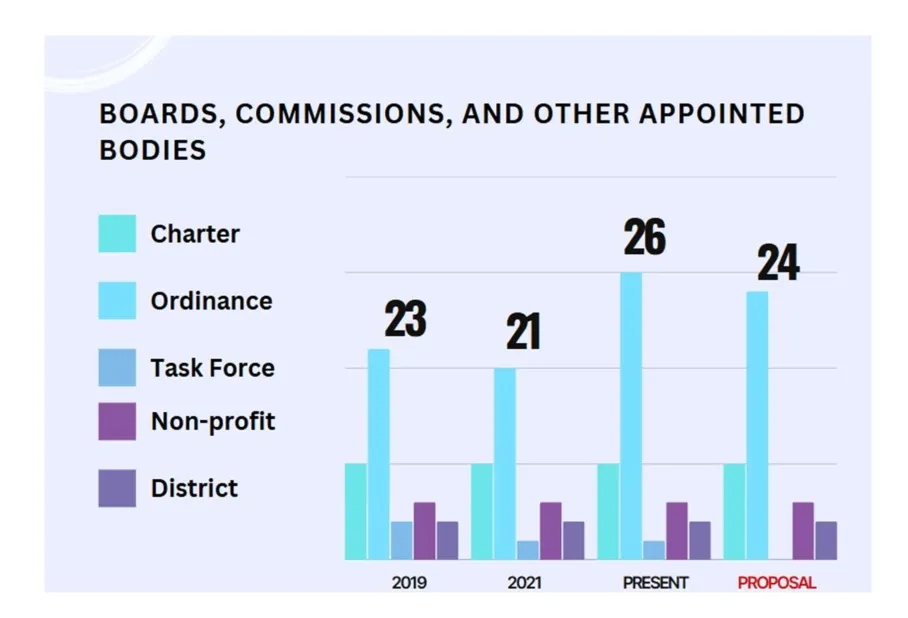
The Santa Monica City Council voted Tuesday to maintain the city's Disabilities Commission as a standalone body, rejecting a staff recommendation that would have merged it with housing and human services commissions in a broader restructuring of the city's advisory boards.
The 4-2 vote, with Mayor Caroline Torosis and Councilmember Dan Hall dissenting, came after emotional testimony from disability advocates who warned that consolidation would erase representation for people with disabilities at a time when their voices are most needed in city planning and policy.
"Consolidating the Disabilities Commission, Housing Commission, and Human Services Commission into a single 'Housing and Human Services Commission' would quietly erase something profound: six guaranteed seats for people with disabilities," Alex Elliott, chair of the Disabilities Commission, wrote in comments to the council. "This is not streamlining. It is silencing by dilution."
The decision was part of a comprehensive five-year review of the city's boards and commissions, mandated to improve efficiency and reduce administrative costs during a period of fiscal constraint. The city currently operates 26 advisory bodies with 162 volunteer members.
Mayor Caroline Torosis framed the session as part of the city's broader commitment to realignment and fiscal responsibility.
"Strong boards and commissions are really essential to transparency, accountability and public trust, and quite frankly, we need to hear more from them as council members," Torosis said. "We want to make sure that we're eliminating inefficiencies, especially in this austere budget environment."
The consolidation debate highlighted a philosophical divide on the council about how best to serve marginalized communities. Hall argued that merging the commissions would actually strengthen advocacy by placing disability issues at the center of service delivery rather than isolating them.
"I think and hope, we learned something important when we consolidated the Commission on the Status of Women and social services into the Human Services Commission, and that is that alignment matters," Hall said. "When our commissions mirror how our departments are structured, we get clearer work plans, stronger staff support, and, in my opinion, far better follow through from policy idea to real world impact."
But the majority of council members sided with disability advocates who contended that a standalone commission ensures focused attention on accessibility issues that extend far beyond housing and human services.
The council did approve several other efficiency measures recommended by staff. The Urban Forest Task Force will be converted to a formal commission with seven members, down from its current size. The Arts Commission and Public Safety Reform and Oversight Commission will also be reduced to seven voting members.
In a significant policy shift, the council voted to remove a prohibition that had barred family members of elected officials from serving on boards and commissions. Councilmember Ellis Raskin, who introduced the change, called the existing rule a "vendetta" from a prior council.
"I think that the council, or I trust this council, would not appoint people who are not qualified, but there are people who are qualified who happen to be family members of elected officials," Raskin said.
Hall and Torosis said that regardless of the Disability Commission discussion, it was the removal of the nepotism clause that ultimiately swayed them to vote "no" on the final motion.
The council also removed term limits for appointees to the Metropolitan Water District and Vector Control District. Raskin argued that influence on regional boards depends heavily on seniority, making term limits counterproductive.
Several decisions will require additional steps before implementation. Any changes to the Public Safety Reform and Oversight Commission must go through a meet-and-confer process with the Police Officers Association, and the council will maintain residency requirements for the Landmarks Commission despite staff recommendations to broaden eligibility.
The review notably excluded the Airport Commission from analysis, despite it being the second-most-costly commission according to city data. Public commenter Eve Lopez criticized the omission, arguing that the commission lacks aviation expertise and includes members living within 1,000 feet of the airport, potentially creating conflicts of interest.
The council also voted to eliminate the annual boards and commissions dinner, which had been suspended since 2020 and was estimated to cost over $30,000. Commission reports will instead be submitted as information items, with representatives invited to provide brief verbal summaries.
Staff will return with amended resolutions and ordinances to implement the approved changes, effective July 1, 2026.