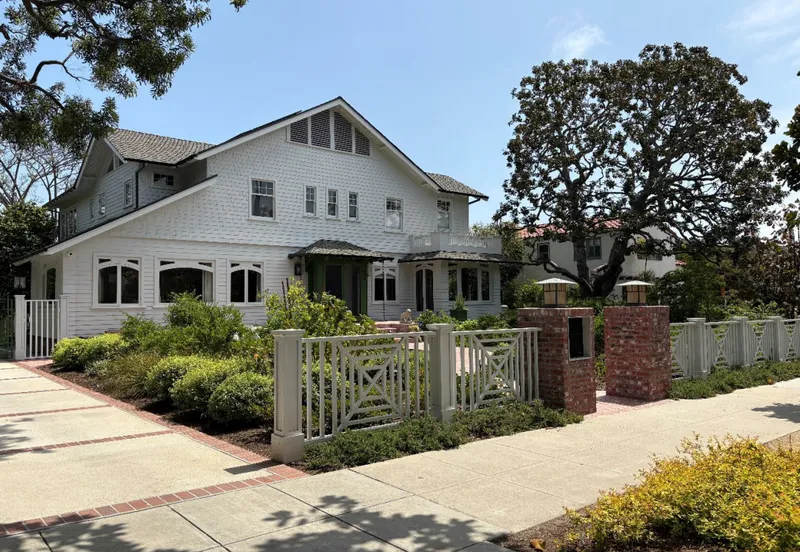
The Santa Monica Landmarks Commission voted 4-3 Monday night to deny landmark designation for a 1912 Swiss chalet-style Craftsman residence at 308 Alta Avenue, citing extensive alterations that commissioners said compromised the building's historic integrity.
The property owner, Aleese Orr, had sought landmark protection for what she called "the last of its kind" in Santa Monica, making an emotional plea to commissioners during the public hearing.
"We feel truly fortunate to call this remarkable house our home," Orr told the commission. "While we plan to live out our days as its caretakers, we need the city's help to protect it beyond our time on this earth. It is the last of its kind in our seaside city. Please vote to preserve it for the next generation."
The denial followed a heated debate over whether the property retained sufficient architectural integrity after major renovations in 1993 and 2021 that added 2,200 square feet and significantly altered the front facade.
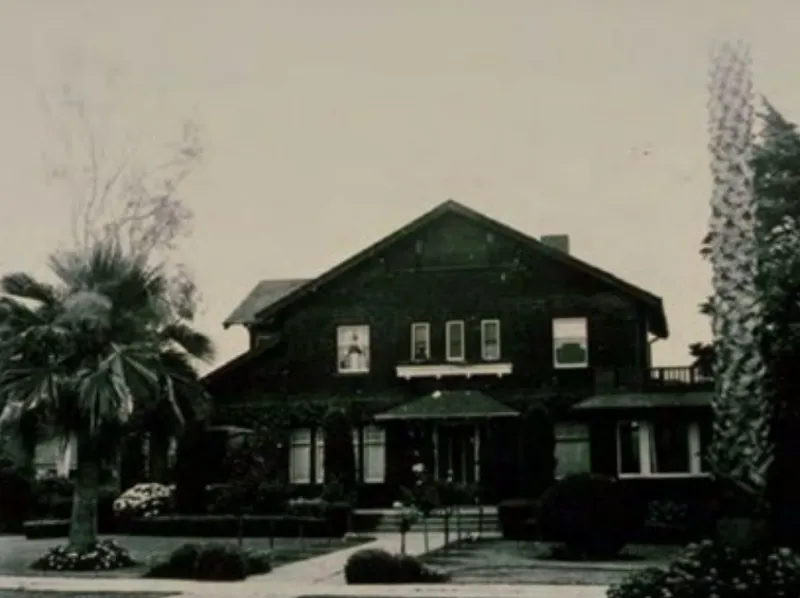
Commissioner Pam O’Connor argued the changes were too extensive, saying the building lost its original "lightness" and now has "a ponderous front elevation" after porches were enclosed and additions built.
"If you look at the 1983 [version] which is closer to the original, you see there's a lightness about the volume of the house," O'Connor said. "Now you look at the current version 2024, it's a ponderous front elevation because they filled in the porch side with volume, with structure."
Commissioner Jack R. Hillbrand, an architect, agreed the alterations were too significant. "The front elevation no longer has that feeling of integrity of the Swiss chalet style," he said, noting that authentic Swiss chalet structures feature exposed wood as "an integral expression."
However, the property found support from Chair Amy Green and Commissioner Dolores Sloan, who argued the changes weren't overwhelming and that some alterations should be expected over time.
"I find that the changes to the facade are not quite as overwhelming as it's been described by other commissioners," Green said. "I expect over this time that there will be some changes in alterations made to fit changes in aesthetic tastes."
A significant portion of the debate centered on whether the home's association with mathematician Merrill Flood justified landmark status. Flood lived at the property from 1950 to 1954 while working at the RAND Corporation, where he co-developed the famous "Prisoner's Dilemma" game theory concept.
Commissioner Sloan strongly advocated for designation based on Flood's contributions. "Game theory is so basic to so much that we that modern achievements and moving forward in history has been associated with," she said. "He was a pioneer in game theory... and he was connected with the Research Foundation across the street, and so very much a part of our city."
However, city staff and other commissioners questioned whether Flood's work was sufficiently connected to the specific property. Staff planner Stephanie Reich noted that while Flood was important, his "important work" was not "somehow related to the property."
Commissioner O'Connor argued that even if a building has historical significance through a notable resident, "it still needs to retain its architectural integrity."
The property, located in the former Palisades Tract, was originally designed as one of only a few Swiss chalet-influenced Craftsman homes built in Santa Monica. City staff hired preservation consultants Page & Turnbull, who concluded the property "does not retain sufficient integrity" for landmark designation.
The consultants found that the 1993 renovations, which enclosed an open porch, altered window patterns, and added seamless additions, eliminated key characteristics that defined the architectural style. Staff noted the additions were designed to be "seamless," which violates historic preservation standards requiring visual differentiation between old and new construction.
Robert Chattel, representing the property owners, argued the rarity of Swiss chalet examples in Santa Monica—only three others were identified—justified "accepting a greater degree of alterations."
The commission's decision can be appealed to the Santa Monica City Council. The property owners purchased the home in 2019, outbidding developers who planned to demolish it, and have invested significantly in restoration work.
The denial reflects ongoing tensions in Santa Monica between preserving historic character and allowing property modifications in one of the nation's most expensive real estate markets.