The Santa Monica-Malibu Unified School District Board of Education unanimously approved a $282 million budget for the 2025-26 school year in the face of continued enrollment decline and projected deficit spending in future years.
The adopted budget includes $217.6 million in revenues and reflects the district's ongoing financial challenges as student enrollment continues to drop. The district projects 8,333 students for the upcoming year, with average daily attendance of 7,875 students, representing a 94.5% attendance rate.
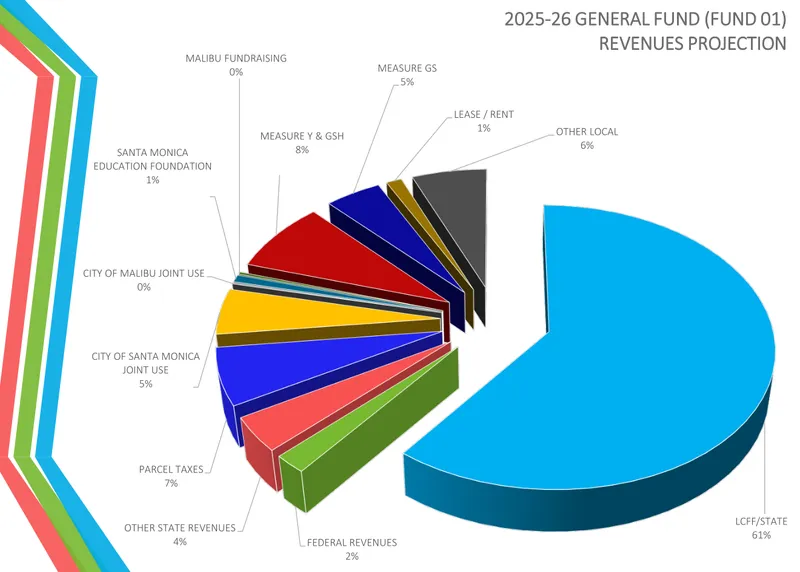
The budget heavily relies on local funding sources rather than state aid, with the Local Control Funding Formula accounting for 61% of revenues at $131.6 million. Other major revenue sources include $18 million from Santa Monica's Measure Y and GSH sales tax, $14.3 million from Measure R parcel tax, and $10 million from the newer Measure GS property transfer tax.
The district also receives significant support from its education foundations, with the Santa Monica Education Foundation contributing $1.8 million and the Malibu Education Foundation adding approximately $592,508.
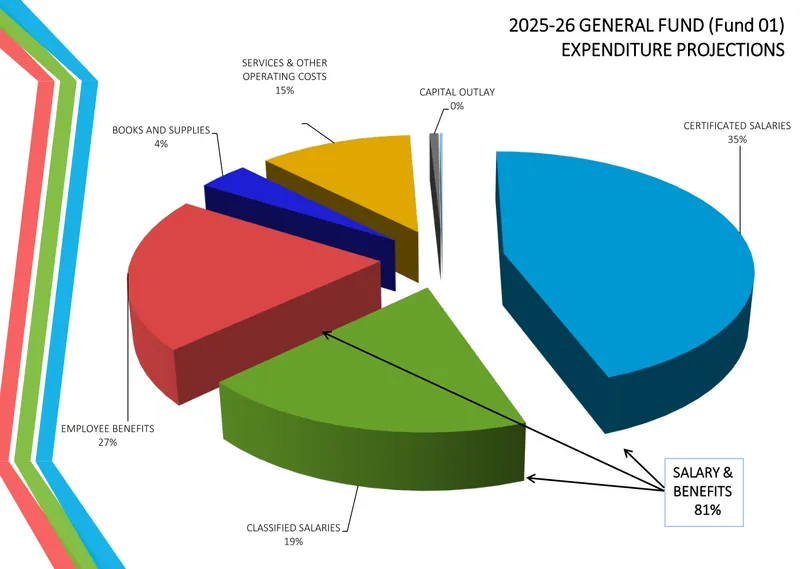
Personnel costs dominate the budget, with salaries and benefits accounting for 81% of total expenditures. Certificated salaries represent $80.6 million, classified salaries $44.2 million, and employee benefits $60.9 million.
The district faces mounting financial pressures, particularly in special education, which requires a $35.6 million local contribution from the general fund—an increase of $1.1 million from the previous year. Gerardo Cruz, Assistant Superintendent of Business & Fiscal Services noted concerns about the financial impact of expanding transitional kindergarten programs.
"I know we're harping on it and you're thinking why are they harping on child development because it really is a push and pull when we look at those TK numbers and they're just skyrocketing," Cruz said. "It just makes me nervous because I'm tasked on your behalf to look at the financial impact of that."
Despite the challenges, the district maintains healthy reserves. The budget includes a 20.27% reserve ratio, well above the state-required 3% minimum and higher than the 15.33% reserve in the preliminary budget. The state average for unified districts is 24.62%.
The district projects deficit spending in the coming years, with reserves set aside for projected shortfalls of $3.9 million in 2026-27 and $3.5 million in 2027-28. To manage cash flow, the district may need to borrow up to $5 million between funds during October through December 2025.
Cruz praised the collaborative budget development process, giving special recognition to Andrew Laxson for his budget work.
The budget includes several transfers between funds to maintain solvency, including $375,000 to the Child Development Fund, $750,000 to the Cafeteria Fund, and $2.5 million to Deferred Maintenance.
The budget reflects negotiated salary increases for all employee groups, with 1.5% increases for both certificated and classified staff, plus additional percentage increases for various bargaining units effective at different dates throughout the fiscal year.
Looking ahead, the district will continue monitoring property tax revenues and may need to prepare budget revisions within 45 days if the state budget adoption requires adjustments. The district's next major budget milestone will be the First Interim report in December 2025.