As a rare early-season heat wave sends temperatures soaring across Southern California, new research from UCLA reveals a troubling reality: extreme heat does not threaten all communities equally.
Heat maps
A large-scale national study of coyote behavior has found that urban coyotes are more willing to take risks around novel stimuli than their rural counterparts — a finding that arrives as
A team of UCLA researchers has screened nearly 700 soil samples for hundreds of Los Angeles County residents concerned about contamination in their yards and gardens, part of a growing
Twelve high school students who first came together while helping rebuild their community after the devastating Palisades Fire have set their sights on a new mission: breaking a world record
UCLA researchers and community partners will host a free soil testing and clean soil demonstration Saturday at MudTown Farms in Watts, offering residents strategies to address contamination from legacy industrial
Los Angeles Councilwoman Tracy Park took to Instagram this week to update residents on a strange sight just north of Santa Monica where concrete slabs had fallen into the storm
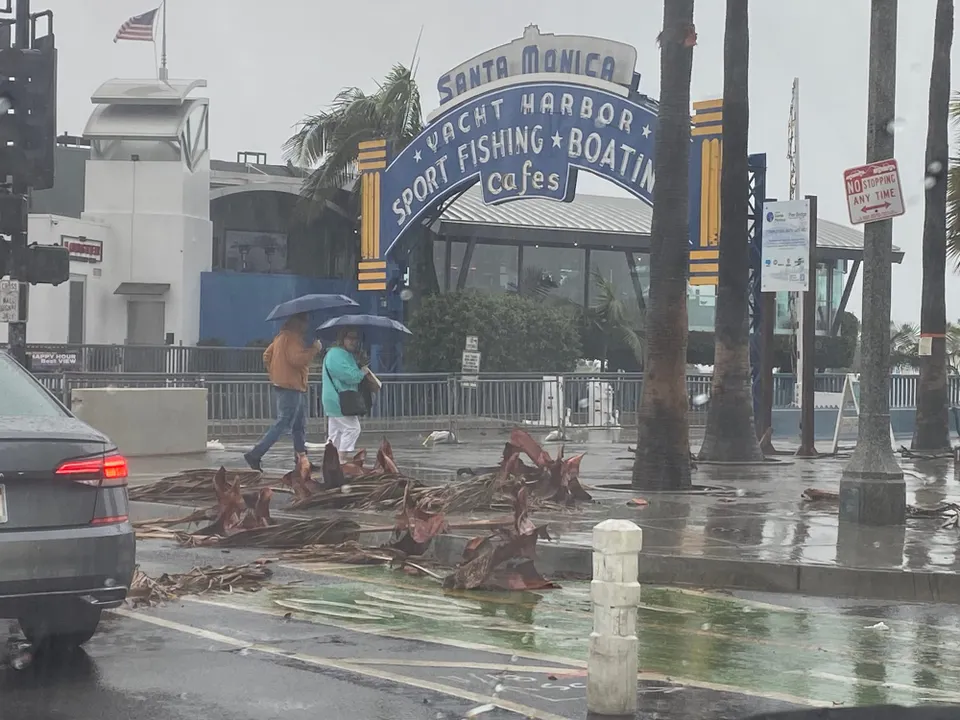
A gale warning and severe thunderstorm threats put the Los Angeles-area coastline on alert Monday as a powerful winter storm system began lashing California with heavy rain, high winds and
By Rachel Becker, CalMatters
This story was originally published by CalMatters. Sign up for their newsletters.
Just weeks after a mountain lion wandered into San Francisco, state officials voted to
The National Park Service is studying whether parts of the Los Angeles coastline—potentially including Santa Monica—should join the national park system. A virtual public meeting on February 11 will gather community input on the proposal.
Twenty years after officials recommended phasing out methyl bromide, the toxic pesticide remains widespread in California. New UCLA research shows some communities face exposure nearly double state safety recommendations, with port areas like Long Beach at highest risk.
Several Santa Monica businesses earned recognition for their environmental leadership at the Green Business Certification Awards held January 16th at the Santa Monica Family YMCA, celebrating their commitment to sustainable practices and rigorous environmental standards.
One year after the Palisades and Eaton fires, Heal the Bay is working to establish the first-ever ocean safety protocol for wildfire impacts on Santa Monica beaches, as the organization warns contaminants may still be present in local waters.