

Maintaining a pay phone became too expensive for Tony Moogan, owner of the Cock ‘N’ Bull pub on Lincoln Boulevard in Santa Monica. Patrons used to be able to step into an old-fashioned, red English telephone booth, but Moogan had to suspend service two or three years ago because not many people were using it. Now the booth is used solely for decoration.
“It seems everyone has a cell phone these days,” Moogan said.“They’re taking over the world.”
Despite the lack of interest by the general public, there are still those who can’t get enough of phone booths. There are companies that specialize in repairing and designing phone booths for homes, offices and hotel lobbies, as well as Web sites dedicated to phone booth enthusiasts, complete with pictures and testimonials.
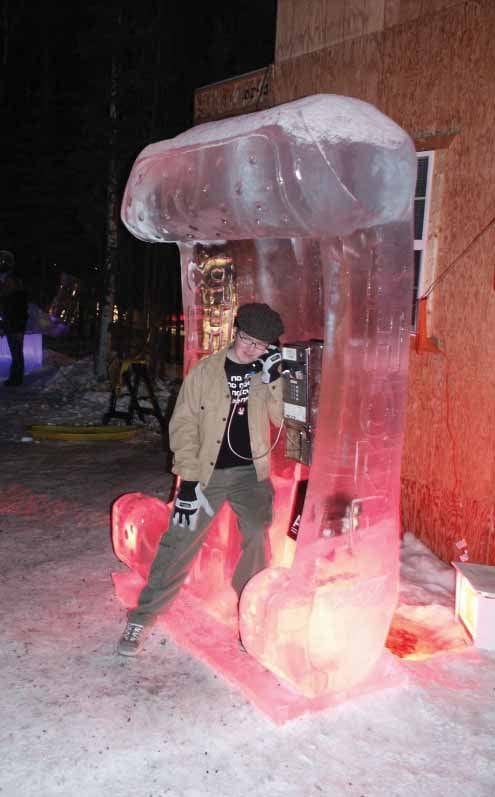
Mark Thomas, a New Yorker, runs Payphone-Project.com. On his site he has photos of pay phones and booths from all over the world, including one booth made entirely of ice in Fairbanks, Alaska, as part of the World Ice Art Championships. Thomas believes strongly in maintaining the pay phone network in the event of an emergency, such as a terrorist attack or a major flood or ice storm, to guard against a blackout.
“They need to be maintained, not as profit centers, but as public resources,” Thomas said via e-mail. “As the quantity of these public pay phones decreases, their value increases, especially in times of emergency. Knowing where you could make a call in an emergency is valuable, but more valuable would be knowing where you could not make a call.”
It is Thomas’ goal to create a map of communication dead zones, where cell phones do not work and all public telephones have been removed.
That sounds like a good idea to Carrie Barr, who occasionally forgets to pack her cell phone in her purse before she leaves for work in the morning. It doesn’t happen often, but when it does, Barr feels “naked” without it and is glad that there are pay phones near her office, just in case of an emergency.
“It’s kind of like, you never notice (pay phones) when you’re out,” Barr said, “but when you need them, you’re glad they’re there.”
Originally published in the Santa Monica Daily Press print edition on April 24, 2007. Read the original PDF.