

FROM BLOOD PAGE 14 Rich scenery punctuates ‘There Will Be Blood’
By REVIEW BY KEN TARR NEWRELEASES
The comparisons between “There Will Be Blood” and “Citizen Kane” are not ludicrous. No — this film is no where near as entertaining or original as “Kane.” However, in terms of style, pacing, sound effects and shot design, this film is so wholly original and primitive that this release is all the more amazing for being made in 2007.
That in the 66 years since the release of “Citizen Kane” very few filmmaking techniques and attempts at visual poetry have been attempted does not show well for the commercialization of the medium as a whole. This is a classic, not necessarily for its story, which is relatively basic. From its opening sequence of oil drilling, it is clear that this film is meant to be enjoyed by the eyes.
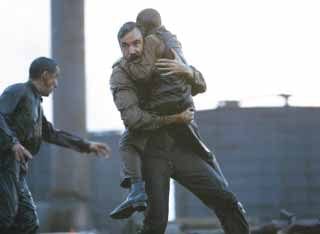
Daniel Plainview (Daniel Day-Lewis) gains success and calls himself an oil man and “as such deals with matters plainly.” It is from his character of contradictions that this film springs to life. Through 30 years we follow this character and never fully understand his quirks. I will permit the viewer to appreciate the performance and the details of the plot, but suffice it to say, the film explores the nature of man and its mystery. Hours into “Blood,” one still does not have a pulse on Plainview and what the story wants from him.
Paul Dano (“Little Miss Sunshine”) adds further archetypal opera into the plot as a compelling preacher in a small, barren oil town. The film could very easily be his story, or his family’s story. Dano is slight of build and slight of voice, but still theatrically enthralls the audience like few characters have. Day-Lewis and he work very well together and director Paul Thomas Anderson is completely comfortable letting entirely theatrical scenes unfold and mystify viewers.
This film will be a thematic and moralistic mystery to most, much in the way that “No Country For Old Men” has become. Whereas “Old Men” has already caught on and caught people’s hearts and minds for its killer-on-the-run plot and dark postulates, “Blood” should struggle to completely ensnare every filmgoer’s imagination. It may leave many empty or wondering why it turns out the way it does. But life turns and weather turns on a dime, and in the time and world and mentality of “Blood,” the film works as a filmmaking odyssey into California in the times of the oil boom. If it succeeds at the box office, so be it. Its long-standing critical praise and guaranteed Oscar recognition for Day-Lewis should be enough.
Anderson as director of “Hard Eight,” “Boogie Nights” and “Punch Drunk Love” has shown no fear while holding his camera on a shot or a subject. Now, in the past and in the great wide open outdoors, he has taken his patience to high levels of cinematic achievement. John Ford shot the west beautifully. So does Paul Thomas Anderson. The attention to detail in this movie is exceptional. It is frequently a very boring piece of work, and that is where “Citizen Kane” and umpteen other movies have it beat. With its title and strength of character, the filmmaker intentionally plays with our expectations of the film and where the plot dares to go.
Based on the lives of many a oil baron (mostly Edward Doheny), “Blood” is far from perfect but neither was “No Country.” It seems clear that we have a two horse race for best picture. In terms of sheer weirdness, originality and technique, my favorite of the two is “Blood.” There will be carnage on Oscar night as “No Country for Old Men” and “Blood” compete for the big awards. Fans of old-time epics should be prepared for a genre-busting, bravely-acted, oil-covered piece of work that is a technical achievement and a work of more literary merit than most contemporary fiction.
Originally published in the Santa Monica Daily Press print edition on January 5, 2008. Read the original PDF.