

Now they’re looking for distribution
When two Santa Monicans decided to make their own independent film, they knew exactly where to go for talent — their own backyard.
“Southern Hospitality,” released earlier this year, took more than three to years to complete. Its creators —Madison Miller and Bill Slate — formed Resilient Films in 2000 and began their journey of making one of the first digitally shot independent films.
They wanted talented actors and knowledgeable people behind the camera. But the challenge — as most independent filmmakers know — was money.
Miller and Slate also wanted to keep artistic control of the film so they used their own cash instead of finding investors, who usually want to give their input.
Nearly 50 people — almost all of them from Santa Monica — volunteered their time to be part of the project. Amateur and established actors, cameramen, sound technicians, special effects specialists and a host of others spent hundreds of hours shooting “Southern Hospitality” — at no cost.
“These people haven’t been noticed yet,” Miller said. “They were given the opportunity to be part of something and they all saw it as a different opportunity in their own way.”
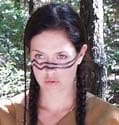
5BD,“Southern Hospitality” is an action-adventure feature-length film about friends searching for the remains of a lost Indian tribe on The Trail of Tears in Oklahoma. It was shot on location in Oklahoma, as well as in Santa Monica and Topanga.
The making of the film was truly a grassroots effort — actors got behind the camera, operated the booms and helped in the overall direction of the project.
“We let them do what they wanted. It was an opportunity for them to learn and gain experience in filmmaking,” Slate said. “They should know what is happening behind the camera.”
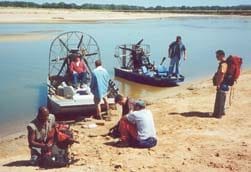
The team drove to Oklahoma to shoot in the hot summer heat for three weeks, and worked 20-hour days. Most of them didn’t know each other, a dynamic Slate and Miller were worried about.
“We stuck them in the car and they drove out there together,” Slate said. “But they all worked together surprisingly well.”
The location — the Trail of Tears — was in the rugged terrain of Oklahoma’s Arkansas mountains about three hours outside of Oklahoma City.
“Most of these guys are not campers, there weren’t any showers and we had to give them necessities,” Slate said. “It was rough conditions so we had to feed them well, push the vitamins and have plenty of beer.”
And there were plenty of challenges, too. Costs rose quickly because transporting equipment like airboats, airplanes and vehicles into the Oklahoma wilderness became expensive. And of course, the project took longer than expected.
All told, Miller and Slate spent $30,000 of their own money on the project.
“I had to lower my ideals about certain situations,” Slate said. “But if you want it to be good, you have to be patient.”
When the shooting was done in Oklahoma, the crew shot several scenes in Santa Monica and in the woods of Topanga Canyon.
The film was shot with a Canon XL1 and done mostly by cameraman Seth Kotok, a Santa Monica resident.
“It was cheaper and no one was doing it,” Slate said. “(Kotok) really spent a lot of time using it and he got his opportunity to shoot his first feature as a director of photography.”
Since Southern Hospitality was shot, many independent filmmakers have used the mini DV.
“The mini DV enables young and upcoming filmmakers to make films in a variety of genres that they would be unable to do in a more expensive medium like film,” Kotok said. “We were able go to Oklahoma and shoot on location, giving us high production value without the expense of bringing large amounts of equipment from Hollywood with us.”
Although an expensive endeavor, Miller and Slate learned a lot about filmmaking through mistakes. But it appears it has paid off — the film has won three awards since it was completed in February. Earlier this year, the film took the Native American Vision Award, which recognizes the contributions of Native American filmmakers both in front and behind the camera. Miller and Slate also won “Long Format Drama” at the Park City DV Awards, for general storytelling and the “Best Narrative Feature” at the Bare Bones International Film Festival.
They now plan to distribute the film to as many people as possible and get involved in some major independent film festivals like the American Film Institute, held locally.
“We are trying to do truly independent filmmaking — good films at a low cost,” Miller said. “And establish ourselves as serious filmmakers.”
“Southern Hospitality” is Slate’s directorial debut. In 2001, he directed another feature entitled, “Shooting Stars,” a dark comedy. Slate, who began his producing career in 1998 and produced five features, is currently in development on another project. He also has created and wrote a few dramatic features and started his career as an actor.
Miller — who produced “Southern Hospitality” and played, “Ontowana” the Indian spirit — began her career in the entertainment industry in 1997 with a small role in “Scream.” She has acted in numerous independent films before forming Resilient Films in 2000. She is currently developing a screenplay she wrote, entitled, “No One’s Talking.”
The pair, who live in Santa Monica, hope “Southern Hospitality” will serve as the launch pad for many of the crew members’ careers, including their own.
“I think you’ll be surprised when people see the passion that was put into it by everyone,” Miller said.

Originally published in the Santa Monica Daily Press print edition on October 3, 2003. Read the original PDF.