

Daughter of Civil Rights invokes spirit of the ’60s
SUNSET PARK With tears welling in her eyes, Donzaleigh Abernathy explained in a quivering voice why she could not delve too deep into the considerable role her father played in the civil rights movement.
Though almost 17 years have passed since her father, Civil Rights leader Ralph Abernathy, died of blood clots, it still hurt to talk about the most important man in her life — the man, who along with Martin Luther King Jr. and countless of other people who advocated for the equality of all — enabled this African American woman to find the love of her life, a white man.
It was at the end of her presentation on the Civil Rights Movement on Tuesday night that Abernathy — a former Santa Monica resident who had managed to hold in her tears throughout the evening — explained the reason why the majority of her presentation had focused on King, or who she fondly referred to as her “Uncle Martin.”
“I don’t talk about (my father) too much,” Abernathy said. “It’s easier to talk about Uncle Martin.”
Some wounds heal slow, if they heal at all. For Black History Month, the Grant Elementary School African American Parent Student Group invited Abernathy to speak about her book, “Partners to History: Martin Luther King Jr., Ralph David Abernathy and the Civil Rights Movement.”
Group President Wesley Terry said the community is a rich resource for civil rights advocates. Abernathy said that one of King’s children resides in Malibu. Abernathy now lives in Los Angeles.
“We all have to look within the community,” Terry said. “We didn’t even know she was here.”
Abernathy has deep ties in the community, being one of the founders of the New Roads School.
The African American Parent Student Group invited Abernathy to speak at the suggestion of Principal Alan Friedenberg, who said the civil rights daughter impressed students when she spoke at the school several weeks earlier.
“The kids knew who MLK was,” Friedenberg said. “She painted a picture and put in context that what they’re dealing with didn’t happen five minutes ago.”
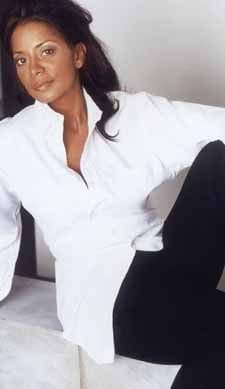
Having grown up during a racially tumultuous time in the south, Donzaleigh Abernathy — Ralph Abernathy’s youngest daughter — provided the audience with a vision of the civil rights movement through the eyes of a young girl. She offered up anecdotes of the partnership and friendship between King and her father, drawing chuckles from the audiences. Most importantly, she recalled stories of the civil rights movement unknown to most.
“He (Ralph Abernathy) was just beyond phenomenal and he had so much to give and was so nonviolent and so loving and nurturing, I thought the least I had to do is give something back to them, which is what the book is about,” Abernathy said.
An ordained minister, Ralph Abernathy was considered to be King’s No. 2 in the Southern Christian Leadership Conference. He was King’s confidante and could be found wherever the face of the civil rights movement was seen. Following King’s death, Abernathy became president of the SCLC.
The two civil rights leaders met in Montgomery, Ala., in 1955 when Abernathy was at a university in Atlanta and King was an undergraduate student at Morehouse College. The two joined forces after an incident in which a woman who had broken a date with Abernathy was caught with King.
“They got rid of the woman and that is how the relationship began,” Abernathy said.
The younger Abernathy, an actress who has appeared in about 34 different television shows, including “House” and “Commander in Chief,” spoke of the various incidents in the civil rights movement that she had either witnessed first-hand or heard accounts of from her father.
She talked about how African Americans were mistreated on the bus and how they finally got fed up and boycotted, crippling the city by “doing something that was right.” During the segment about bus boycotts, a photo was projected behind Abernathy. It was a photo of King, Rosa Parks, Abernathy and Pete Seeger, the folk singer credited with writing “We Shall Overcome.”
Blacks actually had to exit the bus after paying and re-enter from the side, hoping that the bus driver wouldn’t pull away. Even if the entire front section of the bus, which was dedicated to white customers, was empty, the black passengers would be forced to stand in the back like sardines, Abernathy reminisced.
Next came life-threatening experiences that the Abernathy family endured during the civil rights movement. Abernathy’s mother was watching “The Jack Paar Show” when she decided to get up and see how her children were doing. Fifteen minutes later, the living room where Abernathy’s mother had been sitting exploded.
“Mom said she just panicked,”Abernathy said.“She didn’t know what to do.”
A police officer was called to the scene when the mother heard another explosion. The officer looked at his watch and said the explosion came from the First Baptist Church where Ralph Abernathy was the minister.
The slideshow documented events including the March on Washington in August of 1963; the Abernathy house after the explosion; and a meeting of civil rights leaders, including King’s brother, who was later found drowned in a pool. Abernathy would speak fondly of those depicted in the pictures, talking about her Aunt Coretta Scott King, Uncle Sammy Davis Jr. and of course, Uncle Martin.
But then with the happier moments, came the saddest.
One of the final photos was of King’s funeral procession that drew more than 50,000 people. Abernathy told a story not commonly covered in the history books of King’s final moments. King was sprawled over a balcony in Memphis after he was shot. His eyes were wobbly as Civil Rights leader Andrew Young could be heard crying in
Originally published in the Santa Monica Daily Press print edition on February 22, 2007. Read the original PDF.