

Popular lumber yard, hardware store boards up after 82 years
PICO NEIGHBORHOOD — In the end, it took just two weeks to close out a Santa Monica business that was 82 years in the making.
Customers turned out in droves to buy the last two-by-fours and plywood sheets, to pick up tools at prices slashed by 25 percent, 50 percent, and finally, 75 percent. Then, Fisher Lumber & Hardware Co. closed its doors for good.
“We gave ourselves two months to do this, and we did it in two weeks,” said Eric Jorgens-borg, 55, president of Fisher and son-in-law to former owner Bob Sievers. “It hasn’t been fun. A lot of us are still in denial.
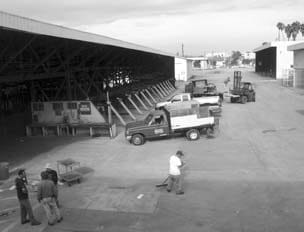
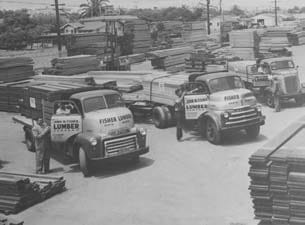
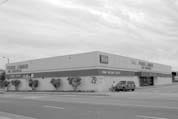
Opened in 1923 by John W. Fisher and Dean Swartz, Santa Monica’s last remaining lumber yard officially closed shop this past Friday. The store will be razed. The three-acre property, bought by City Hall last October for $18.5 million, likely will be turned into open space adjoining Memorial Park.
So ends a business that most recently employed 50 full-time workers and was considered a staple to long-time residents and businesses. So also ends the residency of “Hyster,” a stray cat adopted by Fisher workers 15 years ago.
“There used to be 13 lumber yards around here,” said Jorgens-borg, recalling one yard across the street, another at the current Sears property downtown and several others in the area. “We ended up being the last one.”
John W. Fisher never owned the property his hardware store was built on, renting it from the railroads. The business was sold to Tom Fox, namesake of the development north of San Vicente Boulevard, and later to Bob Sievers, who in 1980 sold it to Weyerhaeuser Co., a major lumber company, Jorgensborg said. Weyerhaeuser bought the land from the railroads in 1994 and two-and-a-half years ago sold it off to developer K.C. Riverstone Ltd. Then, City Hall took over.
“This is really a wonderful day for the people of Santa Monica,”
City Councilman Ken Genser said at a council meeting last October, after the city had purchased the property. “It’s not often … that we can buy large pieces of land, and that’s because they don’t make them anymore, and there aren’t a lot of them around.
“And there aren’t going to be any more, probably.”
“We’ve waited on the third generation of contractors, born and raised here in Santa Monica.” — ERIC JORGENSBORG President, Fisher Lumber
Miriam Mack, who manages the city’s real estate assets, later estimated it could cost as much as the acquisition to convert the land into a park.
Lack of money was never a concern for the bustling lumberyard, which Jorgensborg said netted between $12 million and $13 million per year.
“Weyerhaeuser sold us because they wanted to stick with their core business,” added Jorgensborg, pointing to the company’s emphasis on growing trees and manufacturing lumber. “We weren’t a core business.”
The task of cleaning up after 82 years of hard work was in full swing Tuesday, as garbage trucks hauled off dumpster loads of scraps, and more than a dozen workers disassembled shelving and cleaned up inside.
Jorgensborg said they were given until the end of March to get all their things out, but hoped to be done much sooner. A Malibu lumber yard owned by Fisher that is about half the size of the Santa Monica outlet also will close.
Fisher workers received 60 days’ of continuous pay and eight months’ of health benefits. Most have already found jobs. Jorgensborg, who started working at the yard 30 years ago while studying for a masters in education, said about 75 percent have moved on, many to lumber yards in Mar Vista, West Los Angeles, Culver City, Crenshaw, the Inland Empire and elsewhere.
Not everyone is starting over, though. Mike Price, 62, a Sunset Park resident who worked for nearly 18 years at Fisher, most recently as yard foreman, said he planned to retire. In his free time, Price said he plans to “travel, make furniture and ‘honey do.’”
“There’ll be a lot of ‘honey dos,’” kidded Price, who with his wife also will care for Hyster, the gray tabby adopted by Fisher employees.
The workers at the old lumber yard seemed disappointed Tuesday, but after so many months of knowing it was coming, resigned to the end. They sifted lethargically through loose scraps and recalled old times.
When asked what message he would deliver to the people of Santa Monica who faithfully frequented Fisher for so long, Price said it had been a joy to serve greater West Los Angeles and to get to know so many customers personally.
“Sometimes progress isn’t progress,” he added. “It’s a shame that service-oriented businesses are quickly disappearing.”
Originally published in the Santa Monica Daily Press print edition on February 16, 2005. Read the original PDF.