

Students sketch out the Big Blue Bus of tomorrow
By ALICE OLLSTEIN Special to the Daily Press
DOWNTOWN The Big Blue Bus, tired of the same old “square box on wheels” design, has launched the “Bus of the Future” campaign to solicit new ideas for the buses of tomorrow.
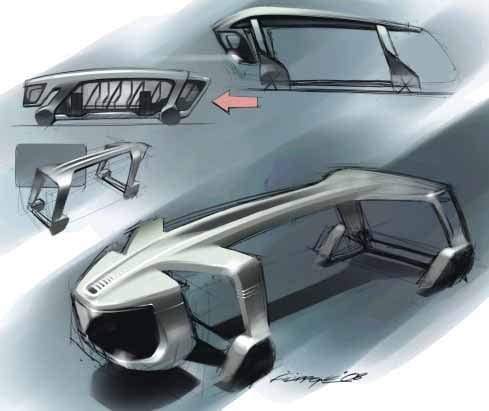
The company has partnered with students and professors from Art Center College of Design in Pasadena to brainstorm innovative, environmentally friendly designs to unveil at the AltCar Expo in Santa Monica on Sept. 26. The top three designs will be judged by a panel of transportation and design experts, and the public will be able to peruse 3-D models, animation of a ride experience from a passenger’s point of view and a video chronicling the lifespan of the project.
The project was announced at the Big Blue Bus’ 80th anniversary celebration in April.
“As we were examining our history, we thought about how important it is to look ahead for the future,” said Stephanie Negriff, director of Transit Services for the BBB.
Now, is the perfect time to reevaluate what and how passengers ride, said BBB Public Information Coordinator Dan Dawson.
“Every year car companies come out with sexy new models with new amenities, but buses still look like they did 50 years ago,” Dawson said. “Gas prices are making public transit more and more important, so we want the nature of bus-riding itself to move into the future.”
He explained the impetus for the redesign.
“We were trying to buy new buses for our Mini Blue fleet, something more unusual than a square box on wheels, and we could-n’t find anything. We thought, maybe it’s time we shake up the industry by creating something innovative to take transit into the future.”
The decision to use design students over industry professionals was an easy one, Dawson said.
“We felt that young people would be more creative than someone staid and tried and true,” he said.“We also knew they’d have a more green perspective.”
The design team from Art Center College of Design includes Geoff Wardle, director of Advanced Mobility Research and associate of Graduate Industrial Design, and design students Mike Peterson (eighth term, Environmental Design), Gabriel Wartofsky (sixth term, Transportation Design) and Giuseppe Filippone (sixth term, Transportation Design).
The Art Center is one of only two schools in the nation with a mobility department. It was also the first design school to receive the United Nations’ Non-Governmental Organization (NGO) status, and remains committed to environmentally conscious design.
Wardle said that the BBB has been “a delight to work with” and that the project’s vision should be “a reflection of everything that’s great about Santa Monica.”
He and his students spent the first phase of the project riding the various city bus lines, taking note of the different roles played by the different routes and times of day and interacting with passengers. The design team will also be in contact through the open Busofthefuture.com blog, where residents can post their concerns and suggestions and receive feedback from the students themselves. This is crucial to the design process, Wardle said.
“Sometimes we designers make assumptions about what we think is right, and we’re surprised when members of the public don’t agree with us,” he said. “The best designs are made collaboratively, and the blog allows for an easy-going dialogue.”
Dawson, who is working hard to publicize the blog through online advertising, also believes in the site’s importance.
“We don’t want the new bus to be created in a vacuum,” he said. “We want feedback from both bus riders and people who’ve never ridden a bus.”
Negriff believes that this dialogue is the most vital aspect of “Bus of the Future.”
“The process is what’s important,” she said. “We’re understanding what the needs of the community are for public transit, and the response has been overwhelming.”
Posted ideas have included on-board entertainment, plug-ins for iPods and dividers between the seats. And every aspect from the design team has the health of the planet in mind.
“Absolutely everything we do has to be accountable to ecological responsibility,” Wardle said.“We have to come up with solutions that look several decades in the future. Maybe by then there will be new materials available that are fully biodegradable or natural and renewable, so they don’t get fed back into the toxic waste stream.”
As evidenced by the futuristic designs going onto the blog, this project could revolutionize the way Santa Monicans ride.
“We’re looking forward to delivering the final project,” Wardle said.
Originally published in the Santa Monica Daily Press print edition on July 5, 2008. Read the original PDF.