

Council eyes green-building standards for homeowners
CITYWIDE Faded Levi’s aren’t just fashionable, they’re sustainable.
Long the hottest thing in hipster fashion, denim has become the hottest thing in home insulation, and could become increasingly popular in Santa Monica now that the City Council is mulling whether to broaden green-building requirements to single-family homes.
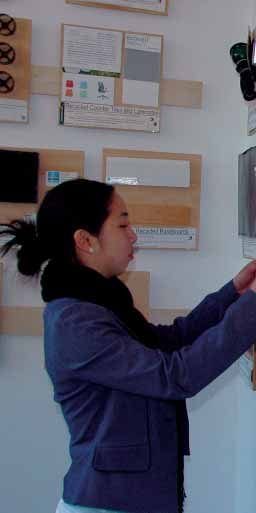
As part of the expansion, those looking to build a new house or do a significant remodel would be required to be 10 percent more efficient than current state standards. To comply, homeowners and developers could choose from a wide range of options, including the installation of energy-saving appliances, waterless urinals and advanced sprinkler systems that conserve water and prevent urban runoff.
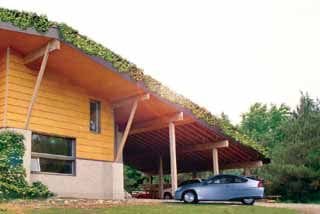
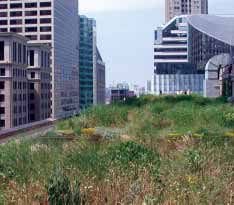
To help, the council is considering offering incentives to those who choose to install solar-thermal and solar-electric systems, solar chimneys and green roofs — which are completely or partially covered with vegetation and soil planted atop a waterproof covering.
The expansion is needed, city staff said, in order to achieve goals set forth in the sustainable city plan, which has benchmarks for more recycling, the use of environmentally-friendly building materials and increased public transit.
SEE BUILDING GREEN PAGE 12 “This is another exciting step we are taking to advance the environmental agenda in Santa Monica,” said Mayor Richard Bloom, just before the council voted unanimously Tuesday night in favor of the expansion. “We push the ball forward, perhaps a little more than we think we should or can sometimes … that is the kind of action that has made us a worldwide leader on environmental issues.”
In addition to the expansion, the council also asked staff to look into requiring all buildings over 10,000 square feet to be LEED-certified by 2010. LEED stands for Leadership in Energy and Environmental Design. Buildings that earn LEED certification are some of the most high performing. Santa Monica has the highest concentration of LEED buildings, including the new Main Library, than any other city it’s size.
David Hertz, an architect and member of the city’s task force on the environment, urged the council to consider changes to the green building program and other ordinances dealing with demolition and construction waste given the short length of time to meet goals of the sustainable city plan.
“Modifying standards will certainly help in achieving those goals,” Hertz said.
Those who are thinking of adding on another story or perhaps building a few con-dos may look at the proposed expansion and think higher costs, and they would be correct. However, industry experts said prices for recycled building materials and appliances are dropping annually, so much so that for a typical remodel using green materials, the cost is only 2 percent or so more than if one used traditional building materials, and that’s not including money saved by lower electric and water bills.
Susan Munves, City Hall’s energy and green buildings program manager, said cost was a factor when considering the expansion, however, after researching the market, city staff found little to no financial hardship would be created by the mandates.
“There are many choices in the market-place with products that are competitively priced and easily available at Home Depot and other big stores,” Munves said.“We were sure that cost would be an issue, but when we looked around, the products are just so off the shelf that there is nothing onerous about this whatsoever.”
ARE WE THERE YET?
Not everyone is brandishing a green grin. There are those who are concerned that housing prices may rise, as will the cost of providing affordable housing.
So what if a building has a green roof if those who need it most can’t afford it?
“We see more and more jurisdictions who want to build green, and what we are encouraging is an incentive-based program instead of a mandate,” said Terra Donlon, vice president of external affairs for the Building Industry Association, greater Los Angeles and Ventura chapter.
“I think five or 10 years down the line, building green will be the norm, but how do we get there is the question,” Donlon said. “An incentive-based program would be best so we can see what is working, what the market can bare and what people want and go from there.
“We don’t want to create an affordability issue.”
The council is expected to debate the issue extensively in the coming weeks, and is sure to discuss whether or not to exempt affordable housing projects, Munves said.
Santa Monica Community Corp., the largest developer of affordable housing in the city, has been incorporating energy-saving technology and recycled materials in projects whenever possible and has only noticed a slight increase in cost. Much of the increase is paid for in savings from lower utility bills.
“Natural linoleum is more expensive than vinyl, but it lasts longer,” said Joan Ling, executive director of Community Corp. “Typically, it all evens out in the end.”
Originally published in the Santa Monica Daily Press print edition on March 22, 2007. Read the original PDF.