

CAMPAIGN 2004
(Editor’s note: This is the second article in a multi-part series this week on the Chamber of Commerce’s political action committee interviews with City Council candidates. Monday’s issue covered homelessness).
CHAMBER OF COMMERCE — How much and what kind of development will occur in Santa Monica will largely be decided by the City Council over the next four years.
And the visions that City Council candidates vying for four open seats have for how Santa Monica should be developed matters to many people, including the Chamber of Commerce’s political action committee members. The committee interviewed 11 candidates last week, and most of them were questioned on where they stand on future development, particularly downtown.
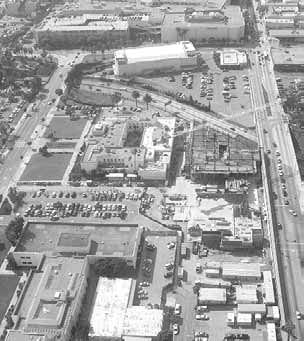
Although Santa Monica is built out, there are plenty of opportunities for redevelopment, and many properties are expected to be overhauled in the next several years. Just in the downtown district alone, the movie theaters on the Promenade will likely be revamped, as well as the Santa Monica Place Mall and the Civic Center area. Plans also are in the works to redevelop the Fairmont Miramar Hotel on Wilshire Boulevard and Ocean Avenue. Conceptual plans could include towers nearly as high as the 100 Wilshire building, a landmark of Santa Monica’s skyline.
Conceptual plans also are drawn up for Santa Monica Place Mall and the Civic Center, which combined will cost hundreds of millions of dollars. Officials from Macerich Co., which owns the mall, have been meeting with current City Council members, as well as candidates, to gauge their reactions on their redevelopment plans. The plans include an apartment building, retail space and opening the mall so it looks like the Third Street Promenade; the idea is that the mall would be open-aired to Colorado Avenue.
City Council candidate Bobby Shriver said he saw the plans and was stunned.
“I don’t see this area with a lot of skyscrapers, but maybe that’s what Santa Monica wants,” he told committee members. He added that he recently stayed in an apartment on Ocean Avenue and joked about how much he enjoyed the views of the Pacific Ocean.
“There will be a lot of pressure to build apartments like that,” he said, adding policy makers must be careful because developers see the potential for success in Santa Monica and it’s up to the public to decide what their community should look like.
The new mall is directly related to City Hall’s ambitious plans to redevelop the Civic Center area, which will cost upwards of $120 million. Officials plan to completely rebuild the area around City Hall on Main Street. It includes housing and 85,000 square feet of office space. The Civic Center is visualized as a town square, with botanical and sculpture gardens, open space and bicycle paths, which would extend onto Main Street.
Mayor Richard Bloom, who is seeking reelection, has been involved in discussions for the past four years relating to much of the development plans facing downtown Santa Monica. It’s an issue he feels is of great importance to the city’s future.
“There is a monumental amount of work to be done and (how development is approached) could create problems or successes,” he said, adding he’s an advocate for redeveloping the downtown area.
Whatever is developed in the next 20 years will have to be in line with the city’s general plan, which is about to be updated through an intense public and political process.
The general plan, which sets the policies that govern development and traffic in Santa Monica, is currently being overhauled at a price tag of $1.6 million. City Hall has hired San Francisco-based consultant Dyett & Bhatia, which is scheduled to begin work on the project this month. The process will take at least two years.
Development in Santa Monica for the past two decades has followed the general plan, which was approved by City Hall’s administration 20 years ago. Many people would agree that the City Council at that time is partly responsible for how the city looks today.
And the four elected City Council members who will take office in January, as well as the other three up for reelection in two years, will be the officials who help shape the next 20 years of development in Santa Monica.
The majority of candidates interviewed by chamber officials last week were asked about what the general plan should include, as well as their vision for the downtown area.
Some candidates support tall buildings downtown, and others like the idea of more development along the beach.
City Councilman Ken Genser, who is running for reelection, said traffic needs to be eased with mass transit but added that downtown will probably always be congested. He said that business districts that have a lot of traffic indicate they are successful.
“I think we can accept more growth downtown, and it will direct traffic out of the residential areas,” he said. “I think it’s appropriate to have a dense downtown. It’s what makes downtowns successful.”
Candidate Matt Dinolfo said current height restrictions on buildings should be lifted and the public review process on development applications should be relaxed. He supports mixed-use development with apartments, retail and commercial in the same buildings. However, more incentives need to be given to developers to provide affordable housing, Dinolfo said.
“You can’t have housing without development,” he said. “We need incentives to let them make a profit.”
Candidate Bill Bauer said the city’s general plan “desperately needs help” and the city’s traffic plan needs “serious help.”
“The whole system needs to be revamped,” he told committee members, adding the codes governing development standards and traffic flow are too complicated. “It’s contradiction after contradiction.”
David Cole, who is running as a slate with Bauer and Kathryn Morea, said Santa Monica is growing without much uniformity.
“We are growing at a hodge-podge state, ticky tack, ticky tack,” he said. “You have to have a cohesive plan, and I don’t think we are a community that has any vision at all.”
Candidate Maria Loya — who if elected would be the first City Council member from the Pico neighborhood located on Santa Monica’s eastside — said she’d like to see more economic development in that area.
“The Pico neighborhood has so much potential,” she said, adding she’d like to see Pico Boulevard look and feel like Main Street.
City Councilman Herb Katz, who is running for reelection and is an architect, said the current zoning and development laws are too dogmatic and need to be more flexible.
“If it’s not addressed (in the code) then we say you can’t do it,” he said.
Katz supports higher buildings throughout the city, which is nearly built out.
“We are one of the most dense cities in the country,” he said. “You can go higher on commercial with more space on the ground... I think we are overdeveloped because of how we manage it.”
He also said he thinks a simplified shuttle system throughout town would ease traffic, and more small parking lots throughout the downtown district would address a lack of parking. Katz doesn’t agree with many of the policies that have come out of City Hall regarding traffic calming, which is designed to slow cars down.
“The traffic circle on 26th is stupid, the outcropping of curbs is stupid, and the speed bumps were wrong,” he said. “What we’ve done is clogged up our city purposely, and it has to change.”
Candidate Patricia Hoffman shares Katz’s distaste for the traffic-calming program.
“I don’t like speed bumps and things that stick out into the street,” she said.
She also supports development at the beach.
“Could there be more oceanfront activity?” she asked rhetorically. “I support that kind of effort to keep dynamic change going on so people keep coming back.”
Originally published in the Santa Monica Daily Press print edition on September 14, 2004. Read the original PDF.