

Los Angeles Cultural Heritage Commission declares the 1924 service station a historic landmark; pending $2.1M sale expected to be called off
DOWNTOWN LA — The fate of an 80-year-old service station in Santa Monica Canyon now rests with the Los Angeles City Council.
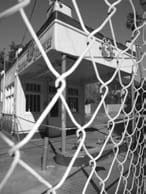
The Los Angeles Cultural Heritage Commission on Wednesday recommended landmark status be conferred on Canyon Service, meaning the small, three-pump specialty station can not be demolished or moved.
Preservationists applauded the decision, which is expected to stop the pending sale of the 17,000-square-foot property to neighbor Christopher Hoffman for $2.1 million. Hoffman reportedly planned to raze the station, along with a 100-year-old bungalow that sits behind it, in order to expand his yard.
Built in 1924, the station represents the second-to-last parcel of land owned by the descendants of Francisco Marquez, who along with Ysidro Reyes was granted the 10-square-mile Rancho Boca de Santa Monica in 1838.
Monica Queen, a Marquez family descendant who has lived on the station property for more than a quarter century, criticized the Wednesday decision, saying interest in the old station came too late, after her family struggled for years to make it profitable. Queen put the station up for sale to settle the estate of her mother, Angelina Marquez Olivera, who died two years ago at the age of 85.
“My dreams of owning my own home are being dashed,” said Queen, adding she and her four siblings were depending on the sale proceeds to pay off loans taken out for station improvements. “Our plan was thwarted, and we were not notified at all of our property being considered a historic monument. Now we can’t pay our bills or our government loan.”
Preservationists, led by the Santa Monica Canyon Civic Association, hope to buy the old station. Former station operator Brian Clark said he would pay full price for the property, an offer he had made before.
“If we’re able to get the property, I envision either a remodeled bungalow in the back that could be leased — maybe used forofficespace,maybeusedforaSantaMonica Canyon museum, a community center, something,” said Clark, who would continue to sell high-octane gas on the front of the property.
Clark had this message for Queen: “We will make you whole. We’re not in this to hurt you in any way... The idea is to make it work for you. To make it work for us.”
Queen was not convinced. She said she had been willing to sell to Clark earlier, but he asked for extra time to gather money and to study whether permits to operate the station in its residential neighborhood would transfer to him. The way the situation has been handled has left her sour and upset, Queen added.
“They didn’t have the money to buy it,” she said. “We’re ready to go.”
Queen pointed to the numerous land gifts her family already has given to the canyon community.
“We gave the street that’s out here. We gave the land for the school. More than one of us have, in this family. We’ve given plenty. You name it, beachfront. We need to be left alone.”
“We’ve given plenty. You name it, beachfront. We need to be left alone.” — MONICA QUEEN Marquez family descendant
While Queen continues in her efforts to sell the property, the matter is expected to be taken up by the Los Angeles City Council either this month or next, said Jay Oren, the city’s historic preservation director, who added the commission has recommended, and the council approved, some 777 sites as “historic cultural monuments.” In his 17 years at City Hall, Oren said the council has disagreed with a commission recommendation only about 10 times.
“It’s very seldom,” he added. “Usually the council takes the word of the commission. The commissioners are the ones who are charged with this.”
Originally published in the Santa Monica Daily Press print edition on January 6, 2005. Read the original PDF.