

Officials mum on missing money
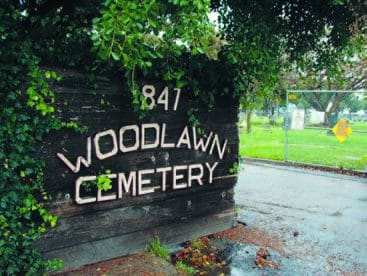
MID-CITY — After nearly a year-long investigation into financial discrepancies at city-owned Woodlawn Cemetery, two employees remain on Santa Monica’s payroll, free and clear of criminal charges.
The cemetery’s top administrator and his assistant were removed from their posts on Dec. 17, 2004. The removal came amid a three-pronged investigation that involved the City Attorney’s Office, City Hall’s human resources division and the Santa Monica Police Department. Each determined through their investigations that there was no criminal wrongdoing.
Still, it remains unclear whether or not any public money was unaccounted for.According to Santa Monica city officials, accusations at Woodlawn Cemetery ranged from poor bookkeeping to improper burial practices.
“They had been looking into it thoroughly for over a period of a year,” said Santa Monica Police Chief James Butts, Jr. “Issues revolved around incompetence and poor record keeping... They are personnel issues.”
Apparent discrepancies in the cemetery ledgers were spotted last year by Steve Stark, City Hall’s finance director, when he attempted to close out an unfinished audit of the cemetery from a prior year.
City officials refused to say whether there was ever any missing money at the cemetery.
Deputy City Attorney Barbara Greenstein said she and Karen Bancroft, City Hall’s human resources director, interviewed the administrator and his assistant, as well as others familiar with the cemetery’s operation. Neither the city attorney’s office, nor SMPD investigators, found any criminal wrongdoing.
Both Bancroft and Greenstein declined to comment on issues related to competence, saying it was a personnel issue which is not a matter of public record.
“If there were a personnel issue — and I’m not saying there was — it is confidential under the law,” Bancroft said.
Judy Rambeau, City Hall spokesperson, said the two administrators continue to be employed by the city of Santa Monica. The cemetery’s superintendent is on administrative leave. Sources said his assistant is back at work but has been transferred to another department. It’s not known where she has been placed within City Hall, or what her job responsibilities are.
The Daily Press is not naming the employees because they have been cleared of wrong-doing. Neither of them would comment, nor would their attorneys.Bought by City Hall in 1897, Woodlawn is a gated, tree-lined cemetery located between Pico Boulevard and Michigan Avenue, from 14th Street to 17th Street. As of June 2000, more than 51,000 Santa Monicans had been interred on the 26.6-acre site, including Abbot Kinney, founder of Venice, and actor Leo Carrillo, son of the first mayor of Santa Monica and namesake of the state beach near the Ventura county line.
Woodlawn is one of the few municipal cemeteries in the state. To be buried there, one either must be a resident of Santa Monica or be related to one.
How much it costs to bury a loved one at Woodlawn varies widely on the type of plot, urn or niche used, and a number of other factors, as spelled out in the cemetery’s 30-page fee schedule, said Steve Stark, city finance director.
With Woodlawn’s top administrator still removed from his post, the cemetery’s offices are being staffed by Gil Borboa and Jean Higbee of the water resources division of City Hall’s environmental and public works management department. Part-time staff is providing clerical support as needed, Rambeau said.
The Santa Monica City Council decided in 2000 to continue operating the cemetery as a community resource, rather than close it to future burials. The cemetery oversees about 100 burials a year, and the same number of daily visitors. Several hundred visitors converge on the cemetery on holidays, with even larger crowds attending Woodlawn’s annual Memorial Day event.
Budget documents show the cemetery has generated between $400,000 and $700,000 annually over the past five years. The cost of running the cemetery, however, has far outweighed revenues, and the cemetery has operated at a net loss of between $320,000 and $670,000 in each of those years, city records show. Expenses for personnel services have steadily increased each year.
To cover the difference between revenues and expenses, City Hall often relies on money from the general fund, as well as interest from its “Perpetual Care Fund,” which in June of 2004 had a balance of $6.8 million, according to Stark. Bereaved families typically pay 15 percent of the cost of each plot into the perpetual care fund.
Stark said $130,000 of the cemetery’s budget was not spent during fiscal year 2004-05, when the administrator in question still held his position. Stark, like other city officials, would not say if other money might still be missing.
Originally published in the Santa Monica Daily Press print edition on July 9, 2005. Read the original PDF.