

is just plain ridiculous
By MARIEL HOWSEPIAN digs black coffee, fairy tales and a man in coveralls. She lives in Santa Monica and
I HAVE STEPPED INTO A TIME WARP. A couple of weeks ago, there was a memo in my box at the LAUSD school where I teach, explaining the district’s policies concerning students’ Halloween costumes. Now, I understand the importance of telling students that they can’t bring fake weapons to school. I also understand why we don’t allow students to bring masks on campus. Students aren’t supposed to wear “nightwear,” a category that encompasses both innocent flannel pajamas and nearly naked negligees. I don’t see the harm in students wearing flannel pajamas to school one day out of the year, but I do think it’s a costume cop-out.
I used to love Halloween, before I became a teacher and realized that none of the costumes I wanted to wear were at all appropriate for public school. You can’t be a sexy-anything. You can’t be truly scary, because the things you find scary are way too dark or abstract. How does one dress up as a tax form? Ghosts and vampires are camp. And so, teachers dress up like pumpkins (the answer is yes to “Does this costume make me look fat?”) and lionized historical characters like American suffragist Susan B. Anthony.
My costumes of Halloweens passed includes: a clown, a purple flower, a hippie, a sock-hop girl, a gypsy, a dead flight attendant, Batman villainess Poison Ivy, a valkyrie, Mary Poppins, a geisha, and half Wicked Witch of the West/half Dorothy Gale of Kansas.
As a little girl, I never got to pick out my costumes from the drugstore. As a result, I never got to be Rainbow Brite, Jem, or a Thundercat. At the time, I was really jealous of the kids at school who showed up in flame retardant-treated polyester dresses and plastic masks as their favorite cartoon characters. Why wouldn’t my artist mother just let me have something off the rack?
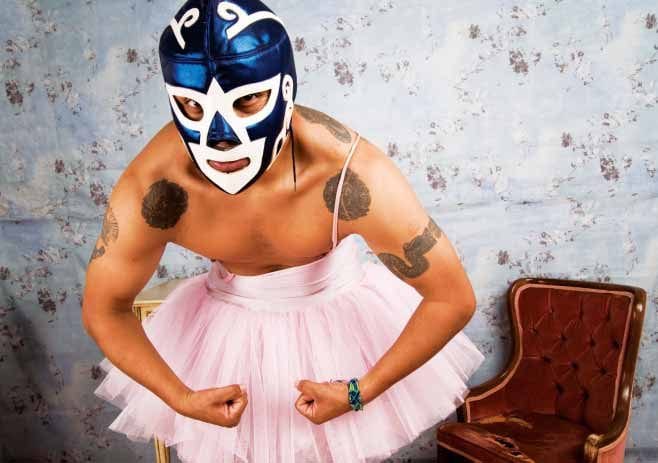
Speaking of racks... The memos that were distributed by the district said that it’s not okay for boys to dress as girls. The memo called it “discriminatory.” I can understand “distracting,” but discriminatory? Really? Discriminatory means “treating a person or group unfairly, especially because of prejudice about race, ethnicity, age, or gender.” When Tim Curry dressed as a sleek transvestite, I didn’t feel that I had been treated unfairly.
The memo also says it’s not okay to come to school as a different ethnicity. I’m half Armenian and half Scottish. I don’t know that I would feel I had been treated unfairly if someone put on a fake nose and gave themselves a uni-brow or dressed in a kilt and carried around some bagpipes, but I understand that the district doesn’t want it to look like they’re encouraging people to instigate a race riot.
The memo says nothing about girls dressing as boys. Why is it only discriminatory for boys to dress as girls? Is that to say that because if a boy dresses as a girl, he’s making fun of girls? Students are also not allowed to dress as if they are handicapped. No, you should be sensitive to the handicapped. They didn’t choose to be handicapped. And, you should also be sensitive to those not born male. We didn’t choose to be girls.
So, for Halloween, I am going to dress like a man. You know what I’d like to do (in my most wild of costume fantasies)? Put on a wife beater tank top, boxer-shorts, black knee socks. I’d like to stuff a pillow under my shirt as a belly, stipple my face with a five-o’clock shadow, and tuck my hair up into one of those plastic hats that holds two cans of beer. I’d like to hot glue a remote control to my belly, along with a half-eaten hero sandwich. Or is that still not discriminatory?
Let’s do the time warp again.
Originally published in the Santa Monica Daily Press print edition on October 27, 2007. Read the original PDF.