

Fire and police officials want to expand to keep up with a growing city
Santa Monica public safety officials are seeking to grow their staffs during the next few years to better respond to a population whose needs have grown in the past few decades, all while the number of personnel has remained relatively stagnant.
The heads of both of the city’s public safety agencies— Police Chief Tim Jackman and Fire Chief Jim Hone — asked the City Council on Tuesday for new personnel. The requests call for 22 additional firefighters and 45 additional police and civilian officers to be hired during the next fiscal year.
When Hone was hired as a firefighter in 1980, there were 112 personnel in the department, comprising 15.6 percent of total staff funded by the budget. That year, the department responded to more than 5,700 emergency calls, approximately 69 percent of which were medically-related.
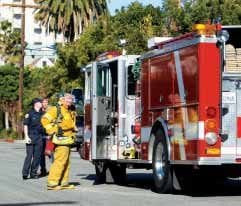
Today, there are roughly 114 fire personnel in the department, making up only 9 percent of city staff. While the net gain in firefighters has increased by just two staffers, the number of emergency incidents have increased by approximately 108 percent, estimated to be about 12,000 total emergency incidents by the end of the year, Hone said.
“The very dedicated men and women of your fire department spend a tremendous amount of on duty and off duty time training and preparing themselves, their vehicles... to effectively respond to incidents ranging from medical emergencies, traffic accidents... and just about everything in between,” Hone said.
The increased number of calls, compounded by new mandatory training, appears to be stretching the current staff too much, especially compared to surrounding cities.
In Beverly Hills, the fire department operates on a fire suppression and rescue staff of 25, responding to less than half of the emergency response calls that Santa Monica, whose fire suppression and rescue staffing level is at 30, receives each year. The firefighter-to-population ratio in Beverly Hills is one to 1,351, compared to Santa Monica, which stands at one to 2,933.
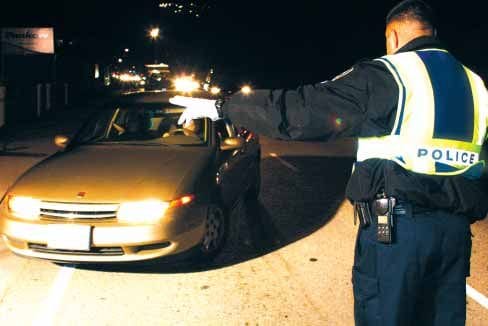
The police department has experienced a similar trend in staffing the past five years, its levels based on a formula using officer-to-population ratio, which Jackman said has resulted in near inactive staff increases.
Expectations of the department has grown during the past five years, with a new approach to community policing and added priorities with traffic, homelessness and youth and gang violence, Jackman said in stressing the need for 31 additional sworn police officers and 14 civilian personnel.
“The increased staffing level will enable the police department to achieve the goals of the city’s five-year strategic plan and will also improve upon the department’s existing high level of customer service,” Jackman said.
Both chiefs are proposing to add personnel incrementally over the next five years. The cost of the fire department’s staff increases, which includes 16 new safety and six non-safety personnel, is about $3.3 million in ongoing funds with a more than $300,000 one-time increase. The police department’s costs are a bit more steep — about $4.9 million ongoing and a $1.5 million one-time bump.
Jackman estimated that it takes roughly three years to recruit, train and get police officers on the street.
While Santa Monica’s population is approximately at 88,000 residents, Jackman stressed that the police department actually provides services for a quarter million people every day because of the local labor force and tourism.
“We police a much larger city than our bedroom population indicates,” Jackman said.
At issue with the current staffing level at the fire department is response time, which averages a little more than four minutes. The optimal response time is four minutes for medical emergencies and five minutes for a structure fire, according to Hone.
Hone added that because of mandatory training requirements, about half of the on-duty Fire Suppression and Rescue Division (FSRD) are in training, keeping the other half, about 15 personnel, on-call for emergency responses. Those 15 on-call responders are usually situated outside of their primary response area, resulting in extended travel distances to calls. The added personnel will allow FSRD staff to be strategically located throughout the city in their primary response areas, decreasing response time, Hone said.
The councilmembers expressed their support for the added staff, some surprised that personnel has remained stagnant.
“I think it’s got to be the highest priority,” Mayor Herb Katz said.
While extra staff for one department means taking away from the other, Jackman stressed that the police department is not the only to provide public safety and that departments like Community and Cultural Services and the Santa Monica-Malibu Unified School District serve an important function in keeping the streets safe.
“I think it’s important we go into this as a coordinated team, not just as a city, but as a community,” Jackman said.
Jump hedline: Staffing levels for public safety has remained stagnant over past few years
Suggested pullquote: “The increased staffing level will enable the police department to achieve the goals of the city’s five-year strategic plan and will also improve upon the department’s existing high level of customer service.”
Police Chief Tim Jackman
Originally published in the Santa Monica Daily Press print edition on March 13, 2008. Read the original PDF.