

A month-long series examining the Santa Monica City Hall finances Miriam Mack: Protecting Santa Monica’s properties
CITY HALL — Santa Monica’s City Hall controls some of the most prominent real estate in Southern California, and managing those holdings is no easy task.
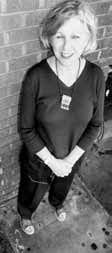
The Santa Monica Pier, Third Street Promenade, Main Street, Montana Avenue — all are overseen by Miriam Mack, the city’s new economic development manager.
Mack, 54, came to City Hall last month from Culver City. Her career started in 1973, when she first interned at the city manager’s office in Ventura.
“At that time, apparently it was a big deal that I was a woman,” Mack said. “They made a big deal about the first woman in the city manager’s office...
“I think there can be nothing more fun than working with the city government, because I think the city government is the closest you can get to the people and to the decision makers, and you can have the most direct influence over what happens,” she added. “I don’t know if I planned it this way, but I just think it’s a lot of fun — night meetings and all.”
Mack has two children. Her son studied at West Point and now serves as a lieutenant with the U.S. Army stationed in Washington, and her daughter is a junior at Columbia University. A Van Nuys native, Mack lives in Ventura with her husband, an LA city worker.
“He leaves at five in the morning, and I leave at six,” she said.
As the head of City Hall’s economic development division, Mack works out of an office overlooking the runway at the Santa Monica Airport. Here, the Daily Press caught up with Mack and asked about her 30-year career in government.
You’re the economic development manager. What does that mean exactly?
“We are a division in the resource management department, and our primary responsibility has to do with the management of the city real estate interests — which are of course the Santa Monica Pier; we coordinate and administer and are concerned about all the activity in the Bayside district; the farmer’s markets are within the economic development division... and liaison and working with the Main Street, Montana and Pico associations, business improvement districts, is the primary mission of our department. To provide assistance and guidance, and to partner with them to help them with the economic vitality of those focus areas.”
What might a day at work entail, specifically?
“We want to be sure that the Pier is maintained. I would want to review — you know, there are many improvements, there’s a construction project underway at the Pier and two major capital projects that are being proposed.
“I will want to be sure that the construction project is going well. I will want to review an environmental impact review that is being prepared for the bridge... I’ll want to review leases that are being negotiated, perhaps, on Third Street Promenade — that took up some time.
“I’ll want to visit with some business people and listen to their questions and concerns on Pico, do some research in regards to council directive, to council initiative...
“Because we deal with real estate, like any division, one needs to be sure that the city’s needs are protected — as we embark on business with private people, be it a lease on the Pier or a license agreement on the Promenade — negotiating and ensuring that the appropriate activities are going to occur that support the city’s goals.”
Why did you want the job in Santa Monica?
“Santa Monica has a fabulous reputation as a very progressive organization. An organization that cares about the community, cares about the staff...
“So the reputation of this being a good place to work, and then the professional challenge. As I said, working for a community that has a very positive initiative and is working with very cutting edge issues is, I think, a professional challenge — and that was the thing that attracted me to this opportunity.”
How are the challenges you face different here in Santa Monica than they were in Culver City and Ventura?
“I think Santa Monica is very, very much connected to a metropolitan region, so it has a lot of the social issues, the transportation issues, the social demands — it’s urban, it’s a very urban area.
“Ventura, when I was there, really had very much a rural mentality. And actually that dominated the issues — a great deal of open space to be developed, a lot of concern about urban sprawl and orderly development in those days, and the profession of community development was new. Historic preservation was new. Doing archaeological excavation and preservation was absolutely brand new, and at that time the people in the profession had to work very hard to educate the public about the value of these new initiatives. So I guess it was rural.
“It was also remote, even though I was from the Valley and everything, but it seemed a little more remote, and in 10 years that’s really, really changed. I remember thinking — when there were conferences in LA — I remember thinking what a long way that was...
“Also, a big effort at that time was to help the community gain recognition and to create the symbol that would get us recognized, its beaches, its downtown, its artists. Here, in Santa Monica, the pressures are infill — it’s urban — and it has such an established reputation. As the mayor said the other night, you can be in Europe or South America and have an informal conversation — people know Santa Monica.
“The pressure on me and staff is that it lives up to the reputation and all the good things about Santa Monica can be preserved and enhanced.”
What about Culver City — how are the challenges in Santa Monica different?
“Culver City was partly different — of course, I was there during the ’90s — it experienced a boom in development, and it was during a transformative time... when they created their new downtown and made very significant inroads into some of those community corridors.
“Culver City shares many things in terms of community and residents. I think they feel very strongly about their community as well... I was there during a very transformative time and that was exciting to see that come out front.”
You mentioned that Santa Monica is very different now than when you used to visit on weekends while growing up in Van Nuys. How?
“Well I think that it didn’t have the progressive social sensibility that it has now...
“Santa Monica now is really a cutting edge community in terms of the issues that it’s tackling, all the concerns that it’s balancing about quality of life and service to residents, and I think it is going about dealing with the issues of living in modern society in a very thoughtful manner to ensure the community that residents, you know, want to be part of. And I think it’s succeeded admirably and in many, many ways it’s a model for other communities.”
You also mentioned social services. Obviously, homelessness is a hot-button issue in Santa Monica. How does that affect the work you do?
“I think that the philosophy — I mean we are all a part of the community and Santa Monica faces special challenges, which I think they are meeting...
“I think that the compassion that the public policy (shows) is very noble...
“Nothing is easy, and everything has to be — all interests have to be considered and that’s part of the public debate, in terms of figuring out ways to balance interests. And that’s part of the challenge here. There’s a balancing of issues, and I think the community as a whole is dealing with the issues. I’m certainly not in a position to say how it should be dealt with.”
Does the issue pop up in your day-to-day work?
“I don’t think it pops up in any way that’s any different than anything else. The people know Santa Monica is a place to do business and that people want to be here for a variety of reasons. The personality that is Santa Monica is overwhelmingly positive and something that people want to be a part of. It’s just a fact — it’s just one of many, many things going on in this community.”
Miriam Mack grew up in Van Nuys but said she used to visit Santa Monica every weekend. “We always summered in Santa Monica,” she said. “So I always felt a part of Santa Monica — you know, Muscle Beach way back when, Sorrento Beach way back when.”
Position: Mack started as City Hall’s economic development manager April 5. Salary: $104,000. Education: Van Nuys High School, history degree from UCLA, master’s degree from UCSB.
Background: Mack started as an intern in the Ventura city manager’s office. She stayed in Ventura — moving into redevelopment and economic managerial posts — until 1993, when she took over as redevelopment administrator in Culver City.
Family: Mack is the eldest of two children to an insurance broker and secretary. Her husband, Darryl, 56, is a supervising electrician for the City of LA. Son Dylan is 24. Daughter Renee is 20.
Originally published in the Santa Monica Daily Press print edition on May 3, 2004. Read the original PDF.