

Coach Cuda leads Samohi Vikings into the postseason
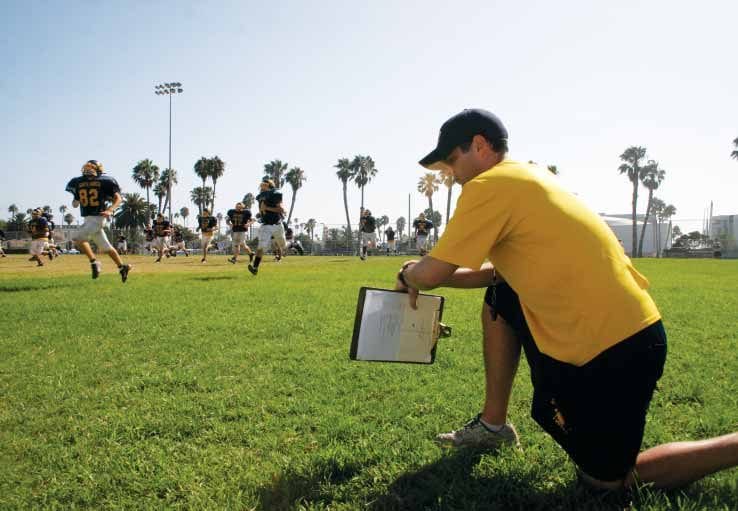
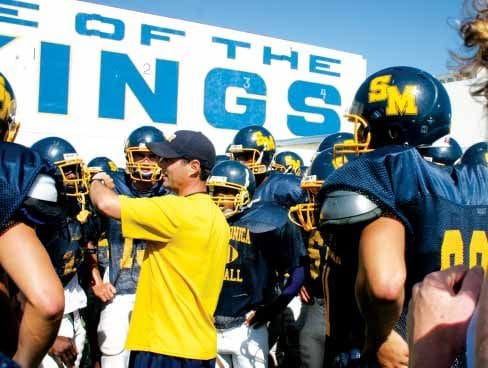
SAMOHI Zach Cuda can now take a slight breather, a very slight one at that.
Two back-to-back losses, each to 2006 Ocean League co-champs Beverly Hills and Culver City by a combined five points, made for a dim postseason outlook for the Santa Monica High School varsity football team.
But the Vikings came through in the end, pulling out victories against Inglewood and Hawthorne High Schools in the last two weeks of the regular season, giving their second-year young head coach his first playoff appearance while at the helm of the team.
On Sunday, two days after taking care of a winless Hawthorne High School on the road, 55-18, Cuda and his Vikings learned they will face a formidable opponent in Palos Verdes, which finished the season 7-2 and at the top of the Bay League, this Friday on the road.
“Some teams have taken tough losses (like) the ones we had this year and things start to go south in a hurry,” he said before last Friday’s game. “We never got that feeling this year.”
“Here we are sitting in week 10 and we didn’t win every game that we played, but we’re sitting here looking at if we take care of business tonight, we have a chance to make a run,” he added.
Being the head coach of a high school football team is not what Cuda envisioned just four years ago when the native Oregonian made his way south to join the academic faculty at Santa Monica High School. At just 29 years old, he’s one of the younger coaches in the field.
Shortly after he had accepted a social sciences teaching position at Samohi, former Vikings football coach Michael Burnett called Cuda, who was still completing his master’s degree in education at the University of Oregon. In the resume seeking his first teaching position, Cuda had mentioned he had a background volunteering in coaching both football and basketball, which had caught Burnett’s eye, seeking to expand the coaching staff in his first year as the head coach.
A few weeks later, Cuda was on the field as an assistant and two weeks later, he was in the classroom.
Even as an assistant, there was nothing further from his mind than becoming the head coach one day, even when Burnett approached Cuda after the end of the 2004 season about handing over the keys to the program.
“I loved coaching, but I was not excited about taking on the administrative work of being the head coach,” he said.
But the young assistant soon had a change of heart, seeing the values that Burnett had instilled in the program and wanting to carry on that same tradition.
In 2006, the Vikings finished the season 6-4 and fell short of the playoffs. But the season was highlighted with a victory over league rival Culver City, ending the Centaurs run for an undefeated season.
Despite the ups and downs of this season, with losses against Venice, Los Alamitos, Beverly Hills and Culver City, the coach believes his players have learned the valuable lessons that can be taught by the game of football, that beyond the wins, it’s about teamwork and dedication.
“I didn’t play college football and most of our kids won’t, but I think there are things I took from my athletic experiences that are part of why I am here and doing what I do today,” Cuda said.
In fact, there isn’t a difference between what is coached on the field and taught in the classroom.
“Effective coaching is teaching,” he said. “You break down a more complex process and teach them in increments how to perform whatever it is you want to perform, and if you’re able to do that, whether it’s AP econ or whether it’s monetary policy or whether it’s a zone block, it’s the same process one way or the other.”
Though he came from a family of teachers and coaches, education isn’t a profession that Cuda initially considered as an undergraduate student at Oregon State University. After he graduated in 2000 with a degree in business administration, Cuda went on to work in the front office at the San Diego Padres’ triple-A affiliate, the Portland Beavers.
After spending five months on the job, bCuda began yearning for the sense of fulfillment that he saw his parents have with their jobs in teaching. Though he was encouraged as a youth to try a different field from his parents, Cuda found himself drawn to teaching.
He enrolled in the master’s program at the University of Oregon and a few years later, found himself in Santa Monica, where he now teaches four advanced placement economics courses.
“I wanted to feel like I was doing more than selling baseball tickets at the end of the day,” Cuda said. “I really feel like one of the lucky people that get up every morning and looks forward to coming in and do what I do.”
Originally published in the Santa Monica Daily Press print edition on November 12, 2007. Read the original PDF.