

MTBE, from page 1 Record settlement marks light at end of tunnel
By the far the biggest settlement of its kind, three major oil companies have agreed to pay City Hall hundreds of millions of dollars to clean up the city’s drinking water.
The settlement allocates an additional $92.5 million to cover the city’s costs incurred since the city’s water supply was tainted by a gasoline additive seven years ago.
The agreement comes after more than three years of litigation and thousands of hours spent trying to get the oil companies to pay for allowing Methyl Tertiary-Butyl Ether to leak into the city’s drinking water supply.
The Santa Monica City Council on Friday morning approved the settlement with Shell, ChevronTexaco and ExxonMobil, who have acknowledged their responsibility in contaminating half of the city’s drinking water in 1996 by allowing the chemical to seep into the groundwater. The contamination forced the closure of five of Santa Monica’s 11 drinking water wells.
The settlement will clean up and restore the Charnock Well Field — the city’s main water source — located in West Los Angeles. A new treatment facility, the first of its kind, will be built specifically to clean up the city’s water. Santa Monica is one of a handful of cities in California that controls its own, independent water supply.
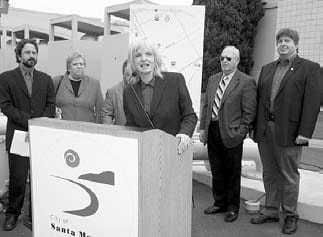
4B6,“This settlement is a landmark achievement, we have reclaimed our water independence,” said Mayor Richard Bloom. “Clean water is vital to everyone, especially in these difficult financial times. The settlement is all the more important because the cleanup will not cost the taxpayers.”
The settlement ensures that the oil companies will pay for all costs to construct, operate and maintain a treatment plant that officials expect will clean the city’s water supply by 2008. The cleanup costs, which could exceed several hundred million dollars, will be entirely paid for by the oil companies.
City Hall’s lawsuit was levied against 18 oil companies and manufacturers in 2000. City Hall has reached separate settlement agreements with other companies and the money will be used to cover out-of-pocket costs, and other city needs like continued water quality improvements and water security.
Since levying the suit in 2000, City Hall has negotiated more than $18 million in separate settlements. The City Council accepted $4.5 million from oil giant Ultramar Ltd., while Atlantic Richfield Co. paid City Hall $9.75 million. Conoco Phillips paid $6 million and Conoco Inc. settled for more than $4.5 million.
Litigation is still ongoing with Lyondell Chemical, which has refused to settle.
Dozens of cities throughout the country are currently battling with oil companies because of MTBE contamination. Before Santa Monica’s settlement, the largest payout by oil companies relating to MTBE was in Lake Tahoe for $69 million, said Joe Lawerence, City Hall’s assistant city attorney who led the lawsuit against the companies.
“It was always joked about that we were the posterchild for MTBE,” he said. “This is by far and away the biggest settlement.”
“It was always joked about that we were the posterchild for MTBE.This is by far and away the biggest settlement.” — — JOE LAWERENCE City Hall’s assistant city attorney
Lawrence said $30 million will go into an interest bearing escrow account, and money will be withdrawn as it’s needed for the construction and operation of the treatment facility.
City Councilman Kevin McKeown said all of the money will be dedicated to water cleanup and protecting Santa Monica’s precious resource.
“This is not a windfall, it’s a waterfall,” he said. “To me what’s really important is not getting the money, but getting our water back.”
Other cities will look to Santa Monica’s new treatment facility once it’s built to determine how to clean up their own water supplies.
“I think we will use this as a model for other communities to get their water where it needs to be,” said Wayne Nastri, the U.S. Environmental Protection Agency’s regional administrator in the Pacific Southwest
While he’s still unsure as to what technology will be used, Craig Perkins, City Hall’s director of environmental and public works, said his department will immediately begin designing the facility.
4B5,“Finally, we will see the light at the end of the MTBE tunnel,” he said.
An Orange County Superior Court judge is expected to finalize the settlement by approving the agreement on Dec. 19.
Because of its frequent monitoring, the city in 1996 was able detect the contamination and cut off the water supply before it reached residents. Since the discovery of MTBE in the wells, the oil companies have been purchasing imported water to supply about half of the 12-plus million gallons of water used by Santa Monica residents and businesses every day. It has cost oil companies about $3 million each year to buy the water from the Metropolitan Water District, which imports the water from an aqueduct located north of Sacramento.
Officials said having an independent water supply is key to the city’s economic future, while at the same time reducing dependence on importing water from northern California. City officials said depending on the oil companies to pay indefinitely for imported water is like having someone burn down your home and then offer to put you up in a motel for the rest of your life — you have a roof over your head, but you don’t have your quality of life or the security you once had.
It’s expected that Santa Monicans will be able to drink their own water again in 10 years. However, once the treatment plant is operating, residents will be able to drink that water in about five years.
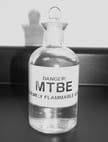
MTBE was designed as a gasoline additive to boost fuel performance and reduce emissions. It has been used in California since 1986 and is a colorless chemical compound, which smells like turpentine at very low levels and is a suspected carcinogen.
Beginning on Jan. 1, it will be illegal to use MTBE in gasoline throughout California. However, most oil companies stopped using MTBE last year, said Rod Spackman, ChevronTexaco’s manager of public and government affairs.
The settlement was reached with the help of four outside attorneys hired by City Hall, two mediators and state and federal agencies, including the EPA and the Los Angeles Regional Water Quality Control Water Board.
“Although there were days when I’m sure some people questioned whether or not we would ultimately arrive at this point, I am happy to say, in the end, it has been a productive journey,” Spackman said.
Originally published in the Santa Monica Daily Press print edition on November 22, 2003. Read the original PDF.