

City stumped for a solution
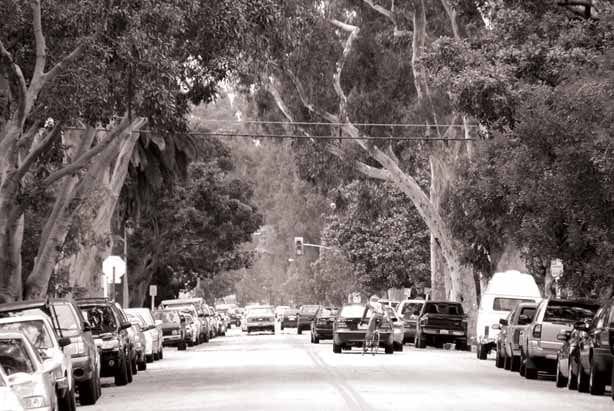
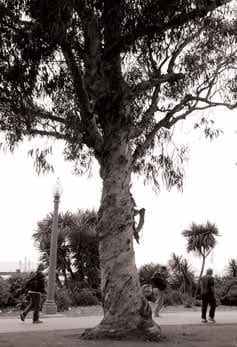
CITYWIDE — In efforts to get at the root of the problem, City Hall has plans to remove 77 aging and damaged Eucalyptus trees that have been rated hazardous because of their tendency to shed dead limbs, possibly causing injuries to pedestrians.
Another 440 Eucalyptus trees will be trimmed to avoid potential limb failure at a cost of close to $175,000, said Walter Warriner, City Hall’s community forest and public landscape superintendent.
Removing the trees will cost an estimated $80,000, with another $20,000 going towards replacement trees. Pruning costs are expected to hit $65,000, with another $8,000 for the maintenance of the new trees, Warriner said.
City Hall plans to hold a news conference on May 5 at Reed Park to officially announce to the public the replacement and pruning project, which is expected to take between four and six months to complete.
Trees removed will be replaced with smaller species of Eucalyptus, or in some cases, the species of tree that dominates the surroundings area, Warriner said.
“We know we have an aging forest and we are looking towards the future of restoring our forest and retaining our canopies for the next generation,” Warriner said. “It is very important for the public to know why we are removing these trees. There is a very logical and precise reason for why each tree has been targeted for removal. We want the public to be aware of it so there aren’t any surprises.”
Warriner said people tend to react strongly to seeing a fully grown tree chopped down, but assured the public that he is an arborist first and will do anything to protect a tree that is worth saving.
“I’ll be the first one to stand up and say ‘Let’s save this tree,’ and also the first to say ‘This tree is at the end of its life span and needs to be removed,’” Warriner said.
Falling Eucalyptus limbs, while uncommon, have struck pedestrians and, in one extreme case, a driver and his wife.
In January of 2001, Jim and Joan Holiday of West Los Angeles were driving down Broadway when one of the city’s mature red-flowering Eucalyptus trees fell on their car, injuring Jim Holiday’s neck and lower back, his attorneys said. The Holidays sued the city for $1.5 million.
Should They Stay or Should They Go City Hall subsequently contracted with HortScience Inc., an arboricultural firm, to provide an assessment of the city’s 517 Eucalyptus trees. The assessment, conducted in late 2005, identified trees in danger of failing and made recommendations to lower the risk posed by trees that were still viable, but in need of attention, according to a city staff report.
Defects in the structure of each tree were identified, such as trunk decay, poor branch attachment and severe wounds. Using this information, HortScience gave a risk rating to each tree based on failure potential, the size of the part that might fall, and the target.
Each component was rated on a scale from 1 to 4. Those components were added together to generate a tree’s overall risk, which could range from the low-est rating of 3 to the highest, 12. Of those studied, 77 trees scored between 8 and 12 — reflecting a high potential for failure. The remaining 440 trees have defective parts that were rated between 3 and 12. Those trees have been targeted for corrective pruning.
“We have learned a lot about Eucalyptus over the years, and one of the things we’ve found is that prior pruning practices actually harmed the tree to the point that wood would die, causing limbs to fall,” Warriner said.
Past pruning practices had tree trimmers cutting the Eucalyptus at points that would create “sucker growth,” in which the tree decays but the wound is covered by a new coating that shields the damage from the naked eye, making it harder to identify which trees are decaying.
“No more stub cuts,” Warriner said. The areas where trees will be removed are: Broadway, between Centinela Avenue and 11th Street; Seventh Street, between California Avenue and San Vicente Boulevard; Reed Park; and Palisades Park.
One crew will be deployed to complete the tree removal process over a period of two to three months, and a second crew will do the corrective pruning, expected to take four to six months, according to a city staff report. The work schedules will take peak traffic conditions into consideration.
Originally published in the Santa Monica Daily Press print edition on April 28, 2006. Read the original PDF.