

New sign to alert public to parking garage presence
The city will have to spend $10,000 to fix a design flaw at the entrance to its newest parking structure.
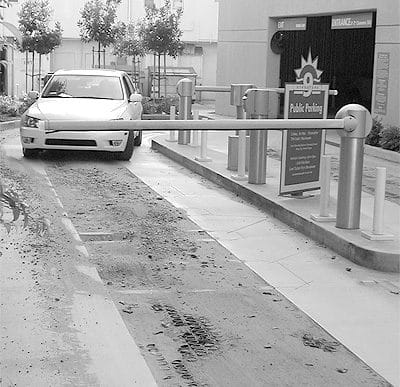
Deep potholes have formed along the driveway motorists use to enter the parking structure, located at 1136 4th St. The driveway consists of two narrow lanes of concrete, wide enough for a car tire, with grass growing between them.
However, cars do not stay on the path and have created deep ruts where the grass once grew. At first the city tried to fill in the pot holes with gravel, but cars peeled out under the loose rocks creating even more pot holes.
Now the city plans to pay a contractor $10,000 to install interlocking paving stones.
“It looked very nice with the grass, it just didn’t hold up,” said Oscar Delgado, the city’s parking coordinator. “The paving stones will stay with the flavor of the aesthetics but be a lot more durable.”
Motorists who use the garage regularly were happy the potholes were going to be fixed.
“Everyone falls off that ditch out there,” said Yolanda Vaquez, who parks in the structure daily and has complained to the city about the potholes. “It’s ruining everybody’s tires.
“In order for people to reach the key card, they have to drive in the middle of the two lanes,” she added. “It’s a very frustrating design flaw.”
Natalie Linthorst has been parking in the structure for the past six weeks and has watched as the pot holes have grown progressively worse each day.
“It’s pretty nasty,” she said.
The work will begin in about a week and take two or three days to finish, Delgado said. Each side of the entrance will be closed alternately, so cars will still be able to use the parking structure.
Construction on the new $5 million, 294-space structure ended last July.
Not many people know about the subterranean garage because a senior housing complex sits above it. The city has recently installed a new sign on the outside alerting people that there is public parking available.
Originally published in the Santa Monica Daily Press print edition on May 7, 2002. Read the original PDF.