

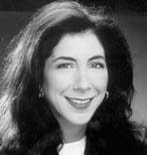
NANCY AOSSEY These days, Aossey, who grew up in Cedar Rapids, Iowa, spends less time managing disaster sites in third-world countries and more time promoting her organization’s work. But in her 19 years with IMC, she has seen no shortage of human wreckage.
She also has seen her group expand enormously. Founded by Dr. Bob Simon, who in 1984 sold his Malibu home for $90,000 to start the charity to help Afghanistan, IMC operated last year on an annual budget of roughly $90 million. The group manages and supplies more than 6,000 healthcare workers, currently runs programs in more than 20 countries, and made the federal government’s short list of organizations to which Americans should send their donations.
As the top spokeswoman for one of the few international aid organizations headquartered in California, and the only such group stationed in Santa Monica, Aossey has made three trips to the East Coast since the tsunami hit to scramble for funds to keep emergency operations running long term.
Last week she met with President Bush. This week, between red-eye flights, she sat down with the Daily Press to discuss IMC, her career with the charity, moving to California and health issues around the world.
How did you get interested in international aid work?
“My dad was a milkman. My mom was a homemaker, and we didn’t have a lot of money, so we didn’t do a lot of international traveling. Actually we did none. But my parents were very interested in making sure their children had a sense of purpose and felt connected to the rest of the world. They instilled in us a sense of community, responsibility. We were involved in Bluebirds, Camp Fire girls, working with the elderly, volunteering with different organizations. My parents were very civic minded and kept us extremely busy. Since that was before the days of the Internet and CNN, our connection to the world was the encyclopedia and National Geographic, trick-or-treating for UNICEF….
“The public education system is outstanding to this day in Iowa, so I went to the University of Northern Iowa, which was a couple of hours away. I stayed involved in charity, but I didn’t really know what I wanted to do. I made my decision between psychology and business standing in the line to choose classes. I had to know what my major was in order to choose, because I had pretty much exhausted all the liberal arts classes. In that split second, I chose business. I thought it would give me the background to pursue whatever I wanted.”
What brought you to California? “We had horrific winters. What is it now, 75 degrees? Well, swing that 100 degrees the other direction.
“I remember thinking there was not a lot of opportunity in Iowa for young people just out of college. The economy was bad in the ’80s. Farmers were losing their livelihoods, and I thought, ‘There is a huge world out there I want to see.’ I figured I’d start looking some place where the weather was better.
“So I got a job with AT&T right out of college in Iowa and transferred with them as soon as I could to California, Fresno. When I heard about IMC from volunteers with the organization, I was looking for to get involved in charity again. That’s what brought me to LA and, ultimately, Santa Monica. I moved to LA 19 years ago, when I joined IMC. The biggest mistake I made was not moving immediately to Santa Monica. Until you live in Santa Monica you don’t know what you’re missing. I like the casual environment, the informal atmosphere, all the outside cafés … LA is huge, and Santa Monica feels like a real city, a small city, which I love, but a real city.”
What’s your least favorite part about Santa Monica?
“Traffic is becoming a big problem, parking. Traffic and parking …. The plan-ning for traffic could have been a little better. The city seems to attract more cars than the roads can handle.”
How was your meeting with President Bush?
“He was interested in hearing directly from key operational organizations that were active on the ground, about what our experiences were like on the tsunami efforts. He was extremely engaged and interested and incredibly well briefed. Secretary Powell and Administrator Natsios of USA-ID (U.S. Agency for International Development) had just returned from the region and had briefed him. He asked a lot of questions, a lot of follow-up questions, and said that he recognized how hugely devastating this tsunami was to so many communities. He said he was glad to see the outpouring of generosity by the American public but also said he knew there were a lot of tragedies in the world that also needed attention. He also said he would make it a priority that places like the Sudan also received the attention and the support they needed over the long term. The tsunami is terribly tragic and it’s huge, but there are many other places that also need our attention. He was extremely open and extremely complimentary of American aid organizations. We’ve received $2 million so far in government tsunami aid, and we expect to receive more.”
What was the most dangerous situation you were ever in on the ground?
“In Somalia there were bullets flying, bombs falling, just complete anarchy. There was a city called Baidoa. Baidoa was called the city of death because there were so many children dying who could-n’t even accept solid food. Their bodies were beyond that. It was so violent that we had to have guards accompanying us when we made trips into the more remote areas. One of the guards, who had been with me a couple days — his name was Jackson — was there to protect us while we were loading this plane with relief supplies at the airport in Mogadeshu. Someone from an opposing clan walked up behind him and shot him in front of all of us. It was a blood feud between clans, and they picked him for revenge. Jackson’s brother, who was another one of the security guards, heard the gunshots, ran over and found his brother had been killed. He dispersed the crowd, and we got out of there as fast as possible.
“Jackson was literally executed with an AK47 in the back right in front of my eyes. I watched him die. That was a real shock.”
What was IMC like when you first joined?
“When I first started with the organization in early 1986, my office was a bedroom in a house donated by (later LA mayor) Richard Riordan. He helped us in so many ways get off the ground. I mean how many people do you know who would let people move into their house to run a nonprofit?
“Approaching disaster relief from a long-term perspective doesn’t limit our capacity to do crises response. That’s what we do well.” — says Nancy Aossey, president and CEO of IMC, from her Santa Monica office
“The way you help people in the middle of civil strife and war, is to help them get back on their feet, not just give them food and medical attention,”
“Our founder Bob Simon is this brilliant physician who was interested in helping people in Afghanistan rebuild their health system. He went to the country and was shocked to see how remote and dangerous these places were. So he appealed to aid groups, but they all said the same thing: Too remote and too dangerous. They would go to the border and set up refugee camps, but wouldn’t go inside. So he decided to found an American-based organization that would help people in their communities, where they wouldn’t have to leave and go to a camp, and to not only help them through direct assistance but help them become self-reliant through training programs that build capacity for health care.
“I used to spend time in the field, trying to build relationships with international donors, trying to prove we could do what we said. It was very slow going. We were an unknown start-up agency, and we were doing something that no other agency was doing, approaching disaster relief not so much from a disaster perspective but from a long-term prospective. It was a radical concept in the early ’80s.”
What was the response like after the tsunami?
“The tsunami has reminded me again how extraordinarily generous Americans are, with their hearts and with their pocketbooks. We had an outpouring of goodwill, financial support and volunteers from the local community. I was so touched by the flood of phone call, e-mails, people who literally just walked into our offices off the street and said, ‘How can I help?’ It was really touching, because the last few weeks have been tough.
“We had people dropping by checks. One person asked for more brochures, and then his neighbors came by with checks. These types of gestures never go unnoticed. Whatever their part is, it’s always known, always remembered and always appreciated.”
What’s IMC’s strategy for tsunami relief?
“We’re going to be over there for the long term, rebuilding and rehabilitating. These communities have had their lives completely shattered. Beyond immediate aid, getting people water and immunizations for disease, what we’re going to do will focus on psychosocial services, then child protection, and helping communities to rebuild their health system, which means training medical workers. More than 50 percent of the health workers in Banda Aceh lost their lives, so there’s a lot to be done.”
What else is IMC involved with right now?
“We’re operating in about 25 countries. We were at the forefront of the Darfur/Sudan crisis and had teams on the ground immediately when things began to heat up. We have a very high profile in Afghanistan, a lot of strong relationships in the local communities. In Afghanistan we have over 1,500 health workers in the country and only a handful are foreigners. Over half the countries we work in are in Africa, places like Burundi the Democratic Republic of Congo. We’re also doing some work in Iraq.”
You tense up at the mention of Iraq, and other medical aid groups, such as Doctors Without Borders, have pulled out of Iraq. How have you stayed?
“Iraq’s a tough place to work. We were inside the country before the fall of Baghdad, in January of 2003, and we’re still there but trying to keep a very low profile because the situation is not good.
“Our focus is training the nursing system, because a good nursing system didn’t exist in Iraq. The local Iraqis are the only reason we can continue programs there quietly. We haven’t had anybody killed, but it’s a very dangerous place. We try to keep a low profile and the rest is luck.
“Recently with terrorism and other types of violence, relief workers have been increasingly targeted at the local level. Those people that want to help their people are often seen as working at odds with people that don’t want to help their people, and so they’re attacked. They may be kidnapped or executed. If it got out they were working with us, they could be in great danger.”
You say recently that the perception of relief workers has changed. What happened?
“It used to be that relief workers — local and from other countries — the biggest danger that faced them was that they were in the wrong place at the wrong time. It might be a vehicle ran over a land mine. It might be shrapnel from a bomb that didn’t target them. It might be a stray bullet. It was risky, but relief workers were not targets.
“That started changing in the early ’90s under the Milosevic regime in Bosnia, where the strategy there among the Serbian militia was to target journalists, because journalists told the story and they didn’t like the story being told, and to target relief workers. That was the end of the notion that relief workers might be harmed from being in the wrong place at the wrong time but wouldn’t be targeted.
“That’s the one thing that really keeps me up at night is the safety of our people in the field, and that includes our local people. I worry about them a lot. They’re the people living with that danger every day.”
What are your goals as CEO? “I want to make us better known. I want us to be one of those organizations that’s a household name. We haven’t invested very heavily in marketing, and my goal is to help educate the public about what can be done in developing countries. We delivered around $90 million in program services last year, but a lot of our funding is highly restricted, highly earmarked for specific programs.
“When a sudden crisis occurs, you can’t use that money, which is why the most important support we get is from the person who writes in an individual contribution and says do with it what you see fit.”
Originally published in the Santa Monica Daily Press print edition on January 24, 2005. Read the original PDF.