

Back on his feet again
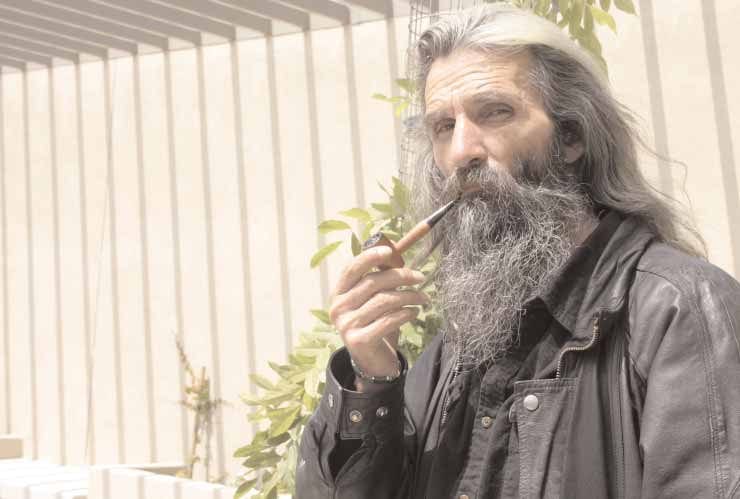
CLOVERFIELD SERVICE CENTER For 24 years, Damon Cedric Allie made the corner of Third Street and Broadway his base of operations. Nearly every day Allie, a tall man with long black hair with white streaks and a long, fluffy beard, would stand by a bus stop and panhandle.
But Allie was different than the rest. Instead of making a cardboard sign with a funny phrase or approach anyone and everyone who passed by, Allie would stand quietly, cup his hands together and shake coins repeatedly for hours, as if he was in some sort of trance. With his almost Zen-like way of “spare changing” and his long hair and even longer leather jacket, Allie became a fixture at the popular corner.
A few months ago,Allie disappeared. Many who worked in the area began to wonder where he went, praying that something bad had not happened to the calm, intelligent and friendly man they passed by nearly everyday on their way to the office or the coffee shop.
Well, something did happen to Allie, something that has changed his life for the better, giving him the stability and encouragement he needs to get back on track. Allie is enrolled in the city’s Chronic Homeless Program, a new way of helping those who have been living on the streets for decades, combining housing with supportive services.
Now, Allie has a full-time job in Hollywood finalizing construction contracts, wears nice suits and is back painting and creating, something he has dreamed of doing ever since he was a teen.
“I’m suited during the week,”Allie said as he sat in the courtyard of the Cloverfield Service Center, smoking his pipe while watching the windmills he purchased for the facility spin in the wind.“I decided if they were serious about this program that I would never lay up in here one single day. I’ve kept that promise.”
Using $1,000 that he borrowed from friends who knew him when he was living on the street, Allie bought a few nice suits, shirts and ties, went out on interviews and landed a job that he enjoys.
“It’s a great office with really good people,” Allie said. “ But Allie couldn’t take a ride with service coordinators. Before Allie enters into anything new, he has to make sure that he gets to where he needs to go on foot first. It has something to do with staying connected to the energy flow around him.
“Before I could start my new job, I had to walk there, walk around the building and just take it in,”Allie said.“I have to have the same sky over me every step of the way, so my office has the same air as this courtyard.”
Allie has been practicing Zen principles and the art of mindlessness for 30 years, trying to find inner peace after years of working stressful jobs in construction and the entertainment industry. It was that very stress that led Allie into homelessness, he said.
As a child living in Tampa, Florida he loved writing and painting. Allie entered college as a journalism major with dreams of becoming a writer, but things did not work out as planned and he ended up leaving the university and began working in construction. The work was grueling and unfulfilling. One day,Allie said he had worked so hard that when he went home, he passed out in his favorite chair with his hard hat still on and the front door wide open.That’s when he realized it was time for a change.
“I just got fed up with everything,” Allie said as he reloaded his pipe and took a big puff of tobacco.“The job market had turned me into something I didn’t want to be. It really just pissed me off. I wanted to put the life back in my life.”
So Allie grabbed his coat and left his apartment, never to return. He hitchhiked from Florida to California where he began working in the entertainment industry. Things were going well for him. He was making good money and had a girlfriend he loved very much, but eventually, it all crumbled. Allie said people he thought were his friends went behind his back. His business dealings went sour and he lost his love.
“It hurt. It hurt bad,”Allie said.“Once again, I found myself with a lot of anger.”
Allie didn’t turn to drinking or doing drugs. He never touched alcohol and quit smoking marijuana 25 years ago. Instead of self medicating, Allie just spent his days on the beach, contemplating life. He figured he would go back to work after a few months or so when the anger and frustration subsided, but a few months turned into a few years and before he knew it, Allie was homeless.
He began to seek spare change on Broadway and it was there that he met people like Larry David, the co-creator of “Seinfeld,” as well as other professionals who would lend him money every so often or sit down and chat. During the holidays and the summer,Allie said he could make as much as $950 every month or so spare changing.He would save the money to take a hot shower and buy some clean clothes so he could look for a job. He would land one, but would always lose it in a couple of weeks because he would slip up and miss a bus or get sick and not make it in to work.
“It was a pretty bad cycle,” Allie said. “I would get things going for a few weeks and then I’d slip up.”
Allie never wanted to accept welfare or any other government assistance. He felt it was a crutch that only led to alcoholism or drug addiction, leaving people with no motivation. He would often hear others talk poorly about the city of Santa Monica and service providers, but Allie would always remind them that you never bite the hand that feeds you.
That said, he was skeptical of the counselors who approached him about a year or so ago asking him if he wanted into the Chronic Homeless Program. Allie thought it was a joke, another offer from service providers looking to make their quota and secure more government funding.
“They pissed me off on the spot,” Allie said. “I didn’t want to hear any of their bulls.t. They come by every six months and hand out peanut butter sandwiches and a list of other service providers. It was a joke.”
But the counselors kept coming back, week after week for a year, until one day, they finally said it was time to move into the new service center. Of course, Allie would not accept a ride to the facility. He had to walk, scope it out and continue to panhandle for a week until he felt ready to go indoors.
“I couldn’t believe it,” Allie said of the multi-million-dollar facility that was created by OPCC and City Hall with the goal of helping the most hard-to-reach clients. “Everything was so new, still had the plastic on things. They asked me what room I wanted. I said,‘Make it room number one.’”
Allie has nothing but praise for the program and hopes that it remains as is and does not become a home for alcoholics, drug addicts or those fresh out of jail.
“If that happens, it’s all over,”Allie said. As for what he’ll be doing next, Allie said he will continue to work, save money and pay off the money he owes to friends for his new duds. He’s proud to say that he’s paid off most of it already. He’ll continue to spare change on the weekends and paint in his free time.
“I’m feeling pretty good these days” Allie said. “I never thought this would be possible, but it is.”
Originally published in the Santa Monica Daily Press print edition on May 28, 2007. Read the original PDF.