

Legendary skater makes wide impact From Dogtown to Hollywood
DEL MAR Clutching a skateboard in his arms, a 16-year-old shaggy blonde hair boy from Mar Vista steps out of his car onto the Del Mar Fairgrounds, his eyes wide open in amazement.
The scene before him is something former professional skateboarder Stacy Peralta will never forget.
It was 1975 and Peralta and a group of unknown street kids from Dogtown had just arrived at the Bahne-Cadillac National Skateboard Championship — also known as the Del Mar Nationals — setting the stage for a revolution.
But before history was made that day, Peralta and his buddies from the Z-Boys team, representing the Zephyr and Jeff Ho Productions surf shop on Main Street, stared in amazement as the Del Mar Fairgrounds was crawling with skateboarders.
“It was as if all these foreign tribes from the country of California — not the state but the country — were brought together and [first] saw each other and didn’t know [one another] existed until that day,” said Peralta, now a 49-year-old documentary filmmaker living in Sunset Park.
Today the beloved surf shop where the Z- Boys would gravitate every afternoon is gone and has been replaced by Horizons West Surf Shop, owned by Randy Wright. The building housing Horizons West Surf Shop and the original Zephyr shop has been nominated for historic preservation and its fate will be decided by the Landmarks Commission next month.
It was at the Del Mar Nationals when the Z-Boys — who had learned to skateboard at a time when the popularity of the sport was in a downturn — realized there were other skateboarders in the country.
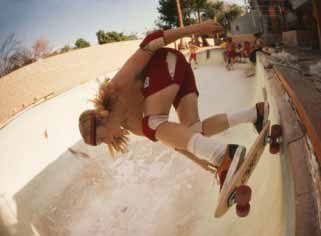
“It existed in a vacuum,” Peralta said on Friday. The championship was at the time considered to be the largest national skateboard competition in the sport’s revival, with a two-day event in this San Diego County city attracting more than 400 people. It was in this competition that the Z-Boys introduced the aggressive grinding style of skateboarding that has come to define the sport today.
Considered by many to have been an integral part of the Z-Boys, Peralta was only five years old when he first stepped onto a skateboard — a skateboard that had been discarded by one of his friend’s older brother. It was the early 1960s and the once booming skateboarding craze had just died down.
The moment he first jumped on that old skateboard, Peralta was hooked. He started skateboarding with the kids in his neighborhood, riding down to the local schools where he would later meet future Z-Boys teammates Tony Alva and Jay Adams.
“We skated literally not knowing if anyone on the planet skateboarded,” Peralta said.
As a youth, Peralta would skateboard with his imagination running wild, visualizing in his mind a scene where he would be surfing giant waves in Hawaii when in reality, he would be riding his board down to the corner from his house.
Those dreams of surfing later became a reality. It was atop the waves of Santa Monica Beach where a 16-year-old Peralta caught the attention of a well-known local surf shop owner and legend by the name of Jeff Ho and gained enough credence and respect to be invited onto the Z-Boys skate team.
“I was one of the up and coming kids,” Peralta said.“We were the next generation of surfers that were going to hold down the place.” 1975 — THE YEAR IT ALL CHANGED After joining the skate team, the young teenagers practiced almost every day behind the surf shop at the corner of Main and Bay streets, crafting the skateboard moves that have become part of mainstream skateboarding.
Skateboarding at the time was still accustomed to what Peralta calls the “60s paradigm.” The equipment used back then was primitive, giving skateboarders very little flexibility with how they could maneuver the board.
The skateboarding moves back then were gymnastic-like in nature, with one of the most popular routines being a skateboarder doing a handstand on his board.
What the Z-Boys brought to the competition was something Peralta calls the “70s paradigm” — radical and aggressive skateboarding.
Their performances at the Del Mar Nationals drew a mixed reaction from competitors and the audience.
“The young kids really thought we were something, they thought ‘wow, I want to be associated with them,’” Peralta said. “The status quo didn’t like us at all.”
The excitement from the Del Mar Nationals caught on and a year later, the first professional skateboard competition was held.
“We were in the front of the line and got a lot of opportunities,” Peralta said.
Slowly, the members of the team started leaving and Peralta became the last remaining member. He remembers the day when he told Ho that he was moving on.
“We remained friends after that,” Peralta said. “It was a sad thing because I idolized him. It’s a hard thing when a kid has to say to his mentor ‘I’m moving on.’”
Famous surfboard company Gordon & Smith offered a sponsorship deal to Peralta after he left the Z-Boys. It was considered to be one of the top sponsorship deals at the time.
Peralta went on to enjoy a fruitful skateboarding career that ended at the age of 22.
For the next 10 years, Peralta spent “retirement” running the Powell-Peralta skateboard shop in Santa Barbara, a business that found and sponsored professional skateboarder Tony Hawk.
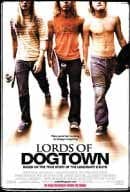
Film production was an area that caught Peralta’s attention shortly after he opened Powell-Peralta, creating a documentary in 1984 about skateboarding around the time the VCR debuted in American homes. He ended up selling 30,000 videos thanks to the advent of the VCR. Perhaps one of his most famous screen credits was as director and writer of “Dogtown and Z-Boys,”a 2001 documentary about the 1970s Z-boys team. He was also wrote the screenplay for the 2005 feature length film,“Lords of Dogtown,”and directed a 2004 documentary,“Riding Giants.”
Peralta is currently working on “The Baron Davis Project,” a joint project of Peralta and NBA star Baron Davis of the Golden State Warriors.
The film is a historical look at the African-American gang problem in South Los Angeles, Peralta said. Davis approached the former pro skateboarder a few years ago, interested in getting his foot into the film production world.
“He wants to heal his community,” Peralta said of Davis, a graduate of the Crossroads School in Santa Monica.
More than 32 years after the Del Mar Nationals, the Z-Boys have all gone their separate ways, but Peralta said he does occasionally communicate with his old friends.
But they’ll always have 1975 to tie them together for life. “They [Jeff Ho and Zephyr co-owner Skip Engblom] were heroes to us,” Peralta said. “That was a place where you could be yourself and you could be the person that society didn’t want you to be, and it was OK.”
Originally published in the Santa Monica Daily Press print edition on April 30, 2007. Read the original PDF.