

Commission rejects residential project
CITY HALL A plan to build a two-story house on the site of an historic home in Ocean Park, the source of a feud between neighbors in the Third Street Historic District, was denied by the Landmarks Commission earlier this week after a heated public hearing marked by accusations and bitter testimony.
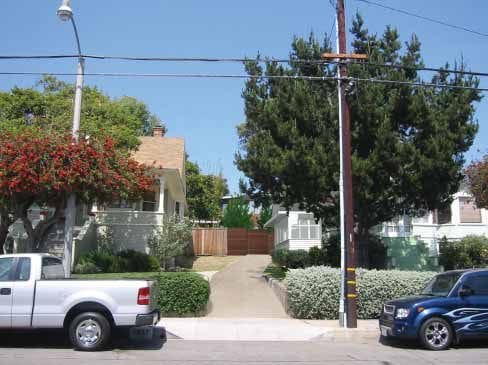
Homeowner Mark Woollen, a 13-year resident of the historic district, was proposing to reconstruct a two-story house on the rear of his property at 2617 Third St., a project that several neighbors have called modernist and out-of-scale with the nature of the district. As part of the project, Woollen is also planning to move his front house forward to make room in the back, a move that was already approved by the Landmarks Commission.
The project, which has been modified the past year into different forms and sizes according to suggestions by commissioners, has been the source of contention in the small Ocean Park neighborhood, some residents have been vocal about their opposition to the design and campaigned against it, handing out fliers and circulating petitions.
The strained relationships between the property owners and some of the opponents was clear during a public hearing Monday night, hisses occasionally heard throughout the public hearing when a person would speak in favor of the project, causing Chairman Nina Fresco to remind the audience that they should neither cheer nor jeer.
Unlike the past few meetings which were more heavily attended by opponents, the hearing included several voices in support of the designs, created by Santa Monica Architect Michael Folonis.
One such person was Ian Kelly, who was born and raised in England and renovated two houses that were more than 100 years old.
“I’m worried we’re preserving things for the sake of preserving things,” Kelly said, who reminded the commissioners that the back house is not what is considered to be a “contributing” structure to the district.
Among those who spoke in favor was Woollen’s mother, Susan Kelly, who criticized the opposition for allegedly distributing fliers that claimed Woollen was trying to ruin the historic district by proposing a monstrosity of a project.
“He’s not trying to ruin the district, he’s trying to make it as user friendly as possible,” she said.
Erin Fotos, who lives with Woollen, said her boyfriend had made a good faith effort to stay within the guidelines of the property. Her voice shaking, Fotos mentioned that several of the opponents had themselves been involved in projects that included the destruction of contributing structures.
Neighbors against the proposal say it is incompatible with the character of the district, a design that is much too large in scale and would jeopardize the unique theme of the neighborhood, which includes a series of California bungalows, American Colonial Revival and Spanish Colonial Revival style houses. Woollen’s home is amongst the row of bungalows on Third Street. Some praised the design of the house, but argued it doesn’t belong in the neighborhood.
“I like the new structure, I just don’t like it here,” said Richard Orton. “It’s kind of like putting a goat in the middle of a chicken coup and pasting on feathers.”
The project actually received a majority vote in support, but couldn’t garner enough numbers to pass. Out of the seven commissioners, five were eligible to vote — Commissioner Roger Genser had to recuse himself because he lives within 500 feet of Woollen, and Commissioner Ruthann Lehrer left because she had written a letter against the project.
Under the Landmarks Ordinance, four votes were necessary in order for the project to pass. Both Fresco and Margaret Bach voted against the project, creating a 3-2 split.
Fresco said she didn’t feel the architect had made enough changes to the project, suggesting the roof should not be flat like a Spanish Colonial Revival and instead be more at an angle to complement the front bungalow. Bach added that while she appreciated the resolution of the design from the previous times it was presented to the commission, she was still uncomfortable with the massing and shape.
The applicant will have approximately one week to appeal the commission’s decision and bring it before the City Council.
While the outcome was disappointing, Folonis said he was actually encouraged that the majority of commissioners on the dais were supportive.
“I thought that all of the commissioners were in fact all pretty positive about the project,” he said.
Originally published in the Santa Monica Daily Press print edition on January 17, 2008. Read the original PDF.