

Changing the flight plan
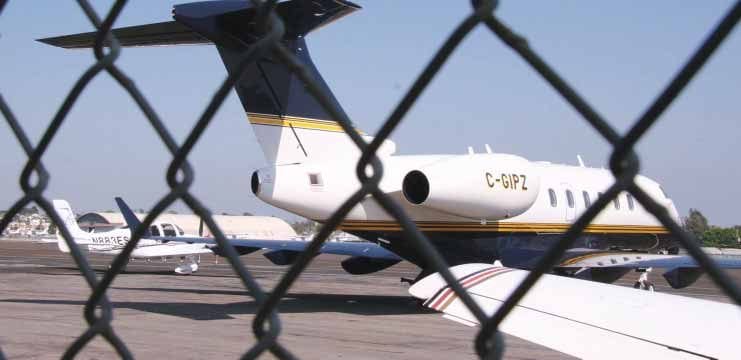
CITY HALL After having balked at the Federal Aviation Administration’s suggestion that the city purchase scores of homes on both ends of the runway at Santa Monica Airport, the City Council voted unanimously Tuesday to move forward with a ban on the largest, fastest jet aircraft, a move that is expected to improve public safety, but could also expose the city to litigation.
The ban, if approved during a second reading in January, would affect only those aircraft with approach speeds of more than 121 knots, which represent only 7 percent of total jet operations at the airport, city officials said. Other jets and piston-powered aircraft traveling at lesser speeds would still be allowed to use the airport.
For years, residents living around the airport have been calling on federal and local officials to ban the bigger jets out of fear that a deadly accident could occur if one of those jets were to undershoot or overrun the runway.
The airport lacks proper buffers or runway safety areas and is surrounded by a dense urban environment with homes located less than 300 feet from both runway ends.
City officials had been working with the FAA for roughly five years to come up with a runway safety plan, but the two sides could not come to an agreement, prompting the council to move forward with the ban, something the FAA vehemently opposes.
Federal officials say they support installing 165 feet of collapsible concrete proven to stop jets traveling at certain speeds from going off the runway, but do not support any safety measures or policies that would limit the types of aircraft that are currently using the airport, which is considered by the FAA to be a reliever airport for LAX.
In a sternly-worded letter from Kirk Shaffer, FAA’s associate administrator of airports, it is suggested that the ban is illegal and that the council should instead focus its efforts on working with the FAA to install safety enhancements and possibly purchase homes around the airport to create runway protection zones.
“Having a residential community close to the end of the runway does not affect the safety of normal operations,”Shaffer wrote.“Rather,it increases that potential for injury from an aircraft accident off the end of the runway.”
Which is why the FAA has recommended clearing land at both ends of the runway, even offering financial assistance.
Shaffer said the current aircraft that use the airport are in full compliance with FAA safety regulations and City Hall has provided no reasonable basis for restricting them.
While City Hall is the operator of the airport, it is limited in what it can do because of a 1984 agreement with the FAA that arose out of litigation. City attorneys believe the 1984 agreement and FAA orders allow City Hall to prohibit or limit any type of aircraft in the interest of public safety.
Mayor Richard Bloom said purchasing homes only to destroy them is “offensive and absurd,” and goes against Santa Monica’s goal of preserving housing and creating more when opportunities arise.
“We are not going to let up on this issue,” Bloom said, speaking on behalf of his council colleagues.
Residents don’t plan to let up either. Several spoke Tuesday before the council in support of the ban and urged their representatives to go one step further and create additional safety measures, such as runway safety areas.
Residents said they would stand by the council during the fight, but only if the council remains committed to the airport conformance plan approved in 2002 and not sacrifice public safety in the form of a compromise that provides reduced safety measures.
City officials will be meeting with the FAA and Congressman Henry Waxman (D- Santa Monica) and Congresswoman Jane Harman (D-El Segundo) in Washington, D.C. on Dec. 5 to discuss the airport. The meeting is being billed as a rare opportunity for City Hall to win safety enhancements for the airport.
Both Waxman and Harman have expressed concern about the airport and are looking at the possibility of legislation or an agreement with the FAA that would recognize the airport’s unique situation and allow it to address the safety issue apart from the FAA’s general regulations.
While residents celebrated the council’s decision, those who operate businesses at the airport catering to the faster jets were left wondering what the future holds for them if their customers are no longer allowed to land. Fixed-base operators, who provide fuel, maintenance, catering and other services to pilots and their passengers, said they made significant investments in their businesses with the belief that the fleet mix would not change at the airport, but would instead continue to grow.
“Only recently has demand developed up to the potential where we can recoup our investment,” said Jay Becker of Hangar:8 North Field Properties, which provides space for filming and events, aircraft rentals and concierge services. “If you eliminate a significant portion of our clientele, do you intend to compensate us?”
Councilman Kevin McKeown said he had sympathy for business owners, “but in the interest of safety, this City Council cannot do anything else but support this ordinance.”
Originally published in the Santa Monica Daily Press print edition on November 29, 2007. Read the original PDF.