

CITY HALL Protesters targeting specific homes, whether they have issue with a resident’s involvement in animal testing or just dislike their outdoor decor, could soon face more regulation.
The City Council is expected to consider an ordinance tonight that would create a 50-foot buffer zone, within which any picketing would be banned. The local law would also regulate the width of any poles or sticks that might be used to hold up protest signs, a measure intended to prevent the poles from being used as weapons.
The goal is to allow free speech while creating some privacy for the targeted homeowner, according to City Attorney Marsha Moutrie.
“Our purpose with the 50 feet (buffer zone) is to be careful about balancing the protester’s right, which we respect, with the homeowner’s right to have a certain amount of peace and security in the home,”Moutrie said Monday.
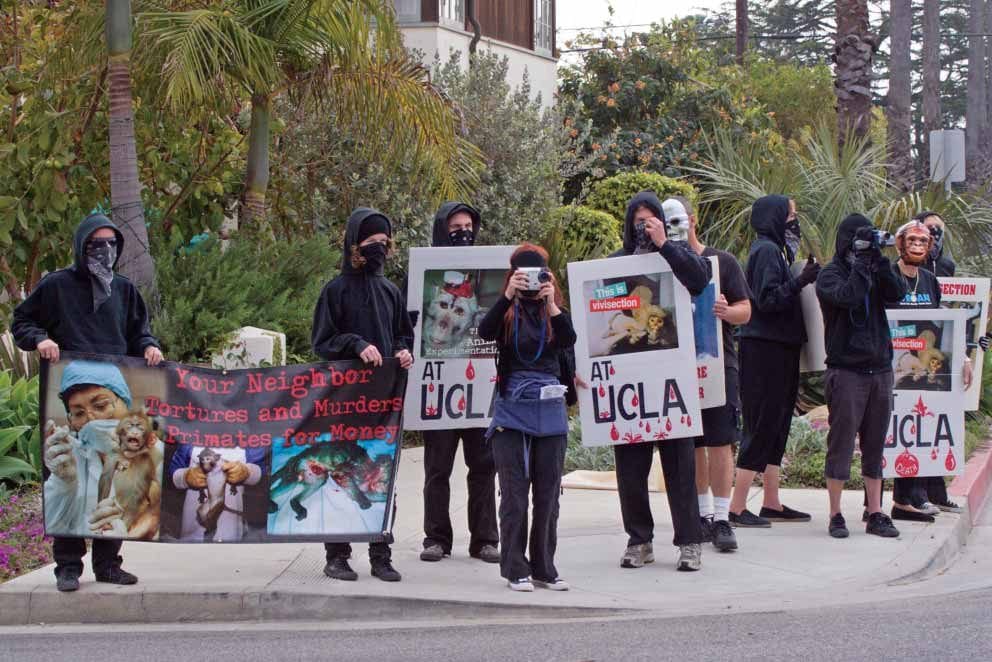
The ordinance is being proposed on the heels of a series of demonstrations that have occurred in residential areas in the past several years, including one last Easter Sunday, when animal rights activists staged a protest in front of the north of Montana home of Nelson Freimer, a UCLA professor of human genetics, whom activists allege experiments on monkeys.
“It’s to restrict their activity, because a lot of times when these protesters do their protesting, they trespass on private property,” said Sgt. Jay Moroso of the Santa Monica Police Department. “It’s to curb any types of vandalism that may occur as a result of the protest.”
The ordinance follows several laws in other Southern California municipalities that have implemented similar measures protecting homeowners’ rights against protests, including in the city of Los Angeles, which has a 100-foot buffer zone, according to Moroso.
Considering the narrow width of many of the streets in Santa Monica, 100 feet would not be a reasonable protection area for residents, effectively backing up the protesters into another property across the street from the target, Moutrie said.
In San Diego, the City Council passed an all-out ban on residential picketing in 1993, a measure that has yet to be challenged.
“It’s to protect the sanctity of the home,” said San Diego Deputy City Attorney Mary Nuesca.
Christine Garcia, an attorney representing several animal rights activists in a lawsuit against City Hall, criticized the proposed ordinance as being “reactionary”and created in response to the litigation involving the five plaintiffs suing City Hall.
“There’s been no issue of threats made to any person or any kind of illegal activity towards people’s residences in the city of Santa Monica,” said Garcia of San Francisco-based The Animal Law Office.“There actually isn’t any factual basis of recent incidents or any incidents in the city of Santa Monica.”
The lawsuit was filed against the SMPD, City Hall as well as the University of California Regents and UCLA in October, alleging that officials abused the rights of animal liberation activists during a series of protests that have occurred in city limits dating back to July 2006. The picketers were arrested without just cause, Garcia said. The lawsuit mentions several protests, including the March 18, 2007 demonstration in front of Friemer’s home on 12th Street.
A court hearing for the federal lawsuit is scheduled for Feb. 11.
Though there have been no cases of physical altercations involving a picketing sign, the proposed ordinance is meant to be a proactive measure against future incidents, Moroso said. The ordinance would limit the thickness of a wood picketing stick to less than one-quarter of an inch in thickness and less than two inches in width.
“It’s something preventative that we can institute now and it brings us more in line with the municipal codes that other municipal agencies have with regard to picketing,” he said.
Originally published in the Santa Monica Daily Press print edition on January 8, 2008. Read the original PDF.