

Council approves red light cameras
CITY HALL Red light cameras got the green light Tuesday when the City Council voted unanimously in favor of a one-year pilot project involving three intersections.
Councilmembers were hesitant to approve such a plan in 1999, when the idea was first introduced, citing concerns about privacy, faulty equipment and the manipulation of traffic lights.
However, advances in technology have made the cameras — which snap photos of drivers running red lights — more accurate and effective, leading to the 6-0 decision Tuesday night.
“It was never a concern that red light-running was not a big deal,” said Councilman Kevin McKeown, who voted against the cameras in eight years ago. “There were concerns about civil liberties, the accuracy of the technology and concerns about companies shortening the period of yellow lights to increase the number of tickets.”
Since companies no longer receive a percentage of the fines issued, and the cameras only photograph drivers and not their passengers, McKeown, as well as other members of the council, felt it was important to move forward with the pilot project.
“This is an important issue for us and those people who lose their lives every day because of people running red lights,” McKeown said.
The intersections where cameras would be installed under the pilot program have not yet been identified.
SMPD Chief Timothy Jackman said intersections will be studied to determine which ones would be best to monitor.
Selecting a vendor and installing the cameras could take anywhere from three to six months, Jackman said.
Studies have shown that the cameras do work. A study released in January 2005, found that intersections equipped with cameras saw a 40-percent decrease in violations. They also found that cameras had a “halo” effect, where nearby intersections also saw a drop in violations. For example, Dayton, Ohio, reported a 9-percent drop in accidents at all city intersections after installing a red light program.
That said, red light cameras have been controversial, with many motorists coming out against them, claiming the technology has not been perfected and is an invasion of privacy. Some have suggested making yellow lights longer as a way to cut down on accidents.
There have been lawsuits challenging the use of the cameras, saying they violate a constitutional right to due process. Some cities have stopped using the cameras altogether because of the cost of fighting lawsuits.
In a report completed by the California State Auditor in 2002, their legal counsel advised that a literal reading of the state law limits the photographs taken by red light cameras for enforcing traffic signal violations.
However, some law enforcement agencies have asserted that other legal principals permit the usage of the photographs in criminal investigations.
The City Attorney would have to review the legal findings in the event a red light camera system is adopted, said officials with the Santa Monica Police Department.
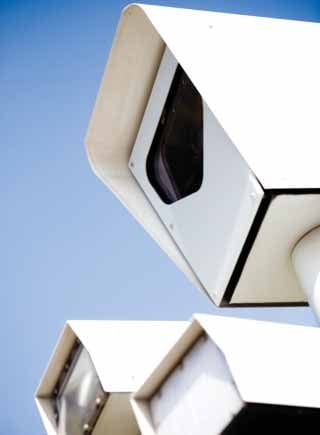
Red light cameras are positioned at intersections in such a way that they can capture images of cars, their drivers and their license plates if a motorist enters an intersection when a traffic light turns from yellow to red. Some cameras are capable of making a short video clip that captures the full violation, a better way of confirming that a driver did, in fact, run a red light.
The fine for running a red light is $381, which includes court costs and penalty assessments, a clerk with the Santa Monica Courthouse said.
SMPD officials said the photo system is not indiscriminate in nature and captures only the specific drivers and vehicles that violate the law. Any passengers in the vehicle are not contained in the photograph.
The cost of the program could be as much as $172,000, however, Jackman said that because it is a pilot, much of the work will be absorbed by existing staff, cutting down costs.
Some vendors offer a “no cost” program, whereby the cost for the equipment is a flat rate and if the revenue generated from a particular intersection does not pay for the cost of the equipment, the cost is adjusted to a break-even amount or moved to a different intersection.
That National Highway Traffic Safety Administration reported that, in 2000, more than 2.8 million intersection-related crashes occurred — representing 44 percent of all reported crashes. Motorists were also found to be injured more often in red light violation crashes than in any other type of crash. These numbers included about 8,500 fatalities and almost one million crashes with injuries occurred at or within an intersection.
The cost for intersection-related crashes is approximately $40 billion a year, according to the Federal Highway Administration.
In Santa Monica, the number of accidents caused by red light violators reached 73 in 2006, representing 3.9 percent of total accidents. That was down from a year ago, when 95 accidents were caused by those failing to stop for a red light.
“I think this is a step forward for public safety for Santa Monica and now that the technology has improved, it really makes it all the more compelling,” said Mayor Richard Bloom.
Originally published in the Santa Monica Daily Press print edition on September 27, 2007. Read the original PDF.