

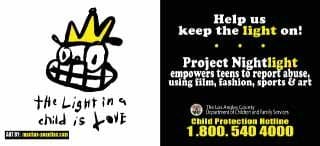
VENICE High above the shoppers and diners along casual Abbot Kinney Boulevard sits an abstract drawing of a smiling boy wearing a crown. Scribbled beneath him: “The light in a child is love.”
On the same billboard is the number to a telephone hot-line, encouraging teenagers to call if they, or someone they know, is a victim of abuse.
The serious message in an otherwise light-hearted shopping district adorns the corner of Abbot Kinney Boulevard and Westminster Avenue. It’s paid for by Project Nightlight, a non-profit organization that aims to empower victims of child abuse through fun activities, such as music, shopping, sports and movies.
The organization was launched in 2003 by Stacia Oemig out of her home in Venice. A victim of child abuse, Oemig started the organization to encourage youths to report abuse, understanding full well the fears associated with speaking out.
Oemig and her younger brother were both physically abused by her stepfather and remained silent until after she left for college. Throughout the years, a social worker would stop by the house asking questions and the children would lie and say everything was all right, Oemig said.
“I didn’t want to be separated from my younger brother,” said Oemig, now 32.“I thought foster care was this horrible, awful thing.”
It wasn’t until after she graduated from college that Oemig realized she should have reported her stepfather, learning of the benefits of the foster care system.
“I want (victims) to realize they don’t have to be afraid,” Oemig said.
The 1-800 number on the billboard goes to the Los Angeles County Department of Children and Family Services, which works with the approximately 20,000 children currently in foster care.
An intake children social worker handles the calls and conducts a first assessment, retrieving as much information as they can from the caller. Upon evaluating the information, the worker will either immediately respond to the home of the child or wait anywhere from one to five days before responding, said Louise Grasmehr, the director of public affairs.
The department receives about 150,000 individual reports of child abuse every year from the hotline.
“I think a lot of people feel helpless and feel like there is nowhere they can turn, or if they know someone is being abused, they don’t know what they should do,”Grasmehr said.
Children usually come to realize by their early teen years that abuse — whether it’s from a family member, a neighbor or teacher — is not right, Oemig said, who started fighting back at the age of 15.
Many children are afraid of reporting abuse because of retaliation and the fear of the unknown, Oemig said.
“Social care is a big black hole, and not knowing is enough to scare them,” she said.
Project Nightlight started with billboard and public service announcement campaigns, working closely with organizations and agencies like the Department of Children and Family Services.
It has grown over the past few years to where volunteers now work directly with victims of child abuse, providing free programs that include instructions on video editing, skate-board lessons and shopping trips for the girls in foster care.
The concept is similar to the Make-A-Wish Foundation, except in Project Nightlight’s case, the children are not terminally ill, the budget is much smaller and the “wishes” are usually activities.
The organization recently began funding chess lessons for several foster care children who mentioned they wanted to learn how to play the game, Oemig said. Operating from a $40,000 annual budget, many of the activities are either funded through Project Nightlight or donations.
Project Nightlight volunteers also work closely with the foster children featured in “Wednesday’s Child,” a weekly segment on KTTV.
“Anything that empowers the children is great and anything that raises their self-esteem gives them hope, exposes them to new opportunities and new experiences,” Grasmehr said.
For more information, visit www.projectnightlight.org.
Originally published in the Santa Monica Daily Press print edition on July 31, 2007. Read the original PDF.