

By series of cognitive exercises.
“The more cognitive exercises I gave him, the more with it he was, the happier he was and the calmer he was,” Michel said. “And the more I did that the more the benefits seem to accrue and the more he seemed to sustain himself over time.”
From this experience, Michel developed a system of computer-based interactive brain exercises for senior citizens, called the [m]Power cognitive fitness system. Through mental stimulation, the cognitive games help delay the onset of dementia, said Michel, who launched Santa Monica-based Dakim Inc. in 2000.
The computer exercises are designed to be user friendly to even the most computer-illiterate person, utilizing a touch-screen interface. The difficulty level of the exercises can be adjusted to match the natural progression of the user, Michel said.
Health experts say that constant mental stimulation, such as doing crossword puzzles and other brain games, can delay the onset of dementia.
The Memory and Aging Research Center at UCLA published a study last year that found people living a healthy lifestyle that included memory exercises and physical conditioning showed improvement in their memory scores as well as in brain efficiency on brain scans, said Dr. Gary Small, the director of the Memory and Aging Research Center.
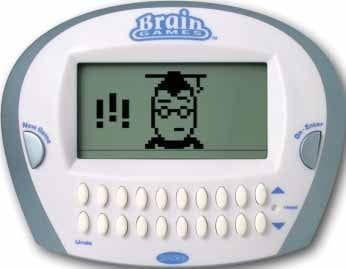
Small is the author of three books on the topic of memory enhancement and the creator of an interactive handheld game called “Brain Games.” Games like “Brain Games” and “Brain Age” — a series of cognitive exercises played on the Nintendo DS handheld system — are believed to help delay dementia.
Other studies have found that walking 10 minutes a day as well as proper stress management can also lower the risk of Alzheimer’s disease, said Small, adding that “what’s good for the heart is good for the brain.”
A proper diet can also help, especially the consumption of antioxidant fruits and vegetables.
“Oxidation is the underlying theme of many age-related conditions from heart disease to cancer to Alzheimer’s where we know there’s inflammation in the brain,” Small said.
Debra Cherry, the executive vice president of the Alzheimer’s Association of Los Angeles, said people with higher levels of education seem to get Alzheimer’s disease later. The same goes for people who remain socially active. But a delay doesn’t mean the disease won’t eventually strike, she said.
“If they exercises and eat right, they will have built up some resistance or cognitive reserve,” Cherry said. “What would happen to them (Alzheimer’s) probably would happen later.”
Evelyn Tummulo retired more than a year ago and tries to maintain an active lifestyle. The 78-year-old Santa Monica resident said she fears Alzheimer’s disease, everyone does.
Her system involves private fitness training sessions once a week, constant traveling and a busy social calendar filled with activities with friends that are both her age and years younger.
“I think the young person keeps you on your toes more or less and you learn more from them,” Tummulo said.
It’s a system that has worked well for Tummulo.
“It’s for me, but it doesn’t mean it’s for everyone,” she said.
AFTER IT HAPPENS In the early stages of dementia, there are therapeutic exercises that can help improve and maintain a person’s mental functioning.
Such exercises are available through the WISE Senior Services’ Adult Day Service Center on Pico Boulevard.
The center assists people with early-stage dementia, Alzheimer’s disease and Parkinson’s disease, said Frankie Aggers, the program director.
Many of the clients that visit the center live with their families and spend their mornings and afternoons at the center while their loved ones are working. The adult day center provides activities and meals.
Aside from assisting the patient, the center also lends a helping hand for the caretakers, giving them a breather a few hours a day, Aggers said.
“Our goal is to allow clients to avoid premature institutionalization and remain in their community and remain with their families,” Aggers said.
Originally published in the Santa Monica Daily Press print edition on July 23, 2007. Read the original PDF.