

Commercial jets possibly restricted
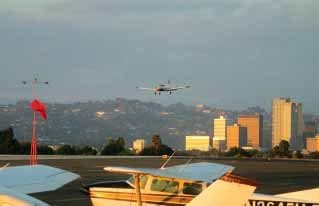
SM AIRPORT Residents’ attempts to ban corporate jets from flying over Santa Monica just might pay off as the FAA, which controls aviation activity at the airport, considers possibly preventing or limiting certain types of aircraft from using the facility because of safety concerns.
The Federal Aviation Administration recently convened a meeting with pilots and operators who routinely use the airport to collect data and feedback on their flights and whether or not proposed runway safety enhancements would prevent them from flying in and out of the airport.
City Hall, at the urging of residents living at both ends of the airport, has been negotiating with the FAA since 2002 to implement safety enhancements, which are sorely needed given the increase in faster, larger jet aircraft using the airport.
Comments collected from pilots will be analyzed by the FAA, City Hall and the Airport Commission later this month to determine what types of planes can safely take-off and land at the airport if safety enhancements were to be enacted.
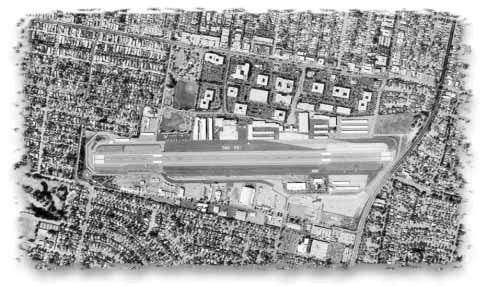
The enhancements may include creating runway safety areas that would decrease the available landing and take-off area pilots use, reserving it for emergencies only. While advancements in technology have allowed jet aircraft to use the airport’s relatively short 5,000 foot runway, the margin for error is slim, which prompted city staff to examine the issue. By further eliminating the amount of available runway, also known as the landing threshold, jets may be grounded.
There are those who are encouraged by the progress made so far between City Hall and the FAA. The two parties have been at odds for years as residents and elected officials alike have complained about the slow pace of the process and are urging the FAA to act before there is a tragic accident.
“We are looking at a potentially tremendous disaster, and the longer we wait, the greater chances are that it can occur,” said Susan Hartley, a member of the Airport Commission, which is expected to address runway safety at its March 26 meeting.“If we had a crash … (where) the plane goes off the west end of the runway, it would travel all the way to 18th Street. That’s the sort of impact we’d face. Think about all of those families.”
Several council members have expressed their displeasure with the FAA and the process.
“It is very disappointing that it’s four years later and it looks like we’ve made no advancements accept that the FAA has become our adversary,” said Councilman Bob Holbrook. “They have offered their views on runway safety and they seem to be less than what is necessary … My only fear is that we will present a plan and the FAA will determine that it is not a perfect plan … and we tell them to shove it and then we launch into some other direction and five years from now, we’re still fighting and we won’t have anything.”
City Hall and the FAA have battled each other over operations at the airport, with federal officials resorting to legal action to prevent City Hall from enacting an airport management plan that called for the elimination of larger aircraft. That led to a settlement agreement that is good until 2015, at which time many residents and city officials hope they will be able to gain more control over flights.
Representatives from the FAA could not be reached for comment, however, in the past they have said they are committed to working with City Hall to find a solution and are very eager to increase runway safety. However, to help relieve traffic at LAX, federal officials are also interested in making sure the airport remains available to as many classes of aircraft possible.
At most commercial airports, the standard runway safety area is 500 feet wide and extends 1,000 feet beyond each end of the runway, according to the FAA.
However, since many airports were built before the 1000-foot extension was adopted some 20 years ago, many, including Santa Monica, cannot achieve the full standard. This is due to obstacles such as bodies of water,highways, railroads or a severe drop-off in terrain.
In Santa Monica’s case, there are homes located directly adjacent to the runway.
City staff has proposed creating a 600 foot runway safety area on the east end of the runway and a 300 foot runway safety area on the west end with a 250 foot Engineered Materials Arresting System (EMAS) bed, a stretch of pavement injected with air bubbles designed to collapse under the weight of an aircraft as large as a Boeing 737 jet traveling as fast as 50 knots. Residents said since bigger aircraft would be the only ones affected by the creation of runway safety areas, they should be the ones to pay for the EMAS system.
A standard EMAS installation extends 600 feet from the end of the runway. An EMAS arrestor bed can still be installed to help slow or stop an aircraft that overruns a runway, even if less than 600 feet of land is available.
“I think it’s time for us to be really clear where we are headed,” said Councilman Kevin McKeown. “Let’s be clear to the FAA, the Airport Commission and let’s be clear to the community. The time has come. Let’s get it done.”
Originally published in the Santa Monica Daily Press print edition on March 10, 2007. Read the original PDF.