

By B Y D A N E R O B E R T S W A N S O N BOOKREVIEW
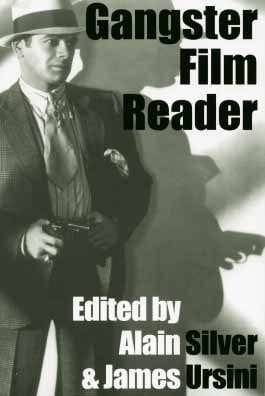
With “Gangster Film Reader” the co-editors Alain Silver and James Ursini have given to us, the gangster film buffs of the world, another volume to add to our film library. This book contains a collection of 25 essays covering the gangster genre of cinema from the 1930s to “The Sopranos.”
What is so interesting is the gangster motif is a saga. It seems people are fascinated with modern day outlawry and modern day outlaws. That may be the reason “The Sopranos” lasted so long. It’s also the reason we enjoyed “The Godfather” so much.
The book presents three sections: Section one covers seminal works, section two covers case studies of individual movies, section three presents contemporary views of the genre.
In section one we are told the American gangster film genre began back in the1930s with “Little Caesar,” “Scarface,” and “The Public Enemy.” The silent era had gangster films but the motif of the bad guy grappling for power and position surfaced with these three films as the basis. Another motif is the vet returning from war a changed man often turning to crime rather than away from it.
The gangster film genre, it is pointed out, was influenced by many factors. The depression era influenced American gangster films heavily. The Japanese gangster film was similarly influenced by the Samurai warrior. The British gangster film was influenced by the atmosphere arising from the end of WWII.
The second section suggests that the mythology surrounding the gangster culture influenced popular writing. In the essay “White Heat” the connection between the movie and some of the James Bond novels is noted.
Further on the essay suggests “The Fort Knox passage’s similarity to final heist of ’White Heat’ is too exact to be coincidental.”
This section gives instances of theme development as seen in individual movies such as “Prizzi’s Honor,” “The Godfather,” and ”Scarface.”
One of the essays in the third section compares the gangster motif to the horror motif. “Some of the most terrifying realist horror offerings in the cinema are better known as gangster movies,” states Catherine Don Diego in her essay “Hits, Whacks, And Smokes.”
Even the female role in the genre is discussed: In “A New Kind Of Woman,” essayist Dominique Mainon states “A fallen woman’s power is usually false, controlled by the man.” She goes on to write, “After an initial flash of anger, she accepts the trade off of her physical commodities for entrance into a socio-economic realm previously denied to her.” Yet she reminds us, “The cuckolded male is the mainstay of the gangster film, whether he is willingly cuckolded or not.”
Some of the areas handled in this last section are: The British gangster film, reforming the Hollywood gangsters and the Hong Kong gangster film, which is very similar to its western counterparts.
This reader is a good one for students of a film studies class as well as the general reader who enjoys the gangster film genre.
Originally published in the Santa Monica Daily Press print edition on August 23, 2007. Read the original PDF.