

Santa Monica City Council ban strips Henna artists of their livelihoods
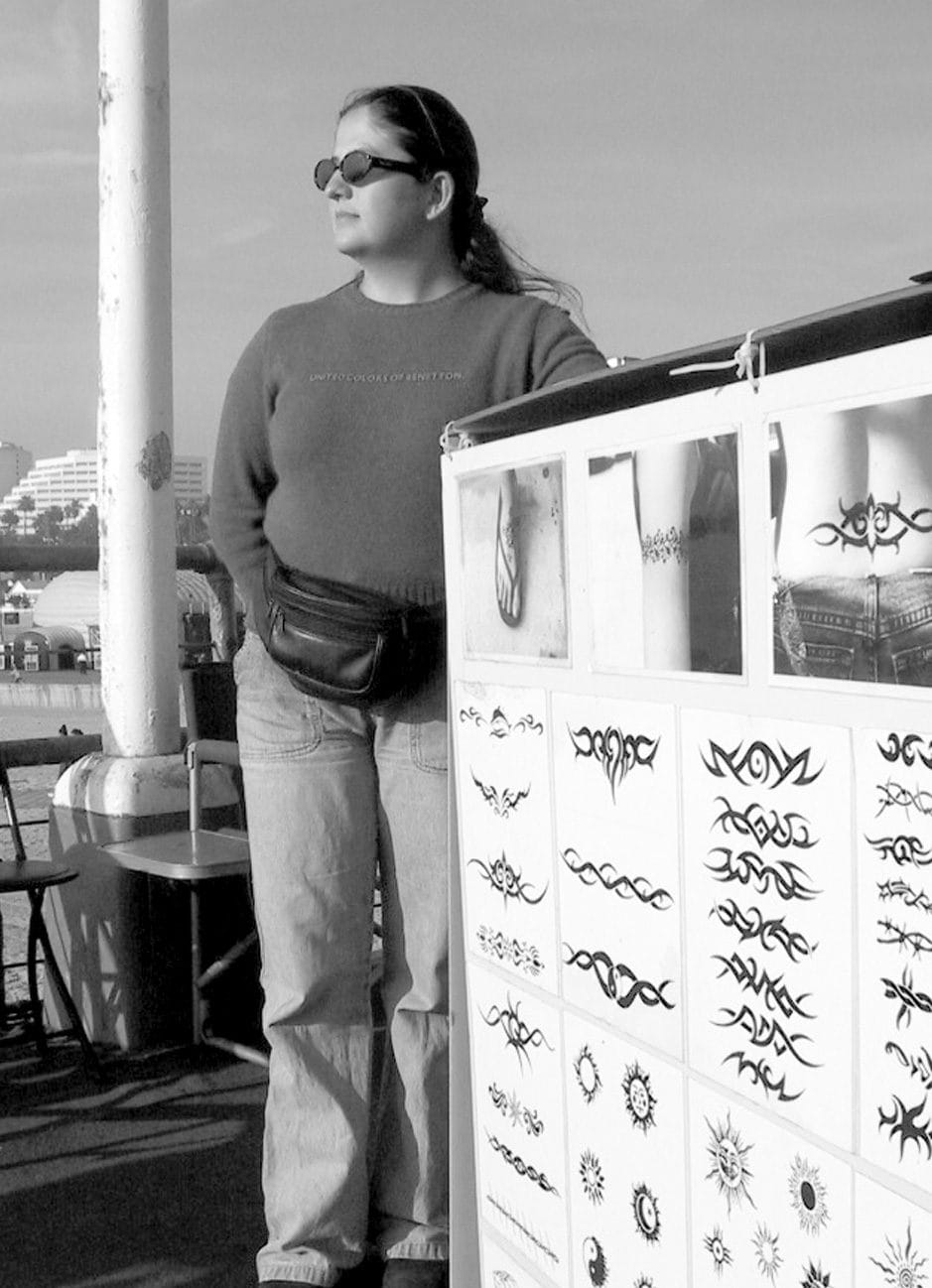
Henna artist Fulya Okatar has been working steadily for nearly three years on the Santa Monica Pier. On a good day, she’ll draw about 30 to 35 temporary tattoos — at $5 to $10 a pop — mostly on the arms and legs of young tourists.
But not anymore. Starting next week, Okatar is out of a job, thanks to the Santa Monica City Council.
“It’s a decent living,” said Okatar, a Turkish immigrant who usually leaves her Culver City apartment at 4 a.m. every day to secure a prime space on the busy pier. “It’s hard to believe soon I cannot be here anymore.”
Last month, the Santa Monica City Council voted to amend the street performer ordinance and ban henna artists from the Third Street Promenade and the pier. Henna is a non-permanent dye used in tatooing.
“It’s ridiculous, honestly,” said Okatar of the revised ordinance. “I wish someone could explain to me what is this really all about?”
The answer is varied, depending on who you ask. Some contend henna artists were shown the door in the interest of public safety. Others, including the city’s mayor, claim the artists are just the latest victims in a turf war between community leaders with intensely conflicting visions of the future of the city’s commercial core.
Following a spirited debate at an Oct. 9 meeting, the council voted 4-3 to amend Santa Monica Municipal Code Section 6.112.020 to define a henna tattoo as a “tangible art object” like a painting or a sculpture.
But the staff report on the issue indicates that the henna-related revisions to the street performers code were necessary to insure public safety.
“The City has received complaints of skin rashes and other adverse reactions. One person, who received a henna tattoo after being told that it was temporary, sued the city for permitting the activity months later because the tattoo could not be removed. These events raised concerns among staff members about the advisability of continuing to permit these activities as performance,” the report reads.
Skin rashes and other complications are caused by “black henna,” or phenylenediamine, a hair dye. The black hair dye is cheaper than traditional henna dye, which is red, and has been used for skin decoration and body art for thousands of years.
Santa Monica Mayor Michael Feinstein believes the “black henna” argument was nothing but smoke and mirrors — a scare tactic designed to mask the ban’s true intent.
“This is about how yuppie or not this community is going to be,” said Feinstein. “We had a very contentious summer and it became a competition about who can win on the council.” He vowed that he would bring the issue back to council next year, when and if new councilmembers are elected.
“This is about how yuppie or not this community is going to be. We had a very contentious summer and it became a competition about who can win on the council.” — — MICHAEL FEINSTEIN Santa Monica Mayor
“Because I really do think it was an ugly class warfare thing,” he said.
Councilman Ken Genser, who along with Herb Katz, pushed hard for the amendment, argued, “If we let (henna) go forward, we might as well let hair braiding and other cosmetology on the Promenade … I think what really matters is it’s not a performance.”
Judging from the wording of the amendment, and Genser’s statements at the October meeting, it appears as though the intention of the new law is to mollify rent-paying business owners on the pier and Promenade who feel henna artists have been getting a free ride. (Street performers pay a $37 annual licensing fee.) According to Steele Smith, the city’s street performer liaison, concerns about “black henna” are valid. By allowing henna to continue without a safety testing procedure in place, the city would be opening itself up to additional lawsuits.
Smith claims the city doesn’t have the money to allow for ink testing. He suggested a plan that would allow henna artists to remain on the pier and Promenade if they obtained their own liability insurance. However, the plan was not mentioned at the October meeting.
“There were plenty of alternatives to simply banning henna that were never considered,” said Linda Sullivan, a board member of the Pier Restoration Corporation, which manages the pier. “Instead of looking at this as people’s livelihoods they were taking away, the council chose to go with the simplest solution for themselves, which was just getting rid of the henna artists and moving on.”
“There were plenty of alternatives to simply banning henna that were never considered. Instead of looking at this as people’s livelihoods they were taking away, the council chose to go with the simplest solution for themselves, which was just getting rid of the henna artists and moving on.” — — LINDA SULLIVAN Board member of the Pier Restoration Corporation
Sullivan expects the loss of the henna artists to have an adverse affect on local businesses, since henna has traditionally been a big draw on the pier and the Promenade. She’s also discouraged by the “over-regulation” of public space, the venue for street performers.
“Our public spaces are being turned into shopping malls,” said Sullivan. “Each and every one of us has been reduced to being nothing more than consumers” in some government officials’ eyes.
As for Fulya Okatar, she says she has “no idea” where she’ll take her henna once the Santa Monica ban goes into effect. She’s tried securing space in Venice, but claims it is simply too crowded.
“They’re saying this is not an art, and that is just wrong,” said Okatar. “They’re getting rid of us and this beautiful art for all the wrong reasons.”
Originally published in the Santa Monica Daily Press print edition on November 16, 2001. Read the original PDF.