

Treesavers could appeal decision
CITY HALL The efforts of a group of environmental activists to historically preserve 153 ficus trees in downtown Santa Monica failed on Monday night, possibly setting the stage for a litigious showdown that could determine the outcome of a contentious tree removal plan.
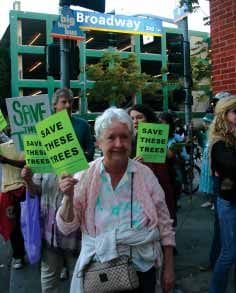
The Landmarks Commission rejected a request by the Santa Monica Treesavers to historically and culturally designate a series of large canopied ficuses on Second and Fourth streets, an attempt by the ad hoc organization of residents and business owners to keep the trees from being uprooted.
The so-called Treesavers have collectively been mobilizing the past four months to pull the plug on the removal of 54 ficus trees from the downtown area, part of City Hall’s plans to improve and beautify Second and Fourth streets from Colorado Avenue to Wilshire Boulevard. The streetscape improvement project calls for the transplantation of 31 ficuses to elsewhere in the city and the destruction of 23 trees that have been identified as structurally deficient and unlikely to survive a move.
The turn-of-events on Monday evening following an emotionally-charged public hearing in City Hall is likely to revive a lawsuit by the Treesavers, which alleges City Hall violated state law by failing to submit an environmental impact report. A few days before the project was set to start in October, a Los Angeles County judge issued a temporary injunction against City Hall, halting work crews from removing any of the trees. The environmental activists put the lawsuit on hiatus after they filed a petition to designate the trees as landmarks late last year.
“We preferred that would never have happened in the first place,” Jerry Rubin, one of the leaders heading the ficus movement, said on Tuesday of the lawsuit.
The Treesavers were scheduled to meet on Tuesday night to discuss their options with attorney Tom Nitti, options that include filing an appeal to the commission’s decision, which would have to be done within the next nine days.
A court hearing is scheduled on Feb. 22 and City Hall has promised not to touch the trees until then, Nitti said on Tuesday.
The commission had postponed discussing the trees at least twice since it first appeared on its agenda in November. The Treesavers requested the postponements because they wanted more time to prepare an argument.
Assistant City Manager Gordon Anderson asked the commission to make a final determination on Monday night, reminding commissioners that delays meant City Hall would be losing money on the project.
The commission was near unanimous in denying the landmarks application, with Ruthann Lehrer being the sole voice in support of designation, persuaded by a revelation of a possible tie-in between the planting of the trees in the early 1960s and the women’s and environmental movements. City staff had recommended that the commission deny the request, finding that the trees did not meet any of the six criteria necessary for a designation.
Apart from promoting the ecological virtues of the ficuses, the Treesavers dedicated a bulk of their argument on the story of former Santa Monica resident Jacqueline Girion, a long-time community activist who was considered to be instrumental in getting the trees planted. Girion resided in the Ocean Park neighborhood for 16 years and for a period of time served on the Santa Monica Chamber of Commerce’s City Beautification Committee. It was on this committee that Girion, a mother of five children, fostered a relationship with downtown business owners and helped secure the planting of the ficus trees, according to the Treesavers.
“The... ficus trees now flourishing on Second and Fourth streets are a testament to the environmental vision of Jacqueline Girion,” said Treesaver Michele Modglin.
Two of Girion’s sons — Sherwood, the eldest, and Shephard, the fourth child — spoke at the meeting, the younger Girion reminiscing about sitting as a child on his mother’s lap while she called business owners with the tree proposition.
“Not one of those trees represents a historic site,”Shephard Girion said.“As a collection, they represent Santa Monica.”
Under the landmarks ordinance, a structure can qualify for designation if it is associated with a historic person or significant event. While Girion might have been instrumental in planting the trees, some commissioners said they didn’t believe she was an historic figure and couldn’t find enough significance with the trees to warrant a designation.
“These special trees have a groundswell of public support, there’s a reason for it because they’re individually important,” said Commissioner Roger Genser. “As a group, I don’t think they come to a level of being landmarked trees.”
Lehrer disagreed and said while Girion might not fit the traditional description of a historic person, her contributions to the civic life of Santa Monica was significant.
“I was quite taken and amazed by her contributions,” Lehrer said.
Originally published in the Santa Monica Daily Press print edition on January 16, 2008. Read the original PDF.