

The historic debate
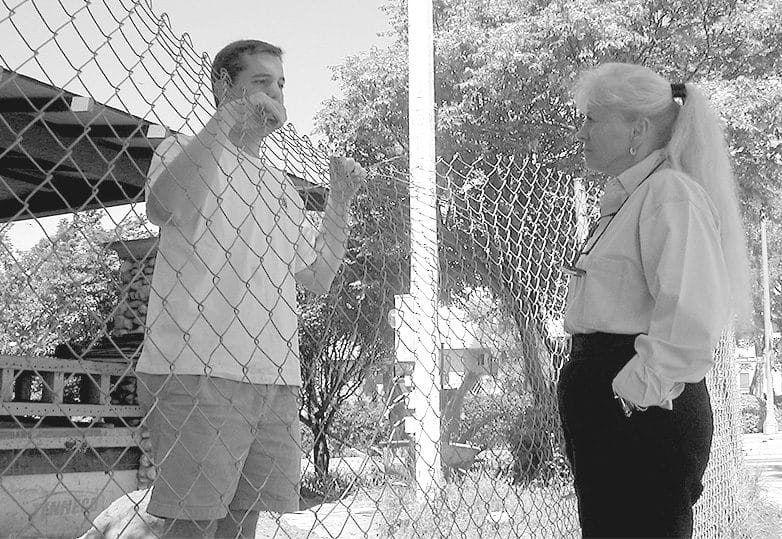
In Bea Nemlaha’s Ocean Park neighborhood, homeowners are on a first name basis. They waive across their fences and chat with each other along sidewalks on weekday afternoons as young kids tumble around in small postage stamp-sized front yards.
Their suburban enclave may be a dying breed in Santa Monica, where many older single-family homes are rapidly being torn down and replaced with mansions, condominiums and apartment complexes.
When developers 12 years ago bought six properties on the block dating back to the early 1900s to build condominiums and apartments, Nemlaha and her neighbors feared their cozy neighborhood was going to be lost forever.
Instead of passively letting it happen, the group did something nobody in Santa Monica had done before — they had their neighborhood designated as a historic district.
The process wasn’t easy. It took more than seven months of research by residents on the block, three hearings before the city’s Landmarks Commission and two more in front of the city council.
In 1990, the Third Street Historic District — which stretches west between Third and Second Streets and from Hill Street to Ocean Park Boulevard — became the first ever created in the city.
“What this does for us is that it protects us,” said Nemlaha, a family law attorney who has lived in the neighborhood since 1981. “It protects us from developers and speculators coming in and buying everyone’s home, building and then leaving. It protects us from our own neighbors doing crazy things with their homes.”
The historic debate
Some homeowners have recently organized to fight possible historic districts designations. They fear the city will take the results of a recently completed survey of homes north of Montana Avenue — one of the wealthiest neighborhoods in the city — and create six districts recommended in the report.
Calling themselves “Homeowners for Voluntary Preservation,” the newly-formed committee has begun circulating a petition in an effort to allow homeowners a choice as to whether their homes should be classified as landmarks, or “structures of merit.” The group needs 6,000 signatures to place the measure on the November ballot.
Committee members believe the current ordinance imposes restrictions on private property and constitutes an unwarranted intrusion of personal freedoms. They claim homeowners won’t be able to alter their homes without government approval if they are designated as historically significant.
But Nemlaha said the report documents how quickly older homes are being replaced with newer ones. The report points out that of about 350 homes north of Montana worthy of designation, less than 1 percent have been preserved.
“The urgency for preserving our neighborhood at the time was very real,” Nemlaha said, “but citywide, it was no where near as critical as it is today.”
The city’s landmarks ordinance allows the city council to designate homes historically significant and carve out entire neighborhoods to create historic districts. While the city council is the only body that can make those designations, an all-volunteer Landmarks Commission is charged with approving exterior changes made to already designated homes and finding other homes worthy of preservation.
The criteria for being considered a historic home isn’t strict. The home has to have been built more than 40 years ago, it has to have distinct architectural features characteristic of the neighborhood or it has to have served an important role in the city’s past.
And while the city council doesn’t need a homeowner’s approval to bestow landmark status on a home, officials have said they typically want the support of at least 60 percent of residents living within a possible historic district before creating one.
“If the neighbors had been significantly opposed to designation then it’s highly unlikely the Landmarks Commission would have recommended our district or the city council would have created it,” Nemlaha said.
History can be changed
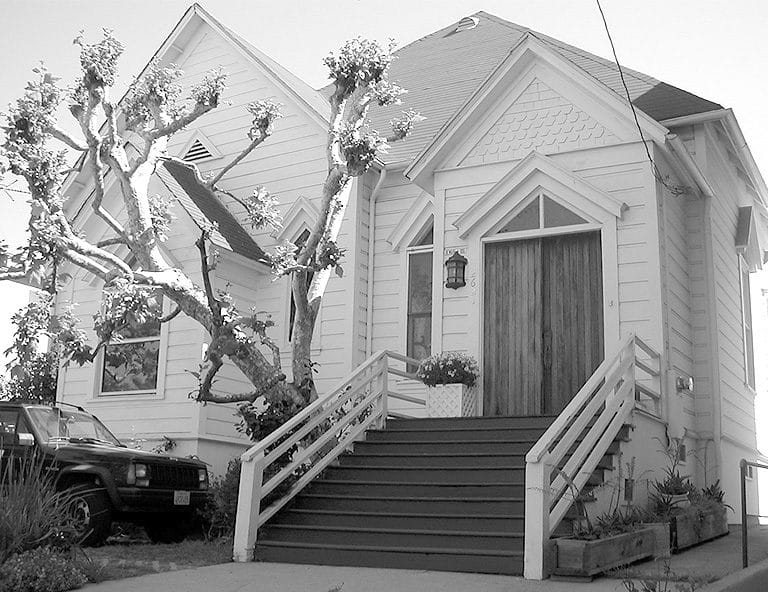
Areas are typically designated as historic districts to maintain the character of the neighborhood in relation to the history of that part of town, Nemlaha said. The Third Street Historic District showcases two-story, 1920-era homes in Ocean Park, while the Bay Street District showcases earlier beach bungalow style homes.
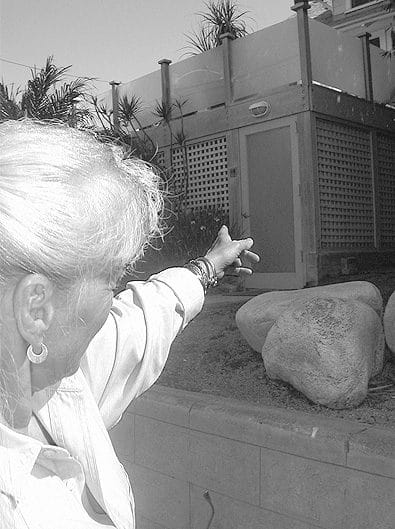
That’s not to say Nemlaha’s neighborhood hasn’t changed. The house next to hers has had two dormers added in the past few years. Nearly all the homes along the block have skylights, some visible from the street. Currently there are at least three homes under construction — one homeowner has nearly completed an addition that will double the size of his house.
“Sure there was paper work and permits needed,” said Scott Campbell, a Third Street resident, of the renovation which will double the size of his home. “But it wasn’t very bad. In many ways it was the normal bureaucracy you expect with a project of this size.”
Nemlaha has extensively remodeled the interior of her home. In the dining room, a yellowish Beachwood floor has been installed on top of the dark reddish-brown oak hardwood floors common throughout the rest of her home.
Upstairs she has removed part of the ceiling to expose rough wooden beams and added skylights. She has installed an eight-foot long bay window in her bedroom, through which a patch of the Pacific Ocean can be seen shining brightly under an afternoon sun.
Homeowners and tenants of the street regularly get together to look over changes a neighbor might want to make. After studying the plans and reading reports from senior city staff, the group votes on their own recommendation.
Many times those recommendations have little effect on the city’s decision. In the 12 years since designation, there have been 10 major changes made to homes along the two blocks. The group has opposed only three of those, but the city allowed two of them to go forward despite neighbors’ objection.
Recently, the group has opposed one neighbor’s request to knock down his front porch and build a subterranean parking garage directly under the front of the home. The Landmarks Commission agreed with homeowners that the placement of the garage would significantly alter the character of the neighborhood. The homeowner has appealed the decision to the city council.
When asked if neighbors should be making decisions about others’ property, Nemlaha responds that home buyers knew they were moving into a historic district ahead of time.
In the case of the subterranean garage, she said neighbors aren’t making that decision — the city council will have the final say.
“We live in a representational government for a reason,” she said. “We ask our elected leaders to take a broader view and make difficult decisions.”
Originally published in the Santa Monica Daily Press print edition on April 22, 2002. Read the original PDF.