

COMMUNITY PROFILES
By PAM WIGHT Special to the Daily Press
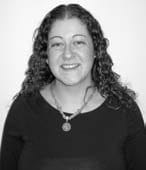
Santa Monica resident Laney Kapgan finally gets to go to Israel and just before age disqualifies her from getting that trip for free.
Founded and financed by several Jewish philanthropists, Taglit-birthright Israel is an organization that provides free 10-day trips to Israel for Jewish youth between the ages of 18 and 26 in order to acquaint young Jews with their heritage. Kapgan turns 26 in May.
Kapgan, a domestic violence educator, had tried for 10 years to go to Israel, beginning with the traditional 10th grade confirmation trip that many American Jewish youth take. But her 10th grade trip coincided with the Gulf War and had to be canceled due to security concerns.
Since that time, financial obstacles and college prevented her from realizing her dream of experiencing Israel.
“Growing up Jewish, your parents are always sending you to all of these Jewish cultural activities all the time,” Kapgan said. “To this or that class through your temple, Sunday school and so on — and maybe you’re not always fond of it, but the culmination is this great trip to Israel you take in 10th grade. And mine got cancelled. So this is my last chance to go for free through this program.”
Kapgan was born in St. Petersburg, Russia in 1979 — the city then known as Leningrad. One year later, her parents PROFILES, from page 1 immigrated to the United States as part of a Russian Jewry movement in the late 1970s and early 1980s. Immigration rules weren’t as strict as they are today and many people qualified because they either had family living in the U.S. or they possessed professional skills.
The Kapgans had both those qualifications but still they arrived in America as refugees from what was the former communist Soviet Union.
“My mom was a doctor and my dad an engineer,” Kapgan said. “But when they came they had nothing. It’s much more strict now, but back then they were able to access a lot of different social services and educational opportunities for them and for me. They had food stamps, subsidized housing, health care and day care.”
And because all of that happened under President Ronald Reagan, Kapgan believes that is what shaped her parents’ conservative world view.
“Within 10 years my mom had repeated medical school, my dad was succeeding as an engineer, they had a house, two cars, and were sending their daughter to private school,” Kapgan said.
When Kapgan was 6 years old, the family moved to San Francisco where, as an only child, she grew to adulthood — and became a liberal.
“My parents are very, very conservative,” Kapgan said. “My mom was wondering how I turned out so liberal and she thought maybe it was the leadership conferences she sent me to. But I said, ‘Mom, I grew up in the Bay area, you sent me to all of these private super-liberal Jewish schools and everything. There’s no way I could turn out conservative.’”
And there was no way she could avoid a very Jewish identity.
Characterized by tight proud communities, united across cultural borders, the Jewish Diaspora has only one homeland that unites Jewish identity — Israel.
And that is why, regardless of the fact that she comes from Russia and has never set foot in Israel, Kapgan yearns to immerse herself in the origins of her experience — that of growing up a Russian Jew in America. She also is planning her first trip back to Russia in May.
At her office at Break the Cycle, a domestic violence prevention organization in Century City, Kapgan spoke to the Daily Press about what’s behind her upcoming trip.”
Do you see Israel as your birthright even though you’re from Russia?
“Yeah, it’s interesting. I don’t have a lot of connection to my Russian heritage. As a matter of fact I know a lot more about myself as a Jew than as a Russian. Much more. My family has very strong roots in Judaism. My grandfather was born in Poland and escaped to Russia during WWII. All of his family was killed by the Nazis and he was able to escape — somehow he knew they were coming. But his family didn’t want to leave, saying it was their home. So he left alone and when he came back, there was no one left, no village, nothing left. So he went to Russia and met my grandmother and he developed more of a grounding in Jewish tradition.
But in Russia they differentiate — you’re either Russian or you’re Jewish.
Jews are Jews. When I say I’m Russian, my family says you’re not Russian, you’re Jewish. Because to be Russian in Russia is to be a part of the Russian Orthodox Church. There was no separation of church and state in Russia. The definition of a Russian is synonymous with both the geographical location and the cultural and religious tradition.
“And I think that because Judaism was an ethnic designation in Russia and because of the state-sponsored religion, there wasn’t really the opportunity for my family to have a bat mitzvah or to practice their faith. So it’s more of a cultural faith more than a faith in practice. My family doesn’t eat pork or shellfish, they have a mezuzah on the door (a scroll to protect your home that contains a seminal blessing in text) and everything, but no one in my family really knows any Jewish prayers or blessings. That’s why I was bat mitzvahed. Both my parents are very Jewish but have no Jewish knowledge. They have a cultural identification but they don’t have a religious practice. So it was important to them to do things like enroll me in a Jewish preschool, in Sunday school, in Hebrew school, in confirmation classes, in BBYO (B’Nai Brith Youth Organization, an international Jewish youth organization). It was important to them to give me a strong Jewish tradition.”
Did you learn any Russian culture alongside the Jewish culture as you grew up?
“Because of the divide in Russia between being a Jew or Russian, I don’t think even my parents identified with being Russian. In terms of Russian culture, my family does nothing. We don’t go to any of the Russian cultural community centers around here, they don’t cook Russian food, and they don’t eat Russian food. But they do cook Jewish food.
They’ve gone to Israel several times. They enrolled me in Jewish education so I identify much more with Israel as far as returning to my cultural roots than with Russia, although I have no roots in Israel. That Jewish identity was so central to their lives and it’s what differentiated them growing up — it had a lot to do with what propelled them to come to America.”
If you’re not that religious, what is it about going to Israel that is so compelling?
“Yeah, I’m not that religious but with Judaism it’s both a religion and a culture. The cultural part is overwhelming while the religious part is not that strong. So maybe it is about going back to your cultural roots. I’m hypothesizing, but maybe it’s like an African-American going to Africa or maybe not. A lot of African- Americans probably don’t identify with Africa at all. But for me maybe that’s it. There’s some kind of identity to being Jewish and Israel being the place of the Jews. Despite the fact that any number of religions have a claim to Jerusalem in terms of post 1945 geographic dispersion, that’s the land of the Jews. It seems to pervade life there. I imagine it’s the same feeling like in the temple during high holidays where you’re all standing and singing and the Torah is out and they’re holding it aloft and everyone’s singing, and you feel really good. You feel like you’re among friends. Even though I only go a couple of times a year, like some Christians who only go to church on Christmas and Easter. I think that’s what Israel is going to be like.”
What are you looking for on this trip? “I think I’m looking for an opportunity to reconnect with Judaism and my cultural roots. I think in the Jewish American community there are a lot of opportunities for youth to be involved but not much once you’re out of college, not much to keep youth invested in the community. I think going to Israel and seeing it firsthand will be really a momentous thing.
During our orientation they told us what we’d see, like going to Masada — a historical site of a famous Jewish military defeat by the Romans in 72 C.E., which is still hugely symbolic in Israel. It’s a major attraction, a part of Jewish history. You can see a lot of Israel from the top of it. That’s part of the significance of it. So we’ll get up at like three o’clock in the morning and go to Masada, climb up to the top and see the sun rise. In Israel all youth must serve in the Israeli army — men for three years, women for two. The soldiers take their oaths in front of Masada and so you can see them there everyday, since there are always soldiers enrolling since everyone has to do it. So part of the Masada oath is ‘Masada will never fall again.’
“I’m really excited about reconnecting with feeling Jewish. Growing up in San Francisco and Los Angeles, I’ve never been oppressed. I’m among friends. There’s such a large Jewish community it doesn’t stand out anymore. It’s like, whatever. And because I’m not involved in any other way in the Jewish community right now, it’s kind of taken a back seat in my life to some extent. It’s not as relevant.”
Are you worried about your safety with all of the fighting between Palestinians and Israelis going on?
“No, I’m actually not. About the safety issue, it’s not in birthright’s interest to risk us, so I’m confident that they know about safe areas and dangerous areas. You probably have a statistically higher chance of being violently attacked in the streets in New York than you do in the state of Israel. It’s just that ours are guns and not explosions. All of those things are happening in very specific locations because no one can get anywhere else. It’s really only Gaza, the Old City, Jerusalem, and maybe Tel Aviv — the big urban centers. But everywhere else is fine, it’s not just exploding right and left over there. Birthright went through everything so carefully, from guards on the bus to a GPS system that tells the Israeli government where we are at all times and every morning they clear our whole day’s itinerary with the consulate and that way they know if something happens in an area we are supposed to go, then they can re-route us immediately somewhere else. It’s very clear that they have taken precautions enough to make sure the trip is safe.”
What sites and activities will you experience on your trip?
“I’m so excited. We’re going to Jerusalem, the Old City, the Jewish Quarter, the Western Wall, Galilee, Golan Heights, and we’re going to see the nomadic tribe called ‘Bedouins.’ We’re going to have the opportunity to ride camels, we’ll visit a kibbutz, climb Masada, float on the Dead Sea, and finally to a beach resort and then Tel Aviv.
About 40 people are going on the trip which is for a total of 12 days. And under this birthright program there are number of trips that subcontract so you can pick from different kinds of trips like there’s a photography-based one, a religious trip — it’s to suit your different interests. So mine is an outdoor trip. We’re going rock climbing, hiking, zip lining, repelling, white water rafting, and stuff like that.”
How did you get involved working on the domestic violence issue?
“I love my job. The organization is called ‘Break the Cycle’ and I’ve been here for two years. I was a legal studies major but always wanted to do something in the non-profit sector, specifically working with youth and their legal rights. Our mission is to engage, educate and empower youth to end domestic violence. We provide youth who are abused in their relationships and homes with free legal services and information. We also go into the classrooms everyday and teach youth about healthy relationships and abuse, and their legal rights and then we provide peer leadership opportunities. We train young people to go and teach their peers about healthy relationships and domestic violence. It is fantastic and amazing.
“Our proactive, preventive approach changes the way that young people view relationships and violence. For me, addressing the root of issues such as dating and domestic violence and helping youth transition from victim to survivor is incredibly important and rewarding.
“We reach 14,000 youth a year in Los Angeles. We just opened three additional offices around the country, too. We started with one office, nine staff members and a $750,000 budget. Now we have 19 staff members in four offices and a $1.7 million budget. We have offices in San Francisco, New York and Washington, D.C.
I am the community and media relations development associate. So I oversee all of our government and community outreach projects, our public relations efforts, and I manage our relationship with our national spokeswoman, Missy Elliott. She’s a hip hop artist. And she has an Adidas line called ‘respect M.E.,’ meaning “respect Missy Elliott.” She is Adidas’s first music spokesperson since Run DMC. And the Adidas ‘Respect M.E.’ line benefits ‘Break the Cycle.’ So I manage that.”
Do you like living in Santa Monica? “Yes, I’ve lived here since I moved to Los Angeles in 2000, after I graduated from the University of Massachusetts in Amherst, Mass., so about four and half years. I love the diversity and sense of community that comes with living here.”
Hobbies: I love the band Phish. They’re similar to the Grateful Dead — it’s a jam band. Education: B.S. in legal studies from the University of Massachusetts in Amherst, Mass. Family: Only child and the only girl in the whole family among all of the cousins. Age: 25 Residence: Santa Monica Job: Community and Media Relations Development Associate for “Break the Cycle,” a non-profit organization that educates youth on domestic violence prevention.
Originally published in the Santa Monica Daily Press print edition on December 27, 2004. Read the original PDF.