

Man rescues sick animals up and down the coast
By TIM MURPHY Special to the Daily Press
Peter Wallerstein has had his work cut out for him the past two weeks.
The marine mammal rescuer spends his day driving up and down the coast searching for sea lions that have washed up on shore. Because of an abundance of natural algae that produces domoic acid, marine mammals are dying daily. In the past two weeks, Wallerstein has rescued more than 30 sea lions and two dolphins.
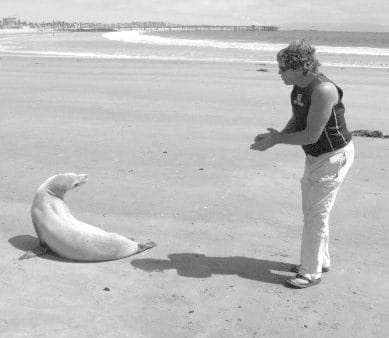
During his patrol Thursday, he found a sea lion on the beach near the Venice breakwater.
“Hey baby, how you feeling,” he yelled, checking the sea lion’s responsiveness. The animal eyeballed him, but didn’t lift its head.
Wallerstein snuck around and tapped the sea lion’s back. The animal responded by snapping backward to bite him.
“That’s a good sign,” Wallerstein said. “If she couldn’t lift her head she’d be a candidate.”
“She’ll probably be a candidate tomorrow.”
Most likely, the sea lion will be a candidate for San Pedro Marine Animal Care Center where rescued animals are taken. The center is so overcrowded now that only severely injured or sick animals are taken in.
“We’re forced to leave animals on the beach that we’d normally rescue,” Wallerstein said. “Some squeeze out their pups way too soon. I hate to leave the animals there to suffer.”
After the rescue attempt, Wallerstein’s pager goes off. It’s a Los Angeles County lifeguard reporting another sick animal.
“None of this would be possible without the lifeguards,” Wallerstein said.
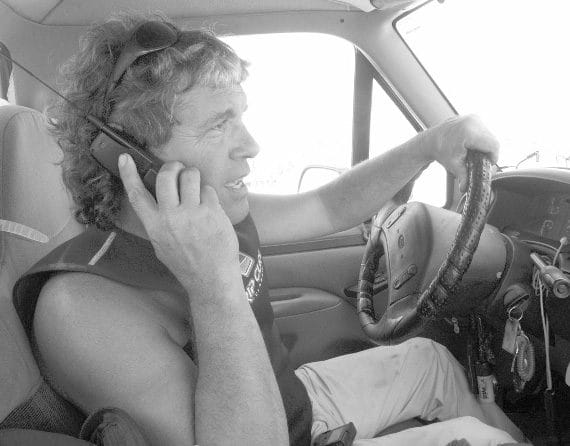
Wallerstein’s rescue truck doubles as his office. He carries a pager, cell phone, extra clothes and all of the rescue equipment.
“With the equipment I have I can capture the animal and with help of a couple lifeguards, get it on board,” he said.
On Thursday, Wallerstein cruised from the Ventura County Line to South Bay, performing triage on sick animals. Triage entails locating and evaluating the animal, and then transporting the most serious ones to the care facility.
“The most important thing is that people give the animals distance,” Wallerstein said. “Otherwise it’s dangerous for the animal and the people. Last weekend a woman in Venice was bit so hard she was rushed to the hospital.”
Wallerstein operates the Whale Rescue Team, a non-profit organization. Private funding pays for equipment and facilities, and more than 40 volunteers do the work.
“I hope we can get the word out, we could use the support,” he said.
For more information, contact the Whale Rescue Team at 1-800-39-WHALE.

Originally published in the Santa Monica Daily Press print edition on April 26, 2002. Read the original PDF.